

In the era of rapid IoT advancement, data collection efficiency has become a critical competitive differentiator. Traditional barcode scanning and manual recording methods struggle to meet modern demands for real-time accuracy and scalability. UHF RFID handheld terminals emerge as transformative tools, offering end-to-end digital solutions for logistics, retail, manufacturing, and healthcare. This review decodes their core value, technical principles, and selection criteria to help businesses maximize ROI.
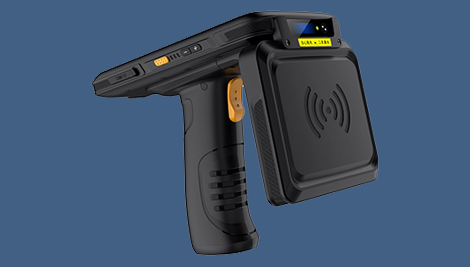
Part 1: Four Pain Points of Traditional Systems
1.Low Efficiency:
Barcode scanning requires line-of-sight and sequential operation, with efficiency 5x lower than RFID in warehouse audits.
2.Dynamic Blind Spots:
Inability to track real-time inventory movement leads to stockouts, overselling, and supply chain opacity.
3.Human Error vs. Cost:
Manual data entry increases error rates (up to 3.2%) and labor costs proportionally with workload.
4.System Silos:
Poor integration with ERP/WMS creates data latency, hindering digital transformation.
Part 2: UHF RFID’s Technological Edge
1. How It Works: From Passive to Proactive
UHF RFID (860MHz–960MHz) uses radio waves for contactless data transfer, enabling:
Bulk Reading: 100+ tags scanned simultaneously (10x efficiency gain).
Material Penetration: Works through paper, wood, and non-metallic obstructions.
Long-Range: 1–25m read distance (antenna-dependent), minimizing human intervention.
2. Six Core Applications
Smart Warehousing: 99.9% inventory accuracy with automated receiving/putaway.
Retail Ops: Dynamic pricing and stock optimization reduce out-of-stock losses by 30%.
Manufacturing: Full lifecycle tracking for compliance (e.g., UDI for medical devices).
Asset Management: Real-time location tracking for high-value equipment.
Cold Chain: Integrated sensors monitor temperature/humidity for perishables.
Healthcare: Medication/equipment tracking and patient wristband management.
3. Quantifiable ROI
Case Study: 3PL Logistics Provider
Labor savings: Reduced daily warehouse auditors from 12 to 2.
Error rate drop: From 3.2% to 0.01%.
Inventory turnover: Increased 25% via data-driven replenishment.
Part 3: Buyer’s Guide – Key Selection Criteria
1. Hardware Specifications
Sensitivity: Match to environment (e.g., high sensitivity for dense shelving).
Durability: IP65+ rating for dust/water resistance and drop protection.
Battery: 8+ hours continuous use; swappable batteries preferred.
OS: Android for better customization.
Connectivity: USB/Bluetooth/5G/NFC for system integration.
2. Software Ecosystem
API Flexibility: Seamless ERP/WMS/TMS integration.
Customization: Support for unique workflows (e.g., cold chain threshold alerts).
Cloud Platform: Remote monitoring, OTA updates, and data dashboards.
3. Compliance & Security
Certifications: FDA/CE for regulated industries.
Encryption: AES256 for data protection.
Part 4: Future Trends – AIoT Convergence
Edge AI: On-device processing for image recognition and anomaly detection.
5G + UWB: Centimeter-level asset tracking in smart factories.
Sustainability: Low-power chips and recyclable materials align with net-zero goals.
Conclusion: A Strategic Investment
UHF RFID terminals are no longer mere tools but strategic assets enabling data-driven decision-making. Businesses must prioritize scenario fit, system compatibility, and long-term support over upfront cost savings to unlock full potential.