

For logistics, retail, and manufacturing sectors, data collection efficiency directly impacts operational costs and customer experience. Traditional methods—manual recording, bulky scanners, and system incompatibility—have become critical pain points. Smart handheld data terminals emerge as the ultimate solution, reconstructing enterprise data management through three dimensions: efficiency, cost, and security.
Part 1: Three Fatal Flaws of Traditional Data Collection
1. Efficiency Black Hole
Manual data entry wastes 3 minutes per transaction with 15% error rates (industry data).
Employees juggle multiple devices in warehouses/stores, causing workflow fragmentation.
2. Hardware Limitations
Legacy scanners only read 1D barcodes.
Standard PDAs last <4 hours, unfit for shift work.
3. Data Silos
Isolated departmental systems delay real-time synchronization, forcing decisions on stale reports.
Part 2: How Smart Terminals Redefine Data Collection
Core Advantages:
All-in-one design × AI algorithms × Omni-scenario adaptability
Efficiency Leap: From Minutes to Seconds
Multi-modal recognition: QR codes, RFID, image/voice input with 99.9% accuracy.
Offline-cloud sync: Auto-caches data offline, instant sync when reconnected.
Cost Revolution: 1 Device Replaces N Tools
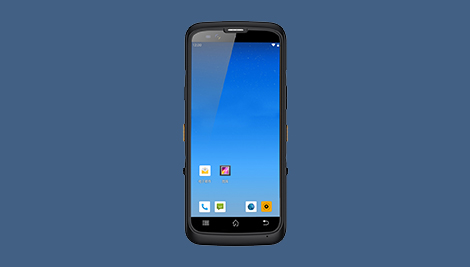
5.7" industrial touchscreen + IP65 rating handles inventory, payments, and inspections.
60% lower maintenance costs: Fast charging (1 hour/12-hour runtime) and remote updates.
Military-Grade Security
End-to-end encryption + granular permissions: Auto-lock on suspicious activity.
AI risk prediction: Learns historical patterns to block breaches preemptively.
Part 3: Real-World Transformations
Case 1: Logistics
A cross-border logistics firm achieved:
200% faster inbound processing
0.01% error rate (from 5%) via GPS/Bluetooth navigation in 100,000㎡ warehouses.
Case 2: Retail
Convenience stores cut labor costs by 40% using terminals for inventory, pricing, and membership management.
Case 3: Manufacturing
Factory inspectors reduced equipment downtime by 70% by uploading vibration/temperature data to MES for AI-driven maintenance.
Part 4: Buyer’s Guide – Avoid 90% of Pitfalls
API-native integration with ERP/WMS (no third-party plugins)
Hot-swappable batteries & ≥1.5m drop resistance
Future-proof ports: 5G/UHF RFID for digital twins
Part 5: The Next Frontier – From Data to Decisions
Next-gen terminals will embed edge computing to:
Generate retail shelf heatmaps in real-time
Optimize delivery routes dynamically
Predict manufacturing equipment failures
Conclusion: Winning the Data Race
Smart handheld terminals aren’t just tools—they’re the foundation of data strategy. In an era where data velocity = competitive advantage, choosing the right device could determine who leads the next decade.