

Introduction: The Importance of Food Safety and Traceability
In today's society, food safety issues are of great concern. Consumers increasingly demand transparency regarding food sources, production processes, transportation, and storage conditions. Food tracing PDA handheld devices, as efficient data collection and management tools, have become a key technological solution for enhancing supply chain transparency and ensuring food safety.
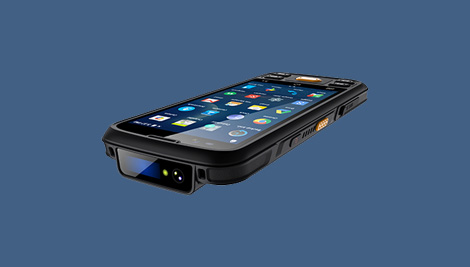
This article explores the functions, advantages, application scenarios, and selection guidelines for food tracing PDA handheld devices, helping food enterprises, logistics companies, regulatory agencies, and other users understand how to optimize food traceability management, build brand trust, and ultimately influence consumer purchasing decisions.
1. What is a Food Tracing PDA Handheld Device?
A food tracing PDA handheld device is a portable smart terminal integrating barcode scanning, RFID recognition, data storage, and wireless transmission. It can quickly collect data from food production, processing, transportation, and sales, enabling real-time recording and traceability via cloud or local systems.
Core Features:
Barcode/QR Code Scanning – Quickly identifies traceability codes on food packaging to retrieve product information.
RFID Recognition – Suitable for batch-reading electronic labels on food packaging, improving data collection efficiency.
Real-Time Data Upload – Supports 4G/Wi-Fi/Bluetooth for instant synchronization with traceability systems.
Tamper-Proof Records – Uses blockchain or encryption to ensure data authenticity.
Durability – Industrial-grade dustproof, waterproof, and shockproof design for harsh environments.
2. What Problems Does a Food Tracing PDA Handheld Device Solve?
① Enhances Food Safety Supervision Efficiency
Problem: Manual recording is error-prone and delayed, making it difficult to detect risks promptly.
Solution: PDA devices record real-time data (e.g., production date, shelf life, storage temperature), enabling quick batch identification to reduce recall costs.
② Improves Supply Chain Transparency
Problem: Consumer doubts about food origins hinder purchasing decisions.
Solution: PDA-generated traceability reports allow consumers to scan QR codes for end-to-end food journey details, boosting trust.
③ Reduces Operational Costs
Problem: Traditional traceability relies on manual entry, which is inefficient and costly.
Solution: PDA automates data collection, minimizing labor costs and improving efficiency.
④ Ensures Regulatory Compliance
Problem: Global traceability regulations (e.g., China’s Food Safety Law, EU GS1 standards) are tightening.
Solution: PDA helps build compliant traceability systems, avoiding fines or market bans.
3. Application Scenarios
Food Production: Tracks raw material batches, processing methods, and quality checks.
Warehousing & Logistics: Monitors storage temperature and transportation routes to prevent spoilage.
Retail Management: Supermarkets/e-commerce platforms use PDAs to check expiry dates and optimize inventory.
Government Inspections: Regulators conduct on-site checks efficiently with PDA devices.
4. How to Choose the Right Food Tracing PDA?
Define Needs: RFID? 4G? Cold-resistant/anti-corrosion?
Key Specifications: Scanning speed, battery life, and compatibility with ERP/WMS systems.
Brand & Support: Opt for reputable brands with reliable after-sales service.
Conclusion: The Future Standard for the Food Industry
Food tracing PDAs address safety challenges while boosting efficiency and consumer confidence. Investing in high-quality devices is not just about compliance—it’s a competitive advantage.
For optimal ROI, select a PDA that aligns with your business needs.