

In an era where food safety is increasingly prioritized, agricultural product traceability has become a vital means to ensure safety throughout the "farm-to-table" supply chain. This article comprehensively explains how agricultural traceability PDA handheld data collectors help farming professionals address quality traceability challenges, enhance product competitiveness, and earn consumer trust.
I. Real-World Challenges in Agricultural Product Traceability
Agricultural production involves complex processes, and traditional recording methods present multiple pain points:
Incomplete data recording: Manual logs often miss critical details like fertilization timing and pesticide dosage.
Low traceability efficiency: Paper-based records are difficult to retrieve, hindering quick issue resolution.
Low data credibility: Consumers distrust self-reported information, damaging brand trust.
High management costs: Dedicated personnel for manual logging increases labor costs and error risks.
These issues prevent high-quality agricultural products from proving their worth and achieving deserved market premiums.
II. How PDA Handheld Data Collectors Solve Traceability Challenges
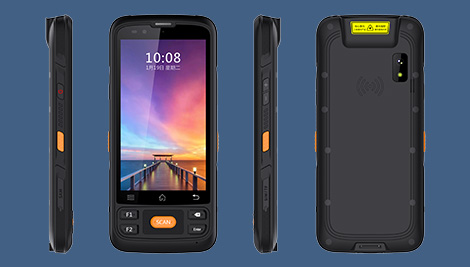
Designed specifically for agricultural applications, these devices offer core functionalities:
1.Real-Time Data Capture Across Processes
Field operation logs: One-touch recording of planting, fertilization, irrigation, and pesticide use.
Environmental monitoring: Automated collection of temperature, humidity, and light data for transparency.
Harvest records: Immediate upload of batch numbers, harvest times, and responsible personnel.
2.Smart Data Processing
Automated data linkage: Connects scattered farming activities into a complete production record.
Anomaly alerts: Warns about pesticide safety intervals or excessive residue levels.
Visual analytics: Generates charts for holistic production insights and decision-making.
3.User-Friendly Traceability Display
QR code generation: Instantly creates traceability codes for consumer scanning.
Multi-device sync: Cloud-stored data accessible via computers or mobile devices.
Blockchain certification: Immutable record-keeping to enhance credibility.
III. Core Advantages of PDA Handheld Data Collectors
Compared to traditional methods, these devices offer:
Durability: IP65+ rating for dust/water resistance in harsh field conditions.
Long battery life: Supports all-day operation without frequent recharging.
Ease of use: Farmer-friendly interface lowers adoption barriers.
Flexible expansion: Supports RFID, barcode, NFC, and other data capture methods.
System compatibility: Seamless integration with farm management software.
IV. ROI of Implementing Traceability PDAs
Adopting this system delivers multiple benefits:
15-30% price premium for fully traceable products.
Market access compliance for supermarkets and e-commerce platforms.
Risk mitigation: Precision recall of problematic batches reduces brand crises.
Production optimization: Data-driven improvements in yield and quality.
Consumer trust: Transparent processes boost repeat purchases.
V. Choosing the Right Traceability PDA
Key selection criteria:
Sector-specific design: Tailored for agricultural needs.
Data accuracy: Sensor precision and capture frequency.
Scalability: Future-proof functionality upgrades.
Support services: Ongoing training and maintenance.
Cost-effectiveness: Balance between device price and long-term ROI.
VI. Implementation Best Practices
Maximize system effectiveness by:
Training: Ensure staff proficiency with devices.
Standardization: Uniform data protocols for consistency.
Continuous improvement: Regular data quality reviews.
Consumer education: Promote traceability value via QR codes.
Regulatory alignment: Compatibility with national traceability platforms.
Conclusion
Agricultural traceability PDAs have evolved from "nice-to-have" to "must-have" tools in modern farming. They solve transparency challenges while creating competitive advantages. As consumer demand for food safety grows, early adoption of robust traceability systems will be pivotal for agricultural branding.