

Driven by consumption upgrading and digital transformation, the fresh e-commerce industry is undergoing unprecedented changes. From farms to consumers' tables, an efficient, transparent, and controllable digital supply chain has become the core barrier for enterprise competition. As a key carrier of Internet of Things (IoT) technology, industrial handheld terminal data is reshaping every aspect of the fresh e-commerce supply chain with its powerful data collection, real-time transmission, and intelligent analysis capabilities, pushing the industry toward an era of lean operations.
I. Digital Pain Points and Breakthrough Needs in Fresh E-commerce Supply Chain
The non-standardized nature and perishable characteristics of fresh products determine that their supply chain management difficulty is much higher than that of standard e-commerce. In traditional models, the industry has long faced three core pain points:
High risk of cold chain breaks: From pre-cooling and warehousing to transportation and delivery, temperature fluctuations can lead to loss rates of 10%-30%;
Low inventory turnover efficiency: Manual inventory errors exceed 5%, resulting in simultaneous stockouts and overstocking;
Poor end delivery experience: Uncontrollable delivery timeliness and product quality directly impact user repurchase rates.
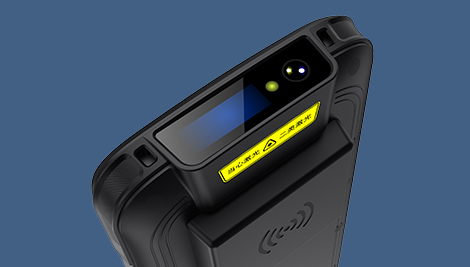
The emergence of industrial handheld terminal data provides a technical solution to these challenges. By integrating RFID recognition, barcode scanning, 4G/5G communication, and BeiDou/GPS positioning modules, it builds a "digital neural network" covering the entire supply chain process, enabling efficient coordination among people, goods, and locations.
II. Key Application Scenarios of Industrial Handheld Terminal Data in Fresh Supply Chain
End-to-End Cold Chain Visibility and Control
In fresh cold chains, temperature is the lifeline affecting quality. Industrial handheld terminals can be paired with temperature and humidity sensors to achieve the following functions:
Real-time data collection: At nodes such as pre-cooling packaging, warehouse stacking, and transport vehicles, the handheld automatically records environmental data and uploads it to the cloud platform;
Abnormal alert response: When temperatures deviate from safe thresholds, the device triggers immediate alarms, synchronized to management and driver ends, ensuring intervention within 20 minutes;
Traceability data loop: Each batch of goods generates a unique digital ID; consumers can scan codes to view the full-chain temperature curve from origin to delivery, building a trust chain for quality.
Innovations in Smart Warehouse Management
Facing the characteristics of multiple SKUs and fast turnover in fresh categories, industrial handheld terminals optimize warehouse operations through:
Dynamic sorting systems: Combined with visual recognition technology, after scanning product barcodes, the system automatically plans optimal storage locations, reducing handling distance by over 30%;
Dynamic inventory optimization: Based on sales prediction models, the device calculates safety stock thresholds in real-time, automatically triggering replenishment when inventory falls below alert levels;
Precise expiration management: By linking batch numbers to production dates, the handheld displays remaining shelf life upon scanning, and the system pushes picking orders based on the "first-expired-first-out" principle, controlling loss rates within 2%.
Leap in End Delivery Efficiency
In the "last mile"link, industrial handheld terminals serve as smart assistants for delivery personnel:
Dynamic route planning: Combined with real-time traffic and order density, the device automatically generates optimal delivery sequences, reducing empty travel rates by 15%;
Contactless signature systems: Using electronic signatures and facial recognition, zero-contact delivery is achieved while collecting data on signees, times, and product status, providing an evidence chain for dispute resolution;
Enhanced user interaction: Delivery personnel can use the handheld to record unboxing videos, transmitting them in real-time to user ends, boosting delivery ceremony and quality perception.
III. Data-Driven Innovation in Supply Chain Decision-Making
The massive data collected by industrial handheld terminals, processed through cloud computing and AI algorithms, transforms into three decision support engines:
Demand prediction engine: By analyzing historical sales, weather, holidays, and other variables, a multi-dimensional prediction model is built, increasing replenishment accuracy to 85%;
Network optimization engine: Based on data such as order distribution, storage costs, and transport times, regional warehouse networks are dynamically adjusted, reducing trunk line transport costs by 12%;
Quality risk engine: Integrating IoT monitoring data and user feedback, a fresh product quality assessment model is established, providing 24-hour advance warnings for potential issues.
IV. Industry Case Studies and Quantified Value
A fresh e-commerce platform achieved the following results by deploying industrial handheld terminal systems:
Loss rate reduction: Cold chain break incidents decreased by 78%, with comprehensive loss rates dropping from 18% to 5%;
Efficiency improvement: Warehouse operation efficiency increased by 40%, with single warehouse labor costs reduced by 25%;
User experience optimization: Delivery punctuality rates rose to 98%, and NPS (Net Promoter Score) grew by 30%;
Carbon emission reduction: Through route optimization, transport mileage was reduced, cutting annual CO2 emissions by over 2,000 tons.
V. Future Trends: Evolution from Tool to Ecosystem
With the integration of 5G, edge computing, and digital twin technologies, industrial handheld terminals are evolving from simple data collection tools to intelligent supply chain hubs:
AR-assisted decisions: Through the handheld camera, AR interfaces overlay digital twin information such as inventory heat maps and equipment status;
Blockchain traceability: Connecting with blockchain nodes enables immutable storage of data from planting, processing, to logistics;
Autonomous coordination networks: Devices achieve task allocation and anomaly alerts through edge computing, building a decentralized supply chain ecosystem.
Conclusion
In the trillion-dollar race of fresh e-commerce, industrial handheld terminal data is no longer just a tool but fundamental infrastructure for reconstructing supply chain value networks. By transforming complex physical scenarios into computable digital language, it helps enterprises build new competitiveness characterized by "controllable quality, optimized costs, and perceivable experiences." In the future, as technological boundaries continue to break, this supply chain innovation driven by handheld terminals may redefine the business civilization of the fresh industry.