

In the wave of intelligent transformation in the automotive industry, traceability management of parts has become a core link in ensuring product quality and improving supply chain efficiency. Traditional barcode
technology, limited by reading distance, environmental adaptability, and data capacity, struggles to meet the demands of complex industrial scenarios. The emergence of Ultra-High-Frequency RFID (Radio Frequency Identification) technology, especially its deep integration with handheld PDAs, is opening new paths for the full lifecycle management of automotive parts. This article systematically elaborates on how UHF RFID handheld PDAs build a one-item-one-code traceability system for automotive parts from three dimensions: technical principles, application scenarios, and implementation value.
I. Technological Breakthrough: Synergistic Advantages of UHF RFID and Handheld Terminals
Technical Characteristics of UHF RFID
UHF RFID operates in the frequency band of 860MHz-960MHz and possesses the following core advantages:
Long-distance identification: Single read range can reach 3-25 meters, eliminating the need for manual item-by-item scanning;
Multi-tag concurrent processing: Capable of identifying hundreds of tags per second, significantly improving data collection efficiency;
Strong anti-interference ability: Penetration through materials like metal and liquids far exceeds traditional barcodes, adapting to complex environments such as warehouses and production lines;
Large data storage capacity: A single tag can store over 2KB of data, supporting extended lifecycle information of parts.
Industrial-Grade Adaptation of Handheld PDAs
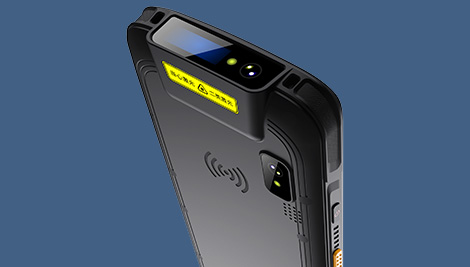
RFID handheld terminals designed for industrial scenarios achieve technological implementation by integrating the following functions:
High-precision positioning module: Combined with UWB or Bluetooth 5.0 technology, achieving centimeter-level positioning of parts in warehouses or production lines;
Multi-modal data collection: Integrated barcode scanning, fingerprint recognition, camera functions, and more to meet multi-scenario data association needs;
Industrial protection rating: Certified with IP65 or higher for dust and water resistance, tolerating extreme temperatures from -20°C to 60°C, and adapting to workshop vibrations and drop impacts;
Intelligent operating system: Equipped with Android or customized systems, supporting seamless integration with MES, ERP, WMS, and other systems.
II. Application Scenarios: Traceability Closed-Loop Throughout the Part Lifecycle
Production Phase: Precise Binding of Process Parameters
In the assembly process of core components such as engines and transmissions, operators use handheld PDAs to scan RFID tags, enabling real-time association with:
Part batch numbers and supplier information;
Torque parameters and quality inspection results for corresponding processes;
Operator identity and timestamps.
The system automatically generates electronic records, eliminating manual entry errors and achieving a "one-code-through design-production-testing" full process.
Warehousing and Logistics: Dynamic Optimization of Inventory Management
Smart inbound: Forklift drivers use PDAs for long-distance reading of pallet tags, with the system automatically comparing purchase orders and physical quantities;
Dynamic inventory counting: Through area positioning technology, handheld devices can quickly locate misplaced parts, improving counting efficiency by 80%;
Outbound error prevention: Scanning RFID tags on shipping documents, the system automatically verifies vehicle configuration lists, preventing mismatches or omissions.
After-Sales Traceability: Building a Quality Traceability Firewall
When end-users report quality issues, maintenance personnel scan vehicle VIN codes or part tags with PDAs to instantly retrieve:
Production batches, process parameters, and quality inspection reports;
Logistics trajectories and warehousing environmental data;
Historical maintenance records and part replacement information.
Based on the complete data chain, enterprises can locate problem root causes within 24 hours, reducing the quality traceability cycle from 7 days to 2 hours.
III. Implementation Path: Five-Step Method from Technology Selection to Value Realization
Top-Level Design: Building a Standardized Tag System
Develop coding rules: Incorporate elements such as enterprise codes, part categories, production dates, and serial numbers;
Select tag types: Choose anti-metal tags, high-temperature-resistant tags, or flexible printable tags based on application scenarios;
Deploy reading devices: Install fixed RFID readers at key nodes, complementing the handheld terminal network.
Hardware Deployment: Creating Mobile Data Collection Terminals
Key selection indicators:
Read/write sensitivity: Ensure stable identification in metal environments;
Battery life: Meet the demands of 12 hours of continuous operation;
Screen display: Support industrial-grade screens visible under strong light.
Customized development: Integrate functions such as barcode scanning and NFC based on enterprise needs.
System Integration: Breaking Down Data Silos
Develop middleware platforms: Enable real-time interaction between RFID data and systems like MES, ERP, and TMS;
Establish data platforms: Clean, standardize, and structurally process collected raw data;
Deploy visual dashboards: Dynamically display key indicators such as inventory turnover rates and quality anomaly distributions.
Process Optimization: Reshaping Operational Standards
Develop SOP standards: Define scanning actions, data validation rules, and exception handling procedures for each link;
Conduct practical training: Improve employee operational proficiency through simulated production lines and VR drills;
Establish assessment mechanisms: Incorporate RFID data collection accuracy into KPI systems.
Value Assessment: Quantifying Implementation Effectiveness
Efficiency improvement: Inbound and outbound operation efficiency increased by 300%, inventory accuracy reached 99.99%;
Cost savings: Reduce manual entry positions and lower rework costs caused by mismatches;
Quality improvement: Quality traceability cycle shortened by 90%, after-sales claim rate decreased by 25%.
IV. Future Outlook: From Point Traceability to Industrial Ecosystem Interconnection
With the deepening development of Industry 4.0, the application boundaries of UHF RFID handheld PDAs will continue to expand:
Blockchain empowerment: Upload part data to the chain, building a tamper-proof distributed traceability system;
AIoT integration: Achieve predictive maintenance of equipment status through edge computing;
Carbon footprint tracking: Integrate environmental sensor data to calculate the carbon emissions throughout the part lifecycle.
In the innovation of the "new four modernizations" in the automotive industry, UHF RFID handheld PDAs have evolved from a single data collection tool to an intelligent hub driving the digital transformation of the supply chain. By constructing a "one-item-one-code" digital twin system, enterprises can not only achieve quality control, process visibility, and cost optimization but also build a new type of competitiveness centered on data in the fierce market competition. In the future, with the standardization of technology and the improvement of the ecosystem, this solution may reshape the collaboration model of the global automotive industry chain.