

In the power and energy industry, smart inspection is a critical process for ensuring equipment safety. Traditional methods relying on paper records and manual judgment are inefficient and error-prone. The advent of industrial-grade handheld PDAs provides inspectors with a "mobile fortress," redefining standardized power inspection workflows through professional industrial design and precise, efficient operation.
I. Industrial DNA: Built for Harsh Environments
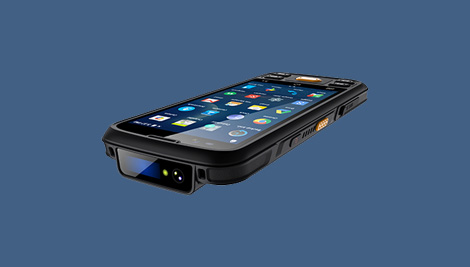
The core advantage of industrial PDAs lies in their "industrial DNA." Unlike consumer devices, they feature high-strength engineering plastic and metal frames, IP65 dust/water resistance, 1.5-meter drop resistance, and stable operation in extreme temperatures (-20°C to 60°C). Capacitive touchscreens support gloved operation, while high-brightness backlighting ensures visibility in strong sunlight. This ruggedness guarantees reliability in complex scenarios like substations, wind farms, and hydropower plants.
II. Precision Operation: From "Experience-Driven" to "Data-Driven"
In power inspections, PDA precision operates in three dimensions:
Accurate Data Capture: Built-in laser scanners read equipment barcodes and asset tags, eliminating manual entry errors.
Precise Positioning: Beidou/GPS dual-mode positioning enables meter-level trajectory tracking to ensure no missed inspection points.
Standardized Guidance: Pre-loaded SOPs with voice prompts and visual instructions standardize procedures, preventing oversights or misjudgments.
III. Full-Scene Coverage: End-to-End Inspection Solutions
Industrial PDAs serve the entire "inspection-maintenance-management" chain:
Substations: Real-time temperature/vibration monitoring with algorithmic fault alerts.
Transmission Lines: Drone-assisted aerial photography synced to PDAs for backend analysis.
Distribution Rooms: NFC tags instantly retrieve equipment history and maintenance records.
Renewable Sites: Defect photography/annotation for solar panels and wind turbines, enabling closed-loop management.
IV. Efficiency Revolution: From "Single-Point" to "System-Wide Synergy"
PDAs elevate inspections from isolated tasks to integrated operations:
4G/5G real-time data sync allows remote progress monitoring.
Bluetooth beacons auto-pair devices, reducing search time.
E-signatures authenticate inspection records.
Result: 40%+ efficiency gain and <15-minute fault response.
V. Future Evolution: From "Tool" to "Smart Hub"
Next-gen PDAs will integrate advanced sensors (e.g., infrared imaging, gas detection), edge computing for on-device analytics, and voice/gesture controls. This transformation positions PDAs as the "nerve center" of smart inspections, driving the industry toward greater safety and intelligence.
Conclusion:
Industrial PDAs enable a paradigm shift from human-centric to data-driven power inspections. As an indispensable "mobile fortress," they deliver industrial reliability, precision, and full-scene coverage. Continuous innovation will further solidify their role in securing efficient, safe energy operations.