

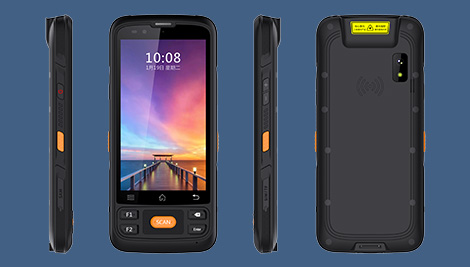
In the wave of digital transformation for medical institution materials management, the SPD (Supply, Processing, Distribution) model has become a core paradigm for improving the efficiency of medical supplies management. As a key enabler of smart healthcare, PDA medical terminals, with their mobile and precise data capture capabilities, are reconstructing the closed-loop system of the entire SPD materials management process. Based on practical cases in the healthcare industry, this article deeply analyzes the innovative application paths and value realization mechanisms of PDA terminals in SPD materials management.
I. Core Pain Points in SPD Materials Management and the Breakthrough Value of PDA
Traditional SPD materials management often faces three major pain points: First, high rates of mismatched high-value consumables due to manual verification; second, low inventory turnover efficiency caused by the complexity of low-value consumable specifications; third, quality risks arising from breaks in the full-process traceability chain. PDA medical terminals address these through barcode/QR code scanning technology with "one item, one code," achieving end-to-end digital tracking from procurement and storage to clinical consumption. For example, in one hospital's SPD system practice, scanning exclusive barcodes of high-value consumables with a PDA instantly links them to the patient record system, reducing the consumable usage error rate from 0.59% to zero and controlling the missed charging rate within 0.001%. This precise management not only mitigates medical dispute risks but also enables a zero-inventory capital occupation model through electronic settlement systems.
II. Innovative Application Scenarios of PDA in the Full SPD Process
Receiving and Storage: PDA terminals scan supplier delivery slips and product codes to automatically verify batch numbers, expiration dates, and quality inspection reports. After system acceptance, they trigger smart storage location assignments. One hospital's practice showed that standardized shelving processes guided by PDAs improved consumable organization efficiency by 40%, with near-expiry items automatically pushed to priority usage areas.
Clinical Consumption: In operating rooms, scanning high-value consumable billing QR codes with PDAs enables seamless integration with HIS and anesthesia information systems, allowing circulating nurses to complete verification and registration bedside, reducing surgical consumable charging time by 60%. For low-value consumables, the "fixed-quantity pack" model (e.g., ten IV catheters per pack, fifty glucose test strips per pack) uses PDA scans of pack labels for bulk withdrawals, cutting department requisition time by 75% and increasing inventory turnover by 30%.
Inventory Management: PDAs support offline data collection and online synchronization, enabling rapid stocktaking through batch scanning of storage location labels. One hospital reported a 50% increase in tertiary storage inventory efficiency and a controlled variance rate of 0.001%.
III. Efficiency Improvement Paths in SPD Management Driven by PDA
The value of industrial PDA medical terminals extends beyond operational efficiency to deep restructuring of SPD management models. In quality control, PDA-recorded consumable flow data enables full lifecycle traceability from procurement to disposal, supporting quality management. In cost control, real-time consumption data collected by PDAs generates heat map analyses to identify abnormal usage patterns and prevent medical insurance fund misuse. One hospital reduced specialty consumable inventory by 50% and optimized general consumable requisition cycles to one week through PDA data analysis, saving over ten million yuan annually in operational costs.
At the decision-making level, real-time inventory and consumption trend data from PDAs generate whitepapers with 18 key indicators (e.g., turnover rate, loss rate), providing scientific basis for procurement strategy optimization and inventory alert thresholds. Crucially, PDAs free medical staff from tedious management tasks—through scan-to-consume functions, clinical departments eliminate manual stocktaking and expiry management, increasing nurse satisfaction by over 40%.
IV. Future Trends and Challenges
With the integration of 5G, AI, and IoT technologies, industrial PDA medical terminals are evolving toward higher integration. Future PDAs will form IoT networks with smart consumable cabinets, RFID tags, and cold chain monitoring devices for real-time tracking and anomaly alerts. Technically, challenges include resolving multi-system data interface compatibility to ensure seamless integration with HIS, SPD, and financial systems. Additionally, smarter inventory alert models are needed, using machine learning to predict consumption trends and automate dynamic replenishment strategies.
In application expansion, PDAs will deepen into scenarios like surgical anesthesia systems, mobile nursing, and emergency infusion. For instance, in anesthesia management, PDAs can record perioperative consumable data combined with patient vital signs monitoring to build precise usage models. In emergencies, PDAs quickly scan patient wristbands and consumable barcodes for accurate allocation and usage recording.
Conclusion
As the neural hub of SPD materials management, industrial PDA medical terminals are reshaping the value chain of medical supplies management through barcoding, mobility, and intelligent innovation. Their value lies not only in operational efficiency gains but also in enabling a shift from "experience-driven" to "data-driven" management models via full-process data collection and analysis. With ongoing technological advancements and deepened applications, PDAs will play an increasingly critical role in smart hospital construction, driving medical materials management toward greater efficiency, precision, and safety.