

In today's increasingly competitive automotive manufacturing industry, leveraging technological innovation to reduce costs and improve efficiency has become a core proposition for corporate survival and development. The automotive engine, as the heart of the vehicle, has its core component—the cylinder block—whose production efficiency and quality directly impact overall vehicle performance and manufacturing costs. Traditional production lines, plagued by manual data collection, paper-based records, and isolated equipment operation, often result in low production efficiency, difficulty in quality control, and high operational costs. The introduction of Ultra-High Frequency (UHF) Radio Frequency Identification (RFID) wireless data collection technology is bringing innovative changes to this field. This article will delve into the practical value of this technology in automotive engine cylinder block production lines from three dimensions: technical principles, application scenarios, and paths to cost reduction and efficiency improvement.
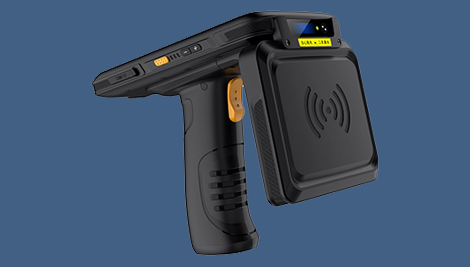
I. Technical Principles: The Core Advantages of UHF RFID
UHF RFID technology enables non-contact data transmission via radio waves, typically operating in the 860MHz~960MHz frequency range, possessing the following characteristics:
Long-Range Identification: Reading distances can reach 5-25 meters, enabling automatic data collection without manual intervention.
Simultaneous Multi-Tag Reading: Capable of identifying hundreds of tags at once, significantly boosting data collection efficiency.
Strong Anti-Interference Ability: Maintains stable operation in complex environments involving metal and liquids.
Data Storage and Encryption: Tags can store production information and support encrypted transmission, ensuring data security.
In automotive engine cylinder block production lines, these characteristics directly address the pain points of traditional production models: error-prone manual scanning, decision-making delays due to data lag, and information silos between equipment.
II. Application Scenarios: Cost Reduction and Efficiency Improvement Across the Entire Production Line
1. Raw Material Traceability and Inventory Management
Cylinder block production requires high-precision cast iron, alloy materials, and other raw materials. By attaching RFID tags to material pallets or packaging, the following can be achieved:
Automated Warehousing: When forklifts or AGVs pass through RFID reading tunnels, the system automatically records material batch, quantity, and supplier information, replacing manual scanning.
Dynamic Inventory Management: Real-time monitoring of inventory levels, combined with production plans, automatically triggers replenishment alerts, avoiding line stoppages due to material shortages.
Quality Traceability: If a batch of raw materials has quality issues, the affected product range can be quickly identified, reducing recall costs.
Cost Reduction Effect: Reduces 1-2 dedicated warehouse management personnel, increases inventory turnover rate by 20%-30%, and reduces downtime due to material shortages by over 50%.
2. Production Process Data Collection and Process Optimization
Deploying RFID readers at key processes such as machining, heat treatment, and assembly, combined with tags on fixtures or AGVs, enables:
Automatic Process Reporting: When a workpiece arrives at a station, the system automatically records processing time, equipment parameters, and operator information, eliminating paper records.
Process Parameter Monitoring: Real-time comparison of actual machining parameters with standard process requirements, with automatic alerts for anomalies, avoiding batch defects.
Flexible Production Support: Rapid identification of product models via tags, automatically invoking corresponding process programs, reducing changeover time.
Efficiency Case Study: After implementation, one company saw a 15% reduction in single cylinder block processing cycle time and a 0.8% decrease in scrap rate due to process deviations.
3. Quality Inspection and Full Lifecycle Management
Deploying RFID systems at inspection stations enables:
Online Inspection Data Binding: Associating results from tests like leak testing and dimensional inspection with the workpiece's RFID tag, forming a complete quality record.
Non-Conforming Product Interception: Automatic alarms triggered for non-conforming products, with the system preventing their flow to the next process.
After-Sales Traceability: Reverse query of production batches, raw material suppliers, etc., via engine serial number, improving after-sales response speed.
Value Demonstrated: Quality traceability efficiency increased by 80%, and after-sales dispute handling costs reduced by 30%.
4. Equipment Management and Predictive Maintenance
Installing RFID tags on equipment like machine tools and robotic arms, combined with sensor data, enables:
Equipment Status Monitoring: Real-time collection of equipment runtime, temperature, vibration, and other parameters to predict failure risks.
Maintenance Plan Optimization: Dynamically adjusting maintenance cycles based on actual equipment conditions, avoiding over-maintenance or unexpected breakdowns.
Spare Parts Management: Managing inventory of consumables like tools and fixtures via tags, reducing downtime caused by spare part shortages.
Cost Savings: Unplanned equipment downtime reduced by 40%, maintenance costs lowered by 25%.
III. The Deeper Logic of Cost Reduction and Efficiency Gain: From Data Silos to Intelligent Decision-Making
The value of UHF RFID technology is not only reflected in efficiency gains at individual links but also in its construction of a real-time data flow network for the production line:
Breaking Information Silos: Unique identification via tags enables connection of all elements: raw materials, work-in-progress, equipment, and personnel.
Data-Driven Decision-Making: Management can adjust production plans and optimize process routes based on real-time data, rather than relying on experiential judgment.
Foundation for Flexible Production: Provides the technical foundation for future transition to low-volume, high-mix production models.
IV. Implementation Challenges and Countermeasures
Although RFID technology offers significant advantages, enterprises still need to focus on the following during implementation:
Environmental Adaptability: Anti-metal tags must be selected for metal processing scenarios, and interference reduced through shielding design.
System Integration: Requires deep integration with MES, ERP, and other systems to avoid data silos.
Personnel Training: Changing employee operating habits and strengthening data security awareness.
Conclusion
In automotive engine cylinder block production lines, UHF RFID wireless data collectors have evolved from an "optional technology" to a "necessity for cost reduction and efficiency improvement." Through full-process application covering raw materials, production, quality inspection, and equipment, enterprises can achieve significant benefits including a 15%-20% reduction in manufacturing costs and over 30% improvement in production efficiency. In the future, with continuous technological iteration, RFID will become the "digital nerve" building smart factories, propelling the automotive manufacturing industry toward higher quality, lower cost, and greater flexibility.