

In the digital era, drug safety regulation faces unprecedented challenges. Issues such as counterfeit drug circulation and abuse of medical insurance funds occur frequently, not only threatening public health but also impacting the credibility of the healthcare system. To solve this dilemma, the QR code data collector handheld device, as a core technical tool, is becoming a key support for building a full-process drug information traceability system.
I. Upgrading the Drug Traceability System Driven by Policy
The working guidelines of the National Medical Insurance Administration clearly require that drug traceability codes must cover the entire chain of production, circulation, and use, and achieve precise supervision through big data models. By building traceability node platforms, scan code information from the drug circulation link is uploaded in real-time to provincial smart supervision platforms, increasing logistics operation accuracy by over 30%. Through the "Three Codes in One" technology, which deeply integrates the national medical insurance code, drug traceability code, and internal hospital codes, precise matching of prescriptions and drugs is achieved, reducing patient medication pickup time by 40%. These practices indicate that the policy-driven upgrade of the traceability system has moved from pilot programs to full implementation.
II. Handheld Technology: The "Digital Nerve Ending" of Drug Traceability
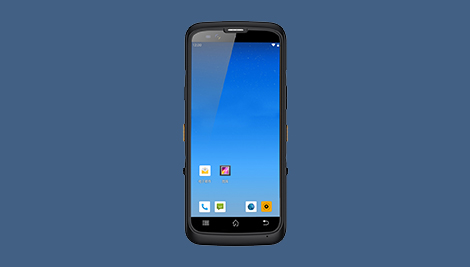
The core value of the QR code data collector handheld lies in achieving real-time collection and dynamic tracking of drug information. Its working principle is based on optical recognition and data encryption technology: capturing images of drug traceability codes through industrial-grade lenses while employing AES-256 encryption technology to ensure data transmission security. For example, in the drug warehousing link, the handheld device can batch-scan entire cases of drugs, identifying up to 100 traceability codes in a single scan, with a reading speed of 30 codes per second, making it over 10 times more efficient than traditional manual scanning. This technological breakthrough not only solves the pain points of time-consuming and labor-intensive traditional scanning but also handles complex scenarios like film coating and scratch obstruction on drug packages, ensuring the accuracy and integrity of data collection.
III. Full-Scenario Application: Closed-Loop Management from Production to Use
Production Link: Enterprises use handheld devices to bind drug batch information, achieving full traceability from raw material procurement to finished product warehousing. For instance, a pharmaceutical company uses handheld devices to collect production line data, uploading information such as production time, equipment number, and operator for each drug package to the traceability system, allowing quick identification of the responsible node if quality issues are found.
Circulation Link: Logistics companies use handheld devices to complete drug inbound and outbound scanning, with the system automatically verifying drug flow direction and order information. Using this technology, the scan error rate in the drug circulation link was reduced from 5% to 0.01%, significantly enhancing supply chain transparency.
Use Link: Medical institutions use handheld devices to achieve "scan-to-dispense," where the system automatically compares prescription and drug information.
IV. Technology Empowerment: Solving Core Pain Points of the Traceability System
The current construction of the drug traceability system faces three major challenges: firstly, the low efficiency of traditional scanning methods; secondly, recognition difficulties in complex environments; thirdly, the need for data security and privacy protection. The QR code data collector handheld addresses these pain points one by one through technological innovation:
Efficiency Improvement: Supports batch scanning and multi-code recognition, e.g., scanning 100 traceability codes in a single operation with automatic announcement of the count, effectively preventing missed scans.
Precise Recognition: Uses barcode positioning technology to identify complex traceability codes caused by printing blur, moisture obstruction, etc., achieving a recognition accuracy rate of 99.99%.
Security Protection: Ensures drug information is used only for regulatory purposes through encrypted data transmission and internal-external network isolation technology.
V. Future Trends: Deep Integration of Intelligence and Collaboration
With the popularization of 5G and IoT technologies, the drug traceability system is evolving towards intelligence. For example, Yaoshihub connects 491,000 pharmacies through its SaaS system, achieving real-time synchronization of drug procurement, inventory, and sales data, while using big data models to analyze drug flow and promptly warn of abnormal transactions. In the future, handheld devices will be deeply integrated with smart shelves and electronic prescription systems, forming an intelligent supervision network characterized by "scanning for association, abnormality triggering warnings." Furthermore, cross-departmental data collaboration becomes key. The National Medical Insurance Administration is collaborating with drug regulatory and health departments to unify data standards and eliminate information silos in the production and circulation links.
Conclusion
The construction of a drug traceability system is a crucial measure to ensure public medication safety and maintain the security of medical insurance funds. As the "digital nerve ending" of this system, the QR code data collector handheld not only achieves precise collection and real-time transmission of drug information but also solves multiple challenges of efficiency, accuracy, and security through technological innovation. With policy promotion and technological iteration, drug traceability will move from "traceable" to "intelligently traceable," providing solid technical support for the Healthy China strategy. In this wave of digital innovation, the continuous upgrading and full-scenario application of handheld devices will become the core engine driving the modernization of the drug regulatory system.