

I. Pain Points in Traditional Archives Management and Technological Breakthrough
In the wave of the digital era, archives management is undergoing a paradigm shift from "experience-driven" to "data-driven". In traditional management models, manual data entry leads to an information error rate as high as 15%, while physical inventory often takes weeks. Instances like an archives bureau delaying the filing of 500 contracts due to manual inventory errors, and a hospital spending three months on evidence collection for a medical dispute caused by misplaced files, highlight the limitations of traditional methods.
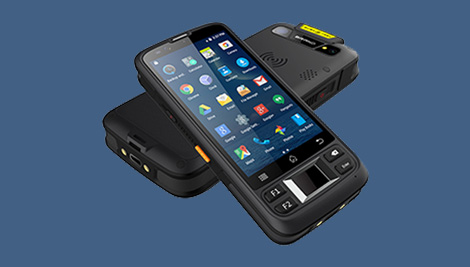
The emergence of Android PDA data collectors provides a technological solution to this dilemma. Its core value lies in upgrading archives from static storage to dynamic data carriers, achieving fully digital management through mobile terminals. Taking the application in a municipal archives bureau as an example, document retrieval response time was reduced from 2 hours to 5 minutes, and file search efficiency improved 30-fold. Behind this data is the disruptive reconstruction of management efficiency by technology.
II. In-depth Analysis of Technical Architecture and Application Scenarios
1. Smart Hardware Layer: Building a Digital Twin of the Physical World
UHF RFID Technology: Supports simultaneous reading of multiple tags within a 10-meter range, completing data collection from 20 storage locations in 8 seconds. By embedding electronic tags into archive boxes, precise "one object, one code" identification is achieved, with the tag storing metadata such as the file's unique ID, security level, and retention period.
High-performance Scanning Engine: Equipped with professional 1D/2D scanning heads capable of recognizing damaged and wrinkled barcodes, with a scanning accuracy of 3 mil, meeting complex identification needs for archive labels.
Industrial-grade Protection Design: IP65 protection rating withstands extreme environments from -20°C to 60°C, and 1.5-meter drop resistance ensures stable operation in complex scenarios like archive storage rooms.
2. Data Processing Layer: Enabling Intelligent Information Flow
Real-time Data Synchronization: Through dual 4G/Wi-Fi communication modules, collected data is instantly synchronized to the cloud system, ensuring no delay in archive status updates. After implementation by an enterprise, the file loss rate decreased by 98%.
Multi-modal Data Fusion: Integration of NFC, fingerprint recognition, and other modules enables borrower identity authentication and permission management. Combined with EAS anti-theft function, it builds a comprehensive security protection system.
3. Comprehensive Application Scenario Coverage
Archive Inventory: Tens of thousands of files that traditionally required several days for manual inventory can be completed in just a few hours using a PDA, with an automatic data comparison error rate below 0.001%.
In/Out Management: Through the linkage of secure access control and handheld terminals, automated registration of file borrowing and returning is achieved, requiring no manual intervention throughout the process.
Storage Room Inspection: Integrated temperature and humidity sensors monitor the archive storage environment in real-time, automatically issuing warnings for abnormal data to ensure the physical safety of archives.
III. Efficiency Innovation and Value Reconstruction
1. Quantitative Presentation of Cost Optimization
Labor Costs: Reduced specialized archivist staffing by 50%. After application by a court, evidence chain integrity reached 100%, indirectly reducing judicial dispute processing costs.
Time Costs: File retrieval shortened from "hours" to "seconds". Through intelligent management, an enterprise increased its inventory turnover rate by 40%.
Equipment Costs: Modular design supports functional expansion (e.g., adding an ID card reader), extending the device lifecycle threefold.
2. Deep Mining of Data Value
Behavioral Analysis: Generating file heatmaps through borrowing data assists in optimizing storage space layout and improving archive utilization efficiency.
Trend Prediction: Establishing file utilization models based on historical data provides data support for prioritizing digitalization decisions.
3. Comprehensive Upgrade of Security Protection
Physical Security: Smart archive cabinets integrate infrared sensors and LED guidance, enabling blind shelving and precise positioning of files, reducing the risk of human operational errors.
Data Security: Utilizing AES-256 encryption algorithm ensures data is tamper-proof during transmission, while supporting offline inventory functions to meet classified archive management needs.
IV. Implementation Path and Risk Prevention
1. System Integration Strategy
Standardized Interfaces: Providing RESTful API supports seamless integration with existing systems like OA and ERP, enabling automated workflow in archives management.
Data Migration Plan: Adopting a combination of incremental migration and full backup ensures the integrity and availability of historical archive data.
2. Personnel Capability Enhancement
Layered Training System: Conducting basic operation training for archive management personnel and secondary development training for technical staff to cultivate a composite talent team.
Simulated Practical Drills: Familiarizing operators with the usage scenarios of smart devices through virtual simulation systems, reducing error rates in practical applications.
3. Risk Prevention Mechanism
Data Audit Tracking: Establishing an operation log system to record the full lifecycle information of archive circulation, ensuring traceability.
Emergency Plan Formulation: Developing multi-dimensional contingency plans for unexpected situations like network failures and equipment damage to ensure business continuity.
Conclusion
The application of Android PDA data collectors is not merely an iteration of technological tools but an innovation in archives management philosophy. By constructing a trinity architecture of "Smart Hardware + Data Middle Platform + Application Ecosystem", it achieves the transformation and upgrade of archives from "custodial" to "service-oriented". Driven by both policy promotion and technological innovation, archives management is accelerating its evolution towards intelligence, refinement, and humanization. In the future, with the deep integration of technologies like 5G, AI, and IoT, Android PDA will unleash greater value in areas such as archive resource development and knowledge service innovation, injecting strong momentum into the high-quality development of archival endeavors.