

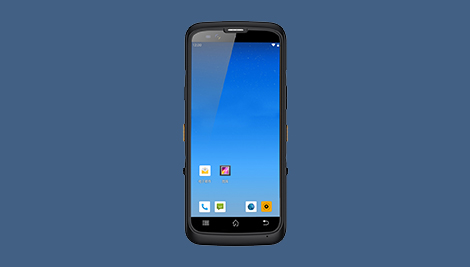
As the digital wave sweeps across industries, the information transformation in the healthcare field has become a critical path to enhance service efficiency and ensure medical safety. As the core device of mobile healthcare solutions, handheld PDA terminals are reshaping the processes of medical information collection, processing, and circulation with their portability, real-time capability, and high integration. This article will deeply analyze the core application scenarios, technical advantages, and practical value of PDAs in healthcare settings, providing actionable digital transformation references for medical institutions.
1. Core Requirements for Mobile Terminals in Healthcare Settings
Medical institutions handle massive real-time information flows daily: patient registration, medication order verification, supply management, and specimen tracking all rely on efficient data exchange. Traditional fixed computer terminals struggle to meet mobile clinical needs due to stationary locations and complex operations. Medical staff require portable, responsive devices that meet healthcare-specific requirements—this is the fundamental rationale for PDAs’ rapid adoption in healthcare.
2. Core Application Scenarios of PDAs in Healthcare
Mobile Nursing Workstations
At patient bedsides, nurses use PDAs for closed-loop "bedside care" management: scanning patient wristbands to access EHRs, verifying medication orders, recording real-time vital signs, and digitally signing documents. Hospital data shows a 60% increase in documentation efficiency and a drop in unsigned orders from 8.2% to 0.01% after PDA implementation. Built-in barcode scanners accurately identify medicines, IV bags, and lab tubes, digitizing the "Three Checks and Seven Verifications" process and reducing medication errors by over 90%.
Outpatient Information Collection Terminals
At triage stations, PDAs replace paper forms, using OCR to scan IDs/insurance cards and auto-fill registration systems. In clinics, they serve as mobile rounds devices, retrieving patient histories and imaging data while supporting voice-to-text order entry. A regional medical consortium reported 25% shorter patient wait times and 40% fewer doctor workstation operations after deployment.
Drug Traceability Systems
For controlled substances and high-value supplies, PDAs enable full-process tracking. RFID/QR codes log operator/time/location data from pharmacy dispensation to bedside administration. A specialty hospital reduced inventory discrepancies from 3.1% to 0.01% and achieved 99.99% accuracy in near-expiry drug alerts.
Emergency Response Platforms
In emergencies, PDAs’ mobility and instant communication are vital. Paramedics transmit real-time vitals via 4G/5G to activate ER green channels. Built-in GPS/BeiDou modules track ambulances, while geo-fencing automates intake preps. One center reported 99% pre-hospital data completeness (vs. 65%) and 37% faster treatment initiation.
3. Technical Requirements for Medical-Grade PDAs
Healthcare PDAs demand stricter standards than commercial devices:
Durability: IP65+ rating, withstands 75% alcohol/chlorine disinfectants, 1.5m drop-tested
Battery: 12+ hours continuous use, hot-swappable battery design
Scanning: Medical-grade engines for damaged/curved barcodes
Compatibility: Medical OS with HL7/DICOM support
Security: SM4 encryption chips, local/cloud dual-data storage
4. Implementation Case: Hospital Mobile Nursing Transformation
Background: Nurses relied on fixed workstations, causing excessive paperwork and inefficient room-to-station trips.
Solution:
Deployed 500 medical PDAs with 2D/RFID scanners
Custom nursing app for orders, education, and surveys
Dedicated WiFi 6 network for stable data transfer
Results:
digital documentation, 85% less paper use
Zero monthly IV errors (previously 12)
Patient satisfaction: 82 → 98
30% fewer nurse steps daily (reduced unnecessary movement)
5. Future Trends
With 5G/IoT integration, healthcare PDAs will evolve:
Edge Computing: On-device data preprocessing
Multimodal Interaction: Voice/gesture controls for complex scenarios
Biometrics: Fingerprint/face recognition for access control
Smart Inventory: UWB real-time supply tracking
In Healthcare IT 2.0, PDAs transcend data collection—they are pivotal to smart medical ecosystems. By integrating devices, systems, and personnel, institutions can optimize workflows, enhance care quality, and reduce costs. For medical organizations pursuing digital transformation, selecting healthcare-optimized PDAs is essential to entering the mobile healthcare era.