

Amid accelerating urbanization, water supply management stands as a critical component of public infrastructure, where operational efficiency directly impacts residents' quality of life and utility companies' costs. Traditional manual meter reading methods—plagued by inefficiency, high error rates, and rising labor expenses—fail to meet modern urban management demands. The emergence of Handheld Data Collection Terminal PDAs has revolutionized water metering through hardware innovation and process reengineering, enabling end-to-end digital transformation from data collection to analytical management.
I. Pain Points in Traditional Meter Reading & Transformation Imperatives
For decades, water utilities relied on manual recording of meter readings, encountering three fundamental challenges:
Efficiency Bottlenecks: Workers carrying paper forms could cover limited households daily, with physical exertion and time costs multiplying in high-rise complexes and aging communities.
Data Integrity Risks: Handwritten entries caused transcription errors and "estimated readings," while paper records were prone to loss/damage, triggering billing disputes.
Management Delays: Lengthy data consolidation cycles prevented real-time detection of abnormal usage or pipe leaks, missing critical optimization windows.
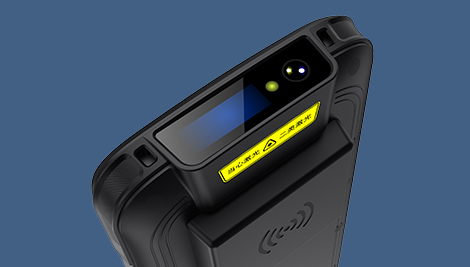
Industrial-grade PDA terminals resolve these issues through integrated hardware and customized software, establishing foundational infrastructure for utility digitalization.
II. Technical Advantages & Scenario-Based Applications
Hardware Resilience: Engineered for harsh environments like underground meter pits and damp pipe channels:
IP65 dust/water resistance
1.5m drop resistance
High-luminance displays for sunlight visibility
Example: Specific models operate at -20°C to 60°C, adapting to regional climate variations.
Precision Data Capture & Transmission:
Barcode/QR code scanning via laser technology
Physical keypad input
<3 seconds per meter reading
Encrypted data storage preventing tampering
Real-time 4G/5G/Wi-Fi dual-channel uploads
Anomaly Management & Maintenance:
Automated flagging of meter reversal/flow abnormalities
Historical data curves with GPS positioning
Documented outcome: 60% faster leak detection, reducing annual water waste by 500,000+ tons
III. From Tool to Platform: Management Paradigm Shift
Deep ERP integration enables systemic transformation:
Dynamic Dispatch: GIS heatmaps boost daily readings per worker by 3x
User Service: On-site bill printing and tiered pricing explanations cut complaints by 45%
Asset Management: 20+ parameter tracking (installation dates/maintenance) reduces meter upkeep costs by 28%
IV. Case Study: Smart Transformation in New First-Tier City
Post-2025 deployment in an 8-million-resident city:
Metric Before After
Reading Cycle 30 days 7 days
Labor Input 100% ↓60%
Annual Savings - ¥20M+
Data Accuracy 89% 99.9%
Leak Detection - Saves reservoir-level water annually
V. Future Evolution: IoT-Driven Advancements
Next-gen terminals leveraging NB-IoT technology:
Predictive Maintenance: Failure alerts 30 days early via vibration/flow noise analysis
Energy Optimization: 72h+ battery with solar assist
Open Ecosystem: API integration with gas/electricity systems
Conclusion
PDA handheld terminals represent dual evolution in operational tooling and management philosophy. By liberating field workers and establishing digital foundations for precision operations, these devices are redefining modern infrastructure standards—where every water drop is accurately measured, every inspection leaves digital traces, and urban lifelines achieve unprecedented operational intelligence.