

In high-risk industrial sectors such as petroleum and natural gas, the safety, stability, and operational efficiency of equipment directly impact production benefits and personnel safety. As a mobile tool specifically designed for complex environments, the explosion-proof handheld smart terminal PDA (Personal Digital Assistant) has become a core asset in scenarios like oilfield inspections, equipment maintenance, and data collection, thanks to its robust functional configuration. This article will deeply analyze how such terminals empower industrial applications from dimensions including explosion-proof safety, data management, communication collaboration, and positioning navigation.
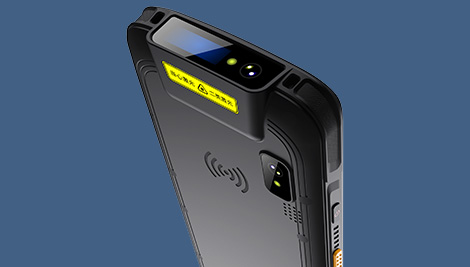
I. Explosion-proof Certification and Industrial-grade Protection: Building the Foundation for Safe Operations
Oilfield operating environments are filled with flammable and explosive gases, dust, and extreme temperature and humidity conditions. Ordinary electronic devices may trigger safety accidents due to static electricity or short circuits. The core value of explosion-proof PDAs lies in minimizing risks through multi-layered protective designs.
Intrinsic Safety Explosion-proof Technology
The device adopts an intrinsically safe (Ex ib IIC T4 Gb) explosion-proof design, which limits circuit energy and uses low-power components to ensure that even internal faults will not generate sparks or thermal effects sufficient to ignite explosive mixtures. This certification standard complies with international norms such as ATEX and IECEx, making it suitable for Zone 1/Zone 2 hazardous areas like oil and gas extraction and refineries.
Three-proof Body Structure
Dustproof and Waterproof: IP68-rated sealing technology prevents dust intrusion and maintains normal operation after immersion in 1.5 meters of water for 30 minutes, adapting to desert sandstorms or rainy seasons.
Impact and Drop Resistance: Passes MIL-STD-810G military standard tests, withstanding drops from 1.5 meters onto concrete surfaces. Rubber corner guards and anti-slip textures reduce accidental damage risks.
Wide-temperature Operation: Operates within a -20°C to 60°C range, covering frigid oilfields and high-temperature well sites. Built-in temperature control systems prevent battery overheating or shutdown in low temperatures.
II. Professional Data Collection: Accurately Empowering Production Processes
The core mission of explosion-proof PDAs is to replace traditional paper-based records by enhancing operational standardization through efficient data collection. Their functional designs address key pain points in industrial scenarios:
Multi-dimensional Barcode Scanning Engine
Integrates high-precision 1D/2D barcode scanning modules, supporting DPM (Direct Part Marking) barcode recognition to read equipment codes through oil stains or worn labels.
Equipped with red light fill lights and auto-focus systems, enabling rapid barcode capture in dim downhole environments or under direct strong light, with a single-scan response time of ≤0.3 seconds.
Industrial-grade RFID Reading/Writing
Built-in UHF (Ultra-High Frequency) RFID module supports ISO 18000-6C protocol, allowing batch reading of electronic tags attached to pipelines or valves within 10 meters, improving inventory efficiency by 80%.
Anti-metal interference design ensures stable reading/writing when tags are near metal equipment, preventing data omissions.
High-sensitivity Data Entry
Dual operation modes (physical buttons and touchscreen): Physical buttons are glove-operable for on-site tasks, while the 5.5-inch Corning Gorilla Glass touchscreen supports wet-hand/glove touch to avoid mis-touches from oil contamination.
Customizable shortcut keys: Users can preset common workflows like inspection routes or equipment checks, enabling one-key access to data templates and reducing repetitive inputs.
III. Real-time Communication and Collaborative Operations: Breaking Data Silos
In dispersed oilfield operating areas, information exchange between devices is crucial for improving response speed. Explosion-proof PDAs build mobile operation networks through multi-mode communication technologies:
Private Network Communication Capabilities
Supports DMR digital/analog integrated intercom, connecting to existing oilfield wireless communication systems for group calls, single calls, and emergency calls.
Features PoC (Push-to-Talk over Cellular) public network intercom, enabling cross-regional real-time calls via 4G/5G networks. In signal-blind areas, it automatically switches to satellite communication (requires external devices).
Data Synchronization and Sharing
Built-in Mesh self-organizing network module allows devices to establish peer-to-peer or chain networks automatically in public-network-free environments, ensuring real-time transmission of inspection data to central control rooms.
Supports Wi-Fi 6 and Bluetooth 5.2, connecting to peripherals like portable printers or gas detectors for on-site data printing or sensor data aggregation.
IV. High-precision Positioning and Navigation: Accurate Guidance in Complex Scenarios
Oilfield equipment is widely distributed across complex terrains. Explosion-proof PDAs ensure precise operation paths through multi-source positioning technologies:
Dual-frequency GNSS Positioning
Integrates BeiDou III + GPS dual-mode chips, supporting L1+L5 dual-band signal reception to maintain ≤3-meter positioning accuracy in obstructed well sites or canyons.
Includes an electronic compass and barometer to output 3D orientation data, assisting operators in judging device direction and altitude changes.
Offline Maps and Path Planning
Pre-installed high-precision oilfield vector maps support custom point-of-interest annotations (e.g., valve locations, historical leak points).
Automatically generates inspection routes avoiding hazardous areas after inputting destinations, displaying real-time position, target direction, and distance.
V. Extended Battery Life and Convenient Maintenance: Ensuring All-weather Operations
To meet continuous oilfield operation demands, explosion-proof PDAs prioritize "durability" in power management and maintenance designs:
Modular Battery System
Uses removable dual batteries, with each 5000mAh+ battery supporting 12 hours of continuous operation. Hot-swap functionality allows battery replacement without shutdown.
Equipped with intelligent power management chips that automatically deactivate idle modules (e.g., Wi-Fi, GPS) to extend battery life, prioritizing communication and positioning functions during low power.
Rapid Maintenance Design
Sealed interfaces employ magnetic charging docks to avoid contact failures from frequent plugging.
Modular motherboard supports quick replacement, enabling on-site technicians to replace faulty components within 10 minutes, minimizing downtime.
VI. Application Scenario Expansion: From Data Collection to Decision Support
With functional iterations, explosion-proof PDAs have evolved from simple data collection tools into mobile operation hubs.