

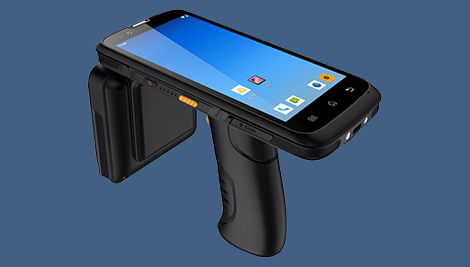
In the wave of digital transformation in the retail industry, the efficiency and accuracy of inventory management directly impact a company's operational costs and customer satisfaction. As a key carrier of IoT technology, the wireless RFID handheld terminal PDA, with its characteristics such as contactless data collection and simultaneous multi-label recognition, is reshaping the outbound management process for retail chains. This article will deeply analyze the technical advantages and application value of RFID reader handheld terminals in retail outbound scenarios from a functional perspective, providing practical references for industry practitioners.
I. Core Function Analysis: Building an Intelligent Outbound Management System
Ultra-High Frequency Multi-Label Instant Reading Capability
Traditional barcode scanning requires aligning with each label one by one, whereas RFID reader handheld terminals can achieve batch recognition of hundreds of tags within a 3-25 meter range through UHF ultra-high frequency technology. In retail outbound scenarios, staff only need to scan entire boxes of goods with the device, and the system automatically matches order information, increasing picking efficiency by 3-5 times. For example, when apparel retailers handle bulk transfers, a single scan can complete inventory reduction for an entire pallet of goods, significantly reducing manual operation time.
Dynamic Inventory Visualization and Tracking
The built-in RFID read-write module can read the EPC code of electronic tags in real time, combined with the enterprise ERP system, to achieve end-to-end inventory tracking from central warehouses to stores. During the outbound process, the system automatically verifies key information such as batch numbers, expiration dates, and SKU attributes, with vibration alerts or screen highlighting for abnormal data, preventing wrong shipments and missing items. Data from a chain supermarket shows that RFID solutions increase outbound accuracy to 99.99%.
Enhanced Environmental Adaptability Design
Designed for complex retail storage environments, professional-grade handheld terminals feature an IP65-rated dustproof and waterproof body that can withstand 1.5-meter drop impacts. Specially designed anti-metal interference antennas ensure stable reading performance in scenarios with dense shelves or numerous metal containers. Some models support a wide operating temperature range of -20°C to 60°C, suitable for special scenarios like cold chain outbound operations.
Offline Cache and Breakpoint Resume Mechanism
Considering the impact of network fluctuations on real-time performance, the device has a built-in large-capacity storage chip that can temporarily store thousands of outbound records. When Wi-Fi/4G signal recovery is detected, data is automatically synchronized to the cloud server, ensuring business continuity. This function is particularly important in remote stores or warehouses with insufficient network coverage.
Human-Machine Interaction Optimization Design
RFID reader handheld terminals adopt industrial-grade touch screens of 5.5 inches or larger, supporting glove operation and wet-hand mode to meet warehouse environment demands. Customized UI interfaces condense core functions into three main menus, shortening new employee training cycles to within 2 hours. Some models integrate barcode scanning engines as redundant solutions to address compatibility issues with special tags.
II. Scenario-based Applications of RFID Reader Handheld Terminal PDA: Reconstructing the Entire Outbound Workflow
Intelligent Wave Picking
The system generates optimized picking paths based on order priority and goods storage locations, with the handheld terminal guiding staff sequentially through voice navigation. During box outbound, the device automatically compares pre-loaded lists with physical tags, pushing discrepancies to the PDA screen in real time, reducing manpower in the review process.
Dynamic Pallet Management
To meet frequent store transfer demands in retail, the device supports custom palletizing rules. After scanning the first item tag, the system automatically recommends grouping goods of the same batch and route, with vibration feedback suggesting optimal loading plans to improve delivery vehicle utilization rates.
Reverse Logistics Handling
In return and inbound scenarios, the RFID handheld terminal quickly identifies product RFID tags and automatically associates them with original sales orders. For non-channel goods, the system instantly retrieves anti-counterfeiting databases for verification, effectively intercepting diverted products. A 3C retailer reported a 60% efficiency improvement in reverse logistics after implementation.
Expiration Warning Management
By reading TTI (Time Temperature Indicator) data built into tags, the device can intercept outbound shipments of freshness-sensitive goods like produce or pharmaceuticals. The system recommends picking sequences based on a first-expired-first-out principle and displays expiration countdowns on screen, controlling near-expiry product loss rates to within 0.01%.
III. Technical Extensions: Building a Digital Foundation for Retail Logistics
Deep Integration with WMS Systems
Through API interfaces, seamless connections are achieved with mainstream warehouse management systems (e.g., Manhattan, Fulger), with outbound data transmitted in real time to TMS transportation management systems to automatically generate electronic packing lists and delivery routes. A cross-regional chain enterprise reported an 18% reduction in overall logistics costs with this solution.
Blockchain Traceability Interface Reservation
The device supports writing key node data required for blockchain distributed ledgers, creating tamper-proof digital identities for each product. In luxury goods outbound scenarios, it records the complete flow trajectory from central warehouses to stores, enhancing brand anti-counterfeiting capabilities.
AI-Assisted Decision Scalability
The hardware architecture reserves computing space. In the future, edge computing modules could enable dynamic resource allocation during outbound peaks or predict store replenishment needs based on historical data.
IV. Selection Suggestions and Implementation Points
When selecting RFID reader handheld terminal PDAs, enterprises should focus on:
Reading Sensitivity: Prioritize models supporting EPC C1G2 protocol with reading rates ≥99%
Battery Life: Recommend configurable detachable dual-battery modules for 8-hour continuous operation
Expansion Interfaces: Reserve USB-C, RS232, and other ports for future technical upgrades
After-Sales Service: Require suppliers to provide 7×24 remote diagnostics and 48-hour standby machine services
During implementation, note:
Establish mapping relationships between RFID tags and existing barcodes
Conduct environmental tests for special materials (e.g., metal shelves, liquid containers)
Develop equipment SOPs to standardize scanning angles and distance parameters
Perform regular antenna sensitivity calibration and firmware updates
Conclusion
RFID reader handheld terminal PDAs are evolving from simple data collection tools into intelligent hubs for retail logistics. Through deep integration with IoT technology, they not only reduce costs and enhance efficiency in outbound operations but also establish a data foundation for achieving omnichannel inventory visibility and precise supply chain decision-making. With the integration of emerging technologies like UWB precision positioning and passive IoT, RFID handheld terminals will continue driving the retail industry toward intelligent and flexible evolution.