

In the digital wave sweeping across all industries today, the field of government law enforcement is undergoing a critical transition from traditional models to intelligent and mobile transformation. As core equipment at the law enforcement scene, the mobile law enforcement PDA (Personal Digital Assistant) terminal has become an essential tool for enhancing efficiency and standardizing processes, thanks to its portability, real-time capability, and integration. This article delves into the core functional dimensions, analyzing how these terminals empower technology and adapt to scenarios to build a comprehensive digital solution for the entire law enforcement workflow.
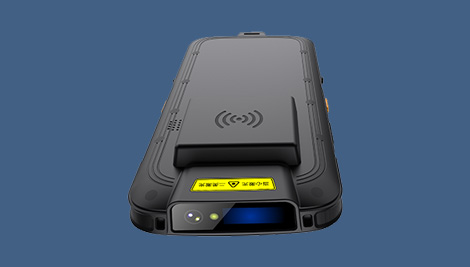
I. All-Scenario Data Collection: The Foundation of Building an Evidence Chain
Evidence fixation at the scene is the primary step in case handling. The mobile law enforcement PDA terminal integrates high-definition cameras, professional scanning modules, and audio recording components to achieve precise collection of multi-dimensional data, including text, images, and audio:
High-Definition Imaging: Equipped with professional-grade cameras supporting 4K video recording and multiple optical zoom, the device captures fine details at the scene. For instance, in traffic violation evidence collection, it automatically annotates metadata like time, location, and license plate numbers, generating electronic evidence packages compliant with judicial standards.
Barcode/QR Code Rapid Identification: A built-in high-precision scanning engine reads barcode information on documents such as business licenses, ID cards, and permits within seconds. Real-time verification against backend databases effectively prevents forged document risks.
Voice Transcription and Archiving: Using directional noise-canceling microphones and intelligent voice modules, the device clearly records law enforcement dialogues with automatic segmentation and storage. It supports key phrase tagging and retrieval playback, providing complete audio archives for reviewing enforcement processes.
II. Real-Time Communication and Collaboration: Connecting Law Enforcement Command Links
The mobile law enforcement terminal serves not only as a data collection tool but also as a neural hub linking frontline operations with rear command centers. Multi-modal communication technologies enable instant coordination across levels and departments:
5G Private Network Encrypted Transmission: Leveraging government-exclusive 5G channels, it ensures low latency and high security during data transmission. For example, in environmental law enforcement, pollution data exceeding standards can be transmitted in real-time to command centers, triggering emergency response mechanisms.
Group Intercom and Video Conferencing: Supporting POC (Push-to-Talk Over Cellular) public network intercom, it enables instant voice dispatch for cross-regional teams. In complex cases, multi-party video conferences can be initiated with legal departments and technical experts for remote consultation.
Geofencing and Personnel Positioning: Based on BeiDou/GPS dual-mode positioning, it displays real-time officer locations on digital maps. Managers can set virtual geofences, triggering automatic alerts if vehicles or personnel deviate from routes, enhancing team management efficiency.
III. Business System Integration: Creating a Mobile Law Enforcement Hub
By deeply adapting to law enforcement agency needs, the PDA terminal acts as a mobile workstation integrating multiple functions:
Standardized Law Enforcement Process Engine: Pre-loaded templates for administrative inspections, penalties, and enforcement guide step-by-step operations. In market regulation, for instance, it auto-generates on-site inspection forms to record items, results, and rectification requirements.
Electronic Document E-Signature: Supporting electronic form filling and digital signatures, parties can sign directly on the touchscreen. Documents upload instantly to law enforcement systems, enabling a paperless workflow from on-site enforcement to archiving.
Intelligent Legal Retrieval: A built-in database covering administrative penalty laws and regulations allows keyword fuzzy searches and related provision recommendations. Inputting violation keywords prompts automatic suggestions of applicable laws and discretion benchmarks.
IV. Security Protection System: Fortifying Data Security Defenses
Given the sensitivity of law enforcement data, the terminal implements multi-layered security from hardware to software:
National Encryption Algorithm Storage: Using SM4 national encryption algorithms, local data remains unreadable even if the device is lost. Critical data transmission via VPN tunnels ensures link security.
Biometric Authentication: Integrated fingerprint recognition and facial unlock provide dual authentication for device startup and app access. Some models support iris recognition for high-level security needs.
Remote Device Management: Administrators can remotely lock or wipe data via backend systems. Self-destruct protocols activate upon detecting tampering, safeguarding data integrity.
V. Environmental Adaptability and Humanized Design
Designed for complex enforcement scenarios, the terminal optimizes industrial durability and user interaction:
Military-Grade Protection: IP67 dust and water resistance, withstanding 1.5-meter drops, adapts to extreme conditions like heat, cold, rain, or snow. For example, it operates reliably in downpours during urban management enforcement.
Long Battery Life and Fast Charging: High-capacity batteries and smart power-saving algorithms support 12 hours of continuous use. Fast charging enables 4 hours of operation from a 30-minute charge, alleviating power concerns in fieldwork.
Ergonomic Interaction: A 5.5-inch HD screen with physical buttons allows glove operation. Some models feature wet-touch capability for rainy scenarios.
VI. Industry Application Expansion
Continuous functional iterations extend the terminal's application boundaries:
Market Regulation: Verifying business registrations, food safety sampling, and price violation evidence collection.
Ecology and Environment: Monitoring enterprise emissions, recording samples, and tracking rectifications.
Cultural Law Enforcement: Inspecting publication copyrights, internet cafe ID systems, and cultural relics patrols.
Emergency Management: Assessing disasters, identifying hazards, and verifying relief supplies.
Conclusion
The evolution of government mobile law enforcement PDA terminals epitomizes the shift from "human-driven" to "data-driven" law enforcement. By embedding enforcement standards into hardware functions and transforming experience into digital assets, these devices reshape frontline work paradigms. As IoT and big data technologies advance, they will evolve toward greater intelligence, collaboration, and security, becoming indispensable neural endpoints in digital government.