

In the field of warehouse management, PDA handheld devices have become a core tool for enhancing operational efficiency and reducing human errors, thanks to their efficient data collection capabilities and real-time information synchronization functions. This article focuses on the two core functions of voice broadcast and inventory check, combining practical scenarios and industry cases to deeply analyze their technical implementation and application value in warehouse management.
I. Basic Functional Architecture: Data Collection and Real-time Synchronization
1.1 Multi-modal Data Collection
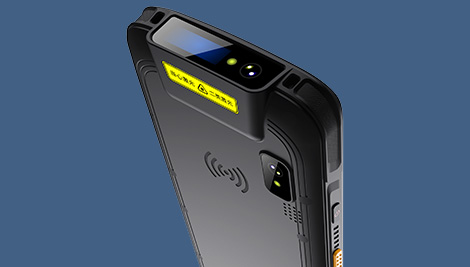
PDA handheld devices integrate high-performance scanning modules to support multi-dimensional barcode recognition, such as 1D barcodes, QR codes, and DPM codes (Direct Part Marking codes). They maintain high-precision scanning even in harsh barcode environments, such as sub-silver materials, oil stains, or damaged codes. For example, a cross-border e-commerce company in Guangzhou deployed PDA equipment, increasing its average daily order processing volume from 8,000 to 20,000 orders while reducing the mis-shipment rate from 3% to 0.01%. Some models also feature RFID readers, enabling rapid batch inventory checks through non-contact electromagnetic wave transmission, significantly improving operational efficiency in complex warehouse environments.
1.2 Real-time Data Transmission
The devices support multi-mode communication, including Wi-Fi, Bluetooth, and 4G/5G, to synchronize collected data in real time to WMS (Warehouse Management System) or ERP (Enterprise Resource Planning system). For instance, in a frozen goods warehouse, seamless integration between PDA and cloud systems kept inventory data errors within ±5 minutes, saving over RMB 120,000 annually in mis-shipment compensation. Additionally, the devices support an offline caching mechanism, ensuring data can be temporarily stored during network instability and automatically transmitted upon recovery.
II. Voice Broadcast: Full-process Optimization from Instruction Reception to Execution
2.1 Scenario-based Voice Interaction Design
The voice broadcast function runs through the entire warehouse operation process, using TTS (Text-to-Speech) technology to convert system instructions into clear voice prompts, freeing operators' hands. Specific application scenarios include:
Receiving stage: After scanning a product barcode, the system automatically broadcasts "Product name: XX, Expected quantity: 100 pieces" to assist quick verification by receiving staff.
Picking path navigation: Combined with warehouse map data, voice guidance such as "Move forward 5 meters, turn right to shelf B" reduces walking distance by 30%.
Exception alerts: When a damaged barcode or quantity mismatch is scanned, it immediately triggers warnings like "Invalid barcode, please rescan" or "Actual quantity: 98 pieces, missing 2 pieces".
2.2 Anti-interference and Customized Technical Implementation
To address noise issues in warehouse environments, the devices use high-sensitivity microphones and directional speakers to ensure voice commands remain audible even in noise levels above 75dB. Some models support dialect recognition optimization, such as configuring Cantonese voice packs for warehouses in Guangdong. Technically, by integrating third-party offline TTS engines (e.g., iFlytek Voice Note), they meet voice broadcast needs in intranet environments without internet; a manufacturing company's tests showed offline voice response delays below 200ms.
III. Inventory Check: Evolution from Manual to Intelligent Verification
3.1 Multi-dimensional Verification Mechanisms
PDA handheld devices achieve precise inventory checks through the following methods:
Barcode-quantity dual verification: After scanning a product barcode, the system automatically compares actual quantities with system records and triggers alerts if differences exceed thresholds.
Batch and expiry management: In pharmaceutical warehousing, the device can identify batch numbers and broadcast "Production date: 2025-06, Expiry date: 2027-06".
Location verification: By scanning storage location barcodes, it confirms if goods are placed correctly, avoiding inventory chaos from misplacement.
3.2 Dynamic Inventory Strategies
The devices support two modes:
Cycle counting: Partial inventory of high-value or fragile goods at preset intervals (e.g., weekly), improving efficiency by 40% in a 3C warehousing case.
Full inventory: Guided by voice commands, operators scan the entire warehouse along specified paths, with the system generating real-time discrepancy reports; a garment company reduced year-end inventory time from 72 to 24 hours.
IV. System Integration and Expandability Design
4.1 Cross-platform Compatibility
The devices support collaborative operations with hardware like AGVs (Automated Guided Vehicles) and smart sorting lines. For example, in an e-commerce warehouse, scanning a shipping order with a PDA automatically triggers AGV path planning, enabling an integrated "scan-pick-transport" process. At the software level, API interfaces connect with major e-commerce platforms' OpenAPIs for automatic order fetching and status updates.
4.2 Modular Expansion Architecture
Base models can expand with features like:
NFC near-field communication: For contactless identity verification in valuable goods management.
DPM code reading: Providing dedicated decoding algorithms for barcodes directly engraved on metal surfaces, such as automotive parts.
Fingerprint recognition: Biometric verification for operator identity in high-security scenarios.
V. Industry Application Cases and Cost-Benefit Analysis
5.1 Typical Implementation Cases
A cross-border e-commerce firm in Guangzhou: Deploying PDA systems increased order processing capacity by 150% during Double Eleven, with mis-shipment rates below 0.01% and system stability at 99.9%.
A pharmaceutical distribution company: Using voice broadcast + RFID technology, it achieved full-process temperature monitoring and alerts for cold-chain drugs, with real-time data uploads to GSP (Good Supply Practice) systems.
5.2 Investment Return Model
For a 50-person warehouse:
Hardware investment: PDA devices (RMB 2,000/unit) × 30 units = RMB 60,000, plus annual RFID tag costs of ~RMB 20,000.
Efficiency gains: 50% labor efficiency improvement saves RMB 360,000 annually; reduced mis-shipment compensation saves RMB 120,000.
Payback period: ~5 months, with a 3-year ROI of 320%.
Conclusion
Voice broadcast inventory check PDA handheld devices are reshaping warehouse management operations through data collection, real-time synchronization, scenario-based voice interaction, and multi-dimensional verification. Their value lies not only in efficiency gains and cost savings but also in building precise, transparent, and traceable modern warehouse systems through technological empowerment. As IoT and AI technologies deepen integration, PDA devices will continue evolving, providing stronger hardware support for industry digital transformation.