

In the construction of smart transportation systems, ETC (Electronic Toll Collection) serves as a core infrastructure, and its operational efficiency directly impacts the traffic capacity of the national highway network. PDA handheld terminal devices, with their portability, multifunctionality, and high reliability, have become indispensable intelligent tools in ETC toll collection scenarios. This article will deeply analyze the key role of PDA in ETC toll collection from three dimensions: device functional architecture, scenario-based applications, and technical advantages.
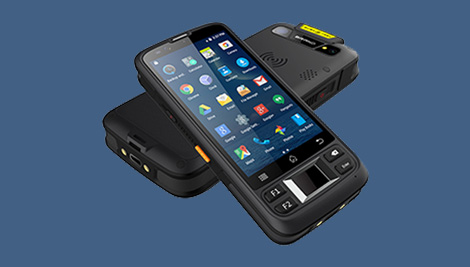
Core Functional Architecture: Building the Mobile Nerve Center for ETC Toll Collection
1. Multi-modal Communication Capabilities
Modern PDA devices integrate 4G/5G full-network modules to support real-time data transmission. In ETC toll collection scenarios, when vehicles pass through toll stations, the devices can instantly upload license plate information and transaction data to provincial networked toll centers, ensuring billing accuracy. Some high-end models support dual-band Wi-Fi and Bluetooth 5.0, enabling seamless connections with peripheral devices such as vehicle-mounted OBU units and portable printers.
2. High-precision Data Acquisition System
RFID/NFC Dual-mode Recognition: Built-in 13.56MHz high-frequency RFID reader can quickly read ETC user card information while supporting NFC near-field communication for compatibility with mobile payments.
License Plate Recognition Engine: Equipped with an 8-megapixel autofocus camera combined with image recognition algorithms, maintaining recognition accuracy in complex environments such as strong light, backlight, rain, and fog.
QR Code Scanning Module: Supports multiple formats like QR codes and DM codes, meeting extended needs such as electronic invoice verification and coupon validation.
3. Mobile Payment Integration Solutions
Devices come pre-installed with UnionPay-certified payment modules, supporting:
All-channel Payments: WeChat/Alipay QR code payments, UnionPay QuickPass, and digital RMB hard wallets.
Offline Transaction Capability: Caches transaction data offline and automatically transmits it when the network is restored.
Security Encryption System: Certified by PCI PTS, using SE chips to store keys and ensuring end-to-end encryption of transaction data.
4. Industrial-grade Protection Design
Designed for outdoor operations, PDA handheld terminal devices meet IP65 protection standards and withstand 1.5-meter drop impacts. Built-in 6000mAh low-temperature batteries ensure continuous operation for 10 hours in -10°C environments. Featuring Corning Gorilla Glass touchscreens, they support glove operation and wet-hand touch control.
Scenario-based Applications: Reshaping the Entire ETC Toll Process
1. ETC Exception Handling
PDA plays a critical role in situations like:
Tag Failures: Reading ETC card information via NFC to manually trigger transactions.
Lane Congestion: Serving as mobile toll terminals to quickly process non-ETC vehicles.
Blacklisted Vehicle Interception: Real-time online verification of vehicle status for on-site handling of toll-evading vehicles.
2. Mobile Inspection and Patrol
Traffic enforcement officers use PDA for:
Dynamic Weighing Detection: Connecting to portable weight sensors via Bluetooth for on-site evidence collection of overloaded vehicles.
Road Asset Damage Verification: Taking photos that automatically link to geographic locations to generate electronic work orders.
Toll Collector Attendance Monitoring: Completing clock-ins via NFC near-field communication to ensure staff presence rates.
3. Parking Fee Extension Applications
In roadside parking scenarios, PDA enables:
Geomagnetic + PDA Synergy: Receiving signals from geomagnetic sensors to automatically record parking start and end times.
Multi-space Management: A single device monitors multiple parking spaces, using audio prompts to distinguish different zones.
Electronic Invoice Push: Automatically generating PDF invoices after transactions and pushing them to users via SMS or apps.
Technical Advantages and Industry Value
1. Efficiency Improvement Data Evidence
Traffic Efficiency Increase: Tests on Nanjing Airport Expressway show that using PDA handheld terminals reduces exception handling time and increases lane throughput.
Labor Cost Reduction: Statistics from a provincial highway operator indicate that after device deployment, the number of lanes managed per toll collector increased.
Evasion Rate Decline: Real-time data comparison has led to significant monthly recovery of evaded tolls on certain routes.
2. System Compatibility and Scalability
Devices support:
Ministry Network Center Standard Protocols: Compatible with the national ETC networked toll system.
Third-party System Integration: Providing SDK development kits for integration with provincial audit platforms and credit management systems.
IoT Expansion: Reserved RS485/RS232 interfaces support connections to peripheral devices like vehicle-mounted ETC antennas and ID card readers.
3. Data Security Assurance System
Two-factor Authentication: Operators require fingerprint and employee ID password verification.
Data Integrity Protection: Using blockchain notarization technology to ensure transaction records are tamper-proof.
Privacy Information Masking: Sensitive data like license plate numbers are automatically encrypted during transmission.
Future Development Trends
AI-empowered Smart Decision-making: Integrating edge computing chips for localized transaction risk identification.
5G + BeiDou High-precision Positioning: Supporting lane-level positioning to enable free-flow tolling.
Green Energy Solutions: Solar-assisted charging systems to extend field operation endurance.
Cross-platform Collaboration: Deep integration with smart roadside devices and C-V2X vehicle-road cooperative systems.
Conclusion
As the mobile terminal of the ETC toll collection system, PDA handheld terminal devices are driving toll models toward smarter and more efficient directions through continuous technological iterations. Their powerful functional integration and scenario adaptability not only solve pain points in traditional toll methods but also provide key technical support for building a nationwide smart highway network. With the deep application of technologies like 5G and AI, PDA devices will play an even more vital role in the digital transformation of transportation.