

In today's fast-paced business environment, how can enterprises achieve efficient data collection and management? As an intelligent device integrating barcode scanning, data processing and mobile computing functions, the barcode terminal PDA is becoming a key tool for improving operational efficiency in industries such as retail, logistics and manufacturing. This article will delve into the core functions, application scenarios, and purchasing guidelines of the barcode scanning terminal PDA, helping enterprises find solutions that suit their own needs.
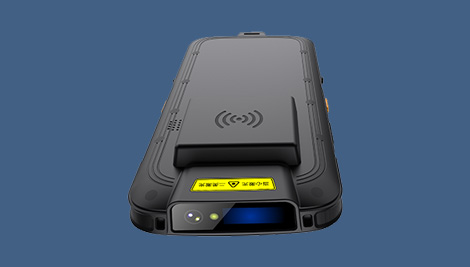
I. Core Value of Scanning Barcode Terminal PDA
The barcode scanning terminal PDA (Portable Data Acquisition Terminal) is an intelligent device that perfectly combines barcode scanning technology with mobile computing capabilities. It fundamentally resolves the problems of low efficiency and high error rate in traditional manual data entry, bringing significant operational optimization to enterprises.
Innovation in data collection : The traditional manual recording method is not only time-consuming and labor-intensive, but also prone to errors. The barcode scanning terminal PDA has achieved the automation of data collection by quickly and accurately scanning barcodes, increasing work efficiency by 3 to 5 times and reducing the error rate to nearly zero. In inventory taking scenarios, the work efficiency of using PDA devices can be more than four times that of manual methods.
Real-time data transmission capability : most modern barcode terminal PDAs are equipped with wireless communication modules (Wi-Fi, 4G/5G, etc.), which can achieve real-time upload and synchronization of scanned data. This feature has completely transformed the traditional working mode of "recording first and then entering", enabling managers to keep abreast of new business data at any time and providing support for rapid decision-making. In the logistics sorting center, real-time data updates can reduce the tracking time of packages from hours to minutes.
Multi-functional integrated design : The barcode terminal PDA not only has barcode scanning function, but also integrates multiple data collection methods such as RFID reading, fingerprint recognition, and NFC communication. One device can meet the diverse needs in complex scenarios, avoiding the trouble of carrying multiple devices. In the medical industry, PDAs integrated with RFID functions can simultaneously manage drug barcodes and patient wristband information, significantly enhancing the level of medical safety.
Durable and robust features : Barcode terminal PDAs designed for industrial environments typically have an IP65 or higher protection level, capable of withstanding harsh conditions such as drops, dust, and water immersion. This durability ensures the stable operation of the equipment in harsh environments such as warehouses and workshops, significantly reducing the equipment failure rate and maintenance costs. Test data shows that the average mean time between failures of industrial-grade PDAs can reach more than five years.
Ii. Industry Application Scenarios of Scanning Barcode Terminal PDAs
The application of barcode scanning terminals (PDAs) has permeated various industries and become a fundamental tool for digital transformation. Understanding these application scenarios helps enterprises better recognize the potential value of PDA devices.
Retail industry solutions
In the retail sector, the scanning barcode terminal PDA has enabled precise inventory management and intelligent sales processes. Youdaoplaceholder0 real-time inventory visualization is one of the major benefits for retail enterprises using PDA devices. Store staff can conduct inventory inquiries, inventories and transfers anytime and anywhere, shortening the traditional quarterly inventory cycle to a daily operation that can be carried out at any time. After a large chain supermarket introduced the PDA system, the inventory accuracy rate increased from 78% to 99.9%, and the out-of-stock rate decreased by 60%.
The mobile POS function is another highlight of modern retail PDA. During the promotion season or peak hours of customer flow, store staff can directly complete the scanning and payment of goods using PDAs, significantly reducing customers' queuing time and enhancing the shopping experience. Data shows that the average single-store sales of stores equipped with mobile POS can increase by 15-20%.
Price verification and loss prevention management is also an important application of retail PDA. Shop assistants can quickly verify the consistency between the prices of goods on the shelves and the system data, and promptly identify and correct price errors. Meanwhile, by regularly scanning high-value goods, the rate of goods theft has been effectively reduced.
Efficient operation of logistics and warehousing
The logistics industry is one of the fields where barcode scanning terminals (PDAs) are most widely applied. The full-process traceability system realizes full-process barcode management from warehousing, sorting, outbound to distribution through PDA. Each scanning operation at every stage automatically records the time, location and operator information, providing a data foundation for logistics timeliness analysis and problem traceability. After a certain express delivery company deployed the PDA system, its sorting efficiency increased by 40% and the missorting rate dropped below 0.1%.
Intelligent sorting guidance is an innovative application of PDA in logistics centers. The system, based on the scanned barcode information, guides the operator to deliver the package to the correct slot through the screen or indicator lights, significantly reducing the difficulty of training new employees and the sorting error rate. Practice has shown that this guided sorting method can enable new employees to reach the productivity level of skilled workers within three days.
In terms of delivery process optimization , couriers can use PDA scanning to achieve electronic signature, route optimization and real-time reporting of abnormal situations. Customers can check the location of their packages and the estimated delivery time in real time, significantly enhancing service transparency and customer satisfaction. Data from a certain e-commerce platform shows that the average daily delivery volume of delivery personnel using PDAs has increased by 25%, while the complaint rate has decreased by 35%.
Manufacturing production management
The application of barcode terminals (PDAs) in the manufacturing industry mainly focuses on two major fields: production traceability and quality management . Through work-in-progress identification barcodes, PDAs can collect production data of each process in real time and build a complete production history. When quality issues occur, the affected product batches can be quickly located, and precise recalls can be carried out, significantly reducing quality costs. The application of the PDA traceability system in automotive parts enterprises shows that it can reduce the handling time of quality problems by 70%.
Material distribution management is another important application of manufacturing PDA. By scanning the material barcodes and location labels, the PDA ensures that the correct materials are delivered to the correct location at the correct time, effectively avoiding problems such as wrong materials and material shortages. After a certain electronic products manufacturer introduced the PDA material system, the downtime of its production line was reduced by 45%.
In terms of equipment inspection and maintenance , staff can scan the barcode of the equipment with PDA to retrieve the inspection list and historical records, enter the inspection results on site and automatically generate the maintenance plan. This digital management approach has reduced the equipment failure rate by 30-50%.
Medical health and safety applications
The demand for barcode terminal PDAs in the medical industry mainly focuses on two aspects: patient safety and drug management . By scanning the patient's wristband and the barcode of the medicine, the PDA has achieved "five correct" medication management: the correct patient, the correct medicine, the correct dosage, the correct route and the correct time. Studies show that this barcode management system can reduce medication errors by more than 85%.
During the specimen collection and submission process , PDA ensures that each specimen is accurately associated with patient information, avoiding sample confusion and false reporting of test results. Meanwhile, by recording the collection time and the submission time for testing, the timeliness of specimen transportation can be effectively monitored.
In terms of asset and equipment management , the hospital uses PDAs to regularly scan the barcodes of medical equipment, record their locations, usage status and maintenance history, which has improved the utilization rate of equipment and maintenance efficiency. A report from a certain hospital shows that PDA asset management has reduced the equipment inventory time from two weeks to two days and increased the equipment utilization rate by 20%.
Iii. How to Choose the Right Barcode Scanning Terminal PDA
In the face of a wide variety of barcode terminal PDA products on the market, how should enterprises make wise choices? The following key considerations will help you find the equipment that suits your business needs.
Scanning performance evaluation
Barcode type compatibility is the primary consideration when choosing a PDA. The types of barcodes used in different industries vary, ranging from traditional one-dimensional barcodes to two-dimensional barcodes, stacked barcodes, etc. Pdas should be capable of recognizing all common barcode types. It is particularly important to note that some special industries may use micro barcodes or high-density barcodes, which places higher demands on the scanning accuracy of PDAs. For instance, the electronic components industry often employs micro-barcodes, which require PDAs to be equipped with high-resolution scanning engines.
The scanning distance and Angle directly affect work efficiency. Warehouse applications typically require long-distance scanning ranging from 2 to 15 meters, while retail cash registers focus on rapid identification at close range. An excellent PDA should have a wide range of scanning depth of field and Angle tolerance, allowing the operator to successfully scan at different distances and angles. Tests show that high-quality scanning engines can maintain a high recognition rate within the tilt range of 0 to 60 degrees.
Scanning speed is a key indicator of efficiency. The scanning speed of PDA can reach multiple times per second, greatly enhancing work efficiency in high-traffic environments. During the peak period of express delivery sorting, a difference in scanning speed between 0.3 seconds and 0.1 seconds may lead to an overall efficiency difference of more than 15%.
Hardware configuration selection
Operating system selection is mainly divided into two camps: Android and Windows. Android system PDAs have a better application ecosystem and user experience, making them suitable for scenarios that require customized applications. Windows-based PDAs have more advantages in enterprise-level compatibility and security. In recent years, the market share of the Android system in the industrial field has grown to over 75%.
Processor performance determines the smoothness of PDA operation and its multitasking capability. The octa-core processor can easily handle complex enterprise applications, while the basic dual-core processor may experience lag when using large industry software. It is recommended to choose a configuration one level higher than the current demand to cope with business growth in the next 2 to 3 years.
Memory and storage configuration should be combined with actual application requirements. For scenarios where big data processing is frequently carried out, it is recommended to choose 4GB or more RAM and 64GB or more ROM. Simple data collection applications, on the other hand, can be configured with 2GB/32GB. It is worth noting that some industrial application software may occupy a large amount of storage space and needs to be evaluated in advance.
Battery life is crucial for mobile work. A high-quality PDA should support continuous use for 8 to 12 hours and offer replaceable batteries or fast charging functions. In special environments such as cold chain logistics, low temperatures can significantly reduce battery performance, so it is necessary to choose specially designed low-temperature resistant batteries.
Durability and protection grade
Drop height is an important indicator for industrial PDAs. High-quality equipment can withstand multiple drops from 1.5 to 2 meters onto a concrete floor without damage, which is much higher than the 0.5 to 1 meter standard for consumer-grade equipment. Actual test data shows that the pass rate of industrial-grade PDAs in the 1.8-meter drop test can reach over 95%.
The protection grade is usually indicated by IP codes. IP54 is dust and splash-proof, IP67 is short-term water immersion, and IP68 is continuous water immersion under specific conditions. Choosing an appropriate protection level based on the working environment can significantly extend the service life of the equipment. For damp environments such as food processing plants, it is recommended to choose at least IP67 grade.
The operating temperature range determines the suitability of the equipment in extreme environments. Standard commercial PDAs typically operate within a temperature range of 0 to 40℃, while industrial-grade PDAs can be extended to -20 to 50℃ or even a wider range. In the application of cold storage warehouses, the working capacity at -30℃ may be a necessary condition.
Communication and expansion functions
The wireless connection method should be selected based on the enterprise 's IT infrastructure. Dual-band Wi-Fi (2.4GHz/5GHz) can provide a more stable connection. 4G LTE supports wide area mobility; Bluetooth is used for peripheral device connections; NFC is applicable to scenarios such as identity verification. Modern PDAs are increasingly adopting Wi-Fi 6 and 5G technologies to provide higher bandwidth and lower latency.
The data acquisition extension function can significantly enhance the application value of PDA. The RFID reading capability is applicable to asset management. Fingerprint recognition enhances security; Infrared temperature measurement is suitable for special industrial scenarios. Image acquisition can be used for document digitization. Although PDAs that integrate multiple collection methods are relatively expensive, they can avoid the trouble of expanding functions later.
Peripheral compatibility is also an important consideration. An excellent PDA should support a variety of peripheral devices such as printers, monitors and payment terminals, and provide rich interface options (USB, HDMI, etc.). In retail scenarios, the ability to simultaneously connect ticket printers and customer displays may be a necessary feature.
Iv. Implementation and Optimization of Barcode Scanning Terminal PDA
The successful deployment of the barcode scanning terminal PDA system not only requires the selection of appropriate hardware, but also meticulous implementation planning and continuous optimization and improvement. The following are the key steps to ensure the success of the project.
System integration strategy
Seamless integration with the existing systems of the enterprise is the primary condition for the success of the PDA project. The PDA system needs to achieve real-time data synchronization with background systems such as ERP, WMS, and MES, which usually requires the development of dedicated interface programs. According to statistics, good system integration can increase the efficiency of data flow by more than 50% and reduce manual intervention links by 75% at the same time.
Data standardization work must be completed before deployment. Unifying coding rules, defining data fields, and establishing verification mechanisms - these fundamental tasks will directly affect the operational effectiveness of the system. A certain manufacturing enterprise spent two months on data cleaning and standardization in the early stage of the PDA project implementation, which increased the system operation efficiency by three times in the later stage.
Implementing the strategy in phases can reduce project risks. It is recommended to first select typical scenarios or departments for pilot projects to verify the feasibility of the plan, and then gradually promote it. A successful case of a logistics enterprise shows that the success rate of a PDA project implemented in three phases is 60% higher than that of a one-time deployment, and the user acceptance is also better.
User training methods
The hierarchical training system can improve the training effect. Focus on training management personnel in systems concepts and data analysis. For front-line operators, the focus is on equipment usage and abnormal handling. By integrating various forms such as classroom training, on-site guidance and online learning, we ensure that users at all levels can master the necessary skills. Practice has proved that blended training can increase learning efficiency by 40%.
Contextualized teaching is particularly suitable for PDA operation training. Teaching is conducted by simulating actual business processes at the workplace to help employees build operational memory. Training data from retail enterprises show that the operational accuracy rate of employees after situational training is 35% higher than that of traditional classroom training.
The continuous learning mechanism ensures long-term effects. Establish an online knowledge base, operation video library and frequently asked questions and answers to facilitate employees' access at any time. Regularly organize skills competitions and experience sharing sessions to maintain enthusiasm for learning. A certain multinational logistics company has continuously improved the efficiency of equipment usage through monthly "PDA Expert "selection activities.
Maintenance and upgrade plan
Preventive maintenance can significantly extend the service life of equipment. Formulate regular cleaning, inspection and calibration plans to promptly identify and address potential issues. It is recommended that PDAs in industrial environments undergo professional maintenance once every quarter. Data shows that regular maintenance can reduce the failure rate of PDAs by 60% and extend their service life by 2 to 3 years.
Battery management strategy is particularly important for mobile devices. Establish a battery replacement cycle (usually 12 to 18 months), train users on the correct charging method, and avoid over-discharging. In a 24-hour operation environment, the adoption of a dual-battery rotation scheme can ensure continuous use.
Software upgrade roadmap should be planned in advance. Pay attention to the security patches and functional updates released by the manufacturer, and incorporate them into the upgrade plan after evaluation. At the same time, in accordance with the business development needs, continuously optimize the self-owned applications. It is recommended that at least two system evaluations be conducted each year to maintain technological advancement.
Effect evaluation and optimization
The key performance indicator (KPI) system is the basis for evaluation. Set quantitative indicators such as inventory accuracy, inventory count efficiency, and data timeliness based on business goals, and track and compare them regularly. A certain retail enterprise comprehensively evaluated the effectiveness of the PDA system through 12 KPIs and achieved continuous improvement.
The user feedback mechanism cannot be ignored. Regularly collect the usage experiences and suggestions of front-line employees, identify system pain points and optimization opportunities. Establishing an "Improvement Suggestion Reward Program" can effectively stimulate participation enthusiasm. Data shows that approximately 30% of the improvement suggestions put forward by employees have implementation value.
Preparations for technological iteration should be prepared in advance. Pay attention to the development trends of PDA technology (such as AI-enhanced recognition, AR-assisted operation, etc.) and assess the potential of new technologies to improve existing systems. Formulate a 3-5 year technological evolution roadmap to ensure the long-term value of the investment. Forward-looking enterprises usually set aside 15-20% of their budget for technological updates.
V. Future Development Trends of Scanning Barcode Terminal PDAs
With the continuous advancement of technology, barcode scanning terminals (PDAs) are developing in a more intelligent, integrated and professional direction. Understanding these trends helps enterprises make more forward-looking investment decisions.
Integration of artificial intelligence technology
Ai-enhanced recognition technology is enhancing the scanning capabilities of PDAs. Through deep learning algorithms, the new generation of PDAs can recognize damaged, blurred or special material barcodes, increasing the recognition rate from the traditional 90% to over 99%. In the logistics industry, this technology can reduce abnormal scans that require human intervention by 80%.
Intelligent early warning system based on historical data analysis, PDA can predict scanning anomalies and warn operators in advance. For instance, during retail inventory checks, possible inventory discrepancies are indicated, or during logistics sorting, abnormal package destinations are warned. This predictive function can advance the problem discovery time by 50-70%.
Voice interaction upgrade makes PDA operation more convenient. Advanced natural language processing technology enables users to complete complex operations through voice commands, freeing up their hands and enhancing efficiency. In a warehousing environment, the picking efficiency guided by voice can be increased by 20-30% compared to traditional screen operation.
Augmented reality (AR) applications
AR navigation picking is an innovative application of PDA in the field of warehousing. By superimposing virtual guidance on AR glasses or PDA screens, operators can intuitively see the location of goods and the pick-up path, increasing picking efficiency by more than 40% and reducing the training time for new employees at the same time.
The remote assistance system uses AR technology to provide remote guidance. On-site personnel share real-time images through PDA cameras and can add AR markers for guidance, significantly reducing the time for handling equipment failures. Data from the industrial maintenance field shows that AR remote assistance can increase the speed of problem-solving by four times.
Visual data display converts scanning data into intuitive charts and animations in real time, helping operators better understand the connotation of the information. In the medical field, this technology can present complex drug information in a visual way, reducing medication errors.
Deep integration of the Internet of Things (IoT)
Edge computing capabilities make PDAs iot nodes. The new generation of PDA can complete data preprocessing and analysis on the device end, reduce the burden of cloud transmission and improve the response speed. In manufacturing scenarios with high real-time requirements, edge computing can reduce data processing latency from seconds to milliseconds.
Sensor fusion technology expands the data acquisition dimension of PDA. Integrating environmental sensors such as temperature, humidity and light, the PDA can simultaneously collect item information and environmental data, providing complete monitoring for special applications such as cold chain logistics. Tests show that multi-sensor PDAs can reduce the demand for dedicated detection equipment by 60%.
Device collaboration network enables seamless collaboration between PDA and other intelligent devices. For instance, after a PDA scan, it can automatically trigger the activation of AGV carts for transportation or smart cabinets, thus building an automated workflow. In smart factories, this kind of collaboration can increase the efficiency of material flow by more than 35%.
Specialized development of industries
Vertical industry solutions have become an important direction for PDA development. In response to the specific needs of different industries such as healthcare, manufacturing, and retail, manufacturers have launched deeply customized hardware and software combinations. For instance, medical-grade PDAs have been enhanced with antibacterial shells and easy-to-disinfect designs, meeting the requirements of hospital infection control.
Enhanced compliance , particularly with respect to data security and industry regulations. Financial-grade encryption chips, GDPR data protection mechanisms, etc. have become standard configurations for PDAs. In the EU market, the market share of PDA products that comply with GDPR has grown to 65%.
Service model innovation shift from product sales to solution services. This includes new business models such as equipment leasing, billing based on scan volume, and fully managed services, which lower the initial investment threshold for enterprises. Some logistics enterprises adopt the "pay per scan" model, which has reduced equipment costs by 30-40%.
Conclusion: Barcode scanning terminal PDA - the cornerstone of enterprise digital transformation
Today, as the digital wave sweeps across all industries, the scanning barcode terminal PDA has evolved from a simple data collection tool into a core device for intelligent enterprise operations. Through the analysis in this article, we can see that a suitable PDA device can bring about a leap in efficiency and a qualitative innovation in management for industries such as retail, logistics, manufacturing, and healthcare.
Choosing a barcode scanning terminal PDA is not merely a matter of purchasing equipment, but a strategic decision. It is related to the integrity of the enterprise's data chain, the degree of optimization of operational processes and the depth of digital transformation. When making choices, enterprises should comprehensively consider current demands and future development, balance performance investment with long-term value, and select solutions that can grow along with their business.
In the future, with the further integration of technologies such as artificial intelligence, the Internet of Things, and augmented reality, the barcode scanning terminal PDA will continue to evolve, providing enterprises with more intelligent and efficient data collection and management capabilities. Those enterprises that make early plans and deeply apply PDA technology will surely gain the upper hand in the competition of digital transformation.
Has your enterprise fully recognized the strategic value of the barcode scanning terminal PDA? Have you found a PDA solution that suits your business characteristics yet? It's time to reevaluate your data collection and management system and let advanced PDA technology give your enterprise efficiency a pair of wings to soar.