

In industrial work sites, metal parts, turnover carts, material bins and moving forklifts are everywhere. Handheld devices in these environments are not only at risk of accidental drops, but also face constant threats of extrusion and hard collisions. The 1.5m drop-resistant industrial PDA is built with a reinforced chassis and impact-absorbing structure, designed to withstand external force impacts during cross-workshop movement, on-vehicle transportation and loading/unloading handover processes. When selecting industrial equipment, you need to take dust, oil contamination, temperature variation and frequent collisions into full consideration, with core focus on protection reliability, cost of wearable parts and maintenance convenience.
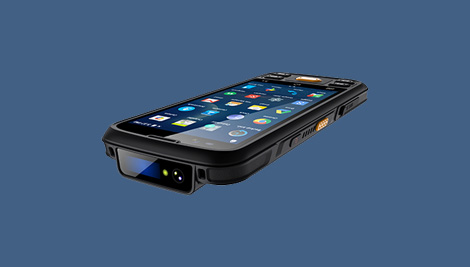
1. Impact Environment Characteristics in Industrial Workshops
Most workshop floors are made of concrete or epoxy, while shelves, production equipment and material bins are all designed with sharp hard edges. When operators move across zones to pick materials, handheld devices can easily collide with metal racks or passing vehicles; even during forklift accompanying operations, unexpected bumps and impacts are hard to avoid.
Different from ordinary office scenarios, industrial handheld devices do not only face single-point drops, but also continuous extrusion, scratching and long-term vibration, which means both the outer shell and internal connection parts must be built to stay firmly intact.
Risk levels vary across different workshop zones: loading and unloading areas are crowded with vehicles and turnover bins, raw material warehouses have narrow access aisles, and production lines are surrounded by fixed equipment with limited operating space. Teams can mark high-risk positions by zone, install stable storage stations, add buffer protection accessories and prepare backup devices for corresponding posts, to greatly reduce the chance of device damage during transportation and handling.
2. Reinforced Chassis of 1.5m Drop Resistant Industrial PDA
A standard industrial reinforced chassis usually consists of thick-wall housing, internal shock-absorbing frame, lockable battery compartment and sealed interfaces. When an impact occurs, the outer shell absorbs most of the external force first, fully protecting the mainboard, display screen and scanning window. All four corners are covered with high-wear-resistant materials, which maintains complete structural integrity even after long-term heavy scratching. The reinforcement design also balances heat dissipation and ergonomic grip, avoiding an overly thick housing that would affect daily operation and long-hour continuous use.
When inspecting industrial handheld devices, you should check if all screws are tightly fastened, compartment lids are properly locked, corners have no deep cracks, and all interfaces show no deformation. Oil stains and metal debris will accelerate component aging, so you need to check the sealing condition in time after regular cleaning. The real durability of a 1.5m drop-resistant industrial PDA should be verified through actual workshop route tests, rather than being judged only by the thickness of its appearance.
3. Protection Solutions for Loading, Unloading and On-Vehicle Operations
During loading and unloading tasks, never place the handheld device casually on the edge of a truck bed. It should be properly secured with a dedicated storage pouch, protective toolbox or safety lanyard. When moving with vehicles, do not mix the device with sharp metal parts, to prevent mutual impact caused by bumps on uneven roads. Install separate fixed slots inside turnover carts, and make sure the device is fully secured before moving the vehicle, which can significantly reduce collision and slipping risks.
Team supervisors should clarify unified device storage rules: operators must wear the device securely during work, place it in designated storage positions when not in temporary use, and check device quantity and appearance condition before getting off vehicles or completing task handover. Only when protective materials are combined with standardized usage habits, can common industrial site impacts be controlled within an acceptable range, avoiding frequent unexpected downtime waiting for repair.
4. Protection Performance and Usage Boundaries
Drop and impact protection has its clear applicable boundaries. The design reference is targeted at conventional accidental drops and collisions, which cannot resist heavy object rolling, extreme high-force extrusion or unauthorized disassembly. Even with a robust 1.5m drop-resistant body, you should never place the PDA at the bottom of material bins, near forklift forks or close to high-temperature heat sources. After a noticeable impact occurs during use, you should follow standard procedures to inspect the display, scanning function, physical keys and power supply status.
During on-site trial use, record the appearance and functional changes under different falling postures, and compare corner deformation, screen status and battery contact performance. In procurement evaluation, you should take protection performance, repair cost, spare part delivery cycle and staff training cost into comprehensive consideration. A clear understanding of protection boundaries helps build standardized operation procedures, instead of relying on the housing to bear external forces far beyond the design specification.
5. Post-Impact Inspection and Maintenance
After an impact happens, first check for housing cracks, screen bright spots and key operation responsiveness, then test scanning performance, data entry function, wireless connection and charging status. If you notice abnormal noise, loose compartment lid, display failure or failed power-on, mark the device as out of service immediately and send it to the formal repair process. Industrial teams should keep fault photos and complete records, so maintenance technicians can accurately judge whether to replace the outer shell, frame, screen or internal components.
During the repair period, use backup devices to ensure production recording will not be interrupted. Reserve common wearable parts according to actual consumption trends, and confirm the procurement lead time of core components in advance. Add all inspection results to the equipment ledger, count high-frequency damage zones and root causes, then reduce repeated failures by adjusting storage positions, optimizing operation posture training or replacing more suitable protective accessories.
6. Industrial Drop Resistance FAQ
Below are detailed explanations covering workshop collision causes, reinforced chassis features, usage boundaries, post-impact inspection and spare part stocking, for unified reference of production teams and logistics hub teams.
Q: What should I do first if the industrial PDA is hit by a material bin? A: First inspect the appearance, screen and keys, then test all core functions. Mark abnormal devices as out of service and register the fault, to avoid bringing a faulty device into production recording workflows.
Q: Can a reinforced chassis resist vehicle rolling? A: Never misunderstand drop-resistant design as rolling-resistant performance. On site, you should always keep the device away from forklift forks and heavy object extrusion areas.
Q: How to protect the device during on-vehicle operations? A: Use dedicated fixed storage positions or safety lanyards, avoid mixing the device with sharp metal parts, and confirm the device is fully secured before task handover.
Q: Will oil contamination affect protection performance? A: Oil stains and debris will accelerate the aging of sealing components. You should clean the device regularly and inspect the condition of compartment locks, interfaces and four corners.
Q: How to stock industrial spare parts properly? A: Reserve corner protectors, batteries and common accessories according to damage frequency, and add core repair parts to the equipment ledger after confirming their supply cycle.
Durability Configuration Evaluation and Daily Maintenance
Configuration evaluation should combine actual workshop operation routes, collision frequency, maintenance cost and operator grip experience, to select a solution with reliable protection structure, universal spare parts and easy access to maintenance. Daily maintenance work includes regular fastening inspection, worn corner replacement, contact point cleaning and standardized storage. Implement pre-shift inspection and complete fault records, to make this industrial impact-resistant PDA run stably in loading and unloading, material verification and production data collection tasks.
Conclusion
The 1.5m drop-resistant industrial PDA adopts a reinforced chassis to effectively cope with frequent collisions in industrial workshops. With clear protection boundaries, standardized on-vehicle storage rules and complete post-impact inspection processes, it can greatly reduce unexpected damage and downtime on production sites, providing long-lasting reliable support for material collection and operation recording work.