

The 508dpi fingerprint RFID handheld PDA integrates high-resolution fingerprint sensor, on-device matching and RFID reading for real-name verification, document fingerprint cross-check, long-term fine imaging, and fast field collection in frontline operations.508dpi fingerprint PDA, fingerprint RFID handheld terminal, field identity verification PDA, high resolution fingerprint capture device, fingerprint verification handheld PDA, RFID fingerprint collector, mobile identity capture terminal, document fingerprint cross-check PDA, industrial fingerprint handheld PDA, offline fingerprint matching PDA
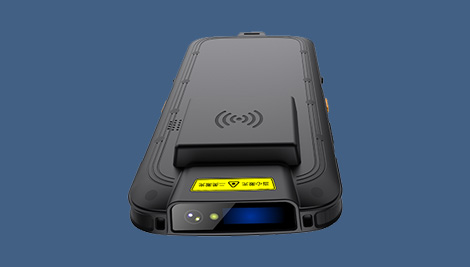
508dpi Fingerprint RFID Handheld PDA: Dedicated Terminal for Field Identity Capture and Verification
The 508dpi fingerprint RFID handheld PDA is a mobile capture terminal designed for on-site identity confirmation operations. It integrates a high-precision fingerprint sensor and matching function into a compact handheld body, enabling users to complete press capture, instant verification, and record storage in frontline scenarios such as high-resolution real-name verification, fine document-fingerprint cross-check, long-term archive fine imaging, and fast collection in complex field environments. This high-definition identity verification terminal eliminates the manual transcription of identity information. All capture results are automatically generated along with operations, making it easy for on-shift summary and backend review. This article covers basic configuration, operation workflow, scenario applications, quality specifications, parameter adaptation, data management, deployment and maintenance, to explain the actual usage and precautions of this capture terminal, helping field teams standardize every capture action consistently.
1. Basic Configuration and Capture Capability of the 508dpi Fingerprint RFID Handheld PDA
This fine dual-factor capture device consists of four core modules: capture sensor, processing unit, verification module, and wireless communication unit. The sensor converts finger ridge details into clear images, the processing module completes feature extraction, and the verification module confirms identity either locally or on the backend. All modules work together to finish one full capture cycle.
Every module is uniformly calibrated before factory delivery. Before operation, users only need to confirm that the capture area is clean, the battery is sufficient, and the operator account is logged in. The interface is arranged strictly following the capture workflow, so operators can master press, verification, and saving actions after very short practice.
2. Field Workflow Arrangement for High-Resolution Real-Name Verification
In frontline operation scenarios like high-resolution real-name verification and fine document-fingerprint cross-check, the operation sequence of this high-resolution identification dedicated terminal is highly standardized: first verify the personnel roster, then guide the user to place the finger flat and press gently. Once a clear image pops up, complete the verification confirmation. The result will be automatically recorded into the on-shift log, greatly reducing deviations caused by verbal description.
If supplementary capture is needed, operators can select the corresponding personnel on the record interface and re-press the sensor. A single capture takes very little time, and operators only need to export the on-shift records during shift handover to close the whole workflow, ensuring smooth connection between previous and subsequent procedures.
3. Identity Confirmation Applications in High-Resolution Real-Name Verification
The 508dpi fingerprint RFID handheld PDA mainly undertakes identity confirmation functions in high-resolution real-name verification scenarios. On-site personnel press the capture area one by one, the image is generated instantly, and operators can release or register the subject right after the system verification result pops up, completely avoiding misjudgment caused by document description only.
These scenarios usually feature high mobility. The device supports single-hand holding and adopts a backlit screen, so operators can clearly see all prompts even under drastic outdoor light changes. Its battery life covers a full single operation shift. Users only need to charge the device uniformly and export data after work.
Continuous Operation Mode in Fine Document-Fingerprint Cross-Check
To meet the actual demands of fine document-fingerprint cross-check, this fine dual-factor capture device integrates capture, verification, and recording into one single interface. Operators do not need to switch between multiple applications, ensuring continuous actions and very low error rate. All management requirements can be directly displayed as interface prompts.
Administrators can view the number of captured personnel and abnormal records by shift. Blurred or duplicate entries will be individually marked and sent back for supplementary capture. After processing, the record status will be automatically updated, keeping all statistical calibers completely consistent.
4. Capture Image Quality Points: Operation Requirements for High-Resolution Real-Name Verification and Fine Document-Fingerprint Cross-Check
Image quality directly determines the verification success rate. When using this high-resolution identification dedicated terminal, users should keep the capture area free of dust and oil stains, place the finger flat without rotation, apply moderate pressing force, and make the center of the fingerprint ridge fall within the sensing area. For ridge detail restoration, users also need to pay attention to contrast and completeness. Unqualified samples should be recaptured on site immediately.
Before capture, wipe the sensing surface with a clean soft cloth. In high-temperature and high-humidity environments, shorten the cleaning interval. Always pay attention to the quality prompts on the screen, and never import blurred or incomplete samples into the backend database, to ensure reliable materials for subsequent verification.
5. Parameter Calibration and Field Adaptation of the 508dpi Fingerprint RFID Handheld PDA
Parameters of this fine dual-factor capture device can be adjusted according to actual field conditions. Capture sensitivity can correspond to different finger statuses, and the verification mode can be selected as local fast matching or cloud verification. All data formats are consistent with system fields. After adjustment, complete several test captures to confirm the effect before formal operation.
Administrators can configure post permissions uniformly. Ordinary operators only retain capture, viewing, and submission functions, while sensitive settings require authorized access. All parameter changes are recorded, making it easy to trace the adjustment basis.
6. Data Transmission and Archiving Arrangement for High-Resolution Real-Name Verification Records
Capture data is transmitted to the backend in real time through wireless network. When the device is in weak signal areas, it will first store records locally temporarily, and automatically complete supplementary transmission once the network recovers. All uploaded data will be marked with timestamp and operator information, avoiding duplicate entry into the database.
The backend archives all details by date and scenario, supporting table export by shift for attendance or file building. Important archives need regular backup. After confirming that all local data is fully synchronized, users can clear local storage to prevent record loss.
Landing Promotion and Daily Maintenance Points for Fine Document-Fingerprint Cross-Check
The deployment of this high-resolution identification dedicated terminal can start with pilot posts, sort out capture points, personnel workflow and docking systems. After verifying the capture success rate and transmission timeliness, promote the device in batches. Daily maintenance mainly includes cleaning the sensing surface, standardizing charging, and updating firmware, to keep long-term stable performance.
Training covers capture specifications, exception handling, and data export, combined with on-site drills to familiarize teams with the whole workflow. The maintenance cycle should be written into the operation manual. Check the battery and button status regularly. If identification delay occurs, send the device for repair in time, so as not to affect the on-shift operation progress.
7. Frequently Asked Questions about High-Resolution Real-Name Verification
Q: Are the images captured by this high-definition identity verification terminal PDA clear and usable?A: If you press the sensor according to specifications and keep the sensing surface clean, the captured fingerprint will have complete ridge details and moderate contrast, fully meeting the requirements of subsequent verification and archiving. Blurred images will trigger interface prompts and support immediate on-site recapture.
Q: Can this fine dual-factor capture device continue working when the network is disconnected?A: Yes. The device supports local temporary storage, and will automatically transmit data after network recovery. No captured records will be lost during this period, and all uploaded records will be automatically merged with the backend.
Q: Can this high-resolution identification dedicated terminal adapt to different finger statuses?A: Capture sensitivity can be adjusted according to conditions such as dry fingers or faint fingerprints. Combined with standard pressing techniques, the device can obtain qualified samples under most finger statuses, keeping the recapture rate at a very low level.
Q: Is this high-definition identity verification terminal easy to use in field scenarios like high-resolution real-name verification?A: The device is designed for single-hand operation. Capture, verification, and recording are completed on one single interface. With optimized grip structure and battery life arrangement, it is very suitable for long-time outdoor use in mobile posts.
Q: How to manage and archive the data of this device?A: Data is stored in categories by date and scenario, supporting table export and regular backup. The backend can query historical records by personnel or shift, so that managers can check workload and abnormal items conveniently.
Conclusion
Overall, the 508dpi fingerprint RFID handheld PDA integrates fingerprint capture, on-site verification, and record archiving into mobile operation links. Combined with standardized operation, parameter calibration, and regular maintenance, this high-definition identity verification terminal can support daily identity confirmation demands for posts such as high-resolution real-name verification and fine document-fingerprint cross-check. When selecting models, evaluate item by item according to the operation environment, docking system, and personnel scale. Then steadily launch the device through pilot promotion, so that the whole capture workflow can remain smooth and controllable for a long time.