

When discussing the differences between industrial-grade and consumer-grade handheld PDAs, subjective opinions often lead to inconsistent conclusions. The most objective way to make a clear distinction is to refer to standardized verification test items. These tests cover seven core dimensions: drop resistance, ingress protection, temperature tolerance, vibration performance, electrostatic discharge protection, corrosion resistance and service life testing. Once you know how to interpret official test reports, you can eliminate half of the guesswork during the PDA selection process.
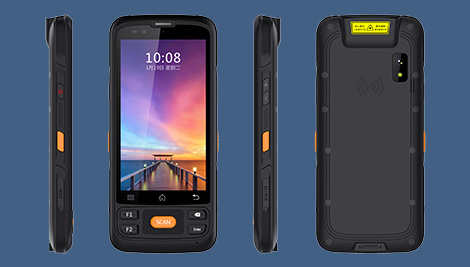
1. Key Drop Verification Points for Industrial and Consumer Handheld PDAs
Drop resistance testing focuses on four critical factors: drop height, impact surface, contact position and total drop count. The standard industrial test procedure usually requires the device to be dropped from waist height onto a concrete surface, with repeated impacts applied to the screen, back cover and four corners respectively. A test report is only truly valuable when all four of these conditions are clearly documented.
Many ambiguous reports on the market only state that the device "passed the drop test" without specifying detailed test parameters. When you encounter such vague descriptions, you should always request full specific parameters from the supplier. Without complete parameter information, you cannot confirm whether the test results match your actual on-site operating heights and ground environments.
2. How to Interpret IP Protection Ratings Correctly
An IP (Ingress Protection) rating consists of two separate digits: the first digit represents dust protection performance, while the second digit indicates water resistance performance. The highest dust protection level means the device is fully dust-tight, and water resistance levels increase gradually from simple splash-proof performance to full continuous submersion capability. Higher digits on the rating correspond to stricter sealing design requirements.
You should always match the IP rating to your actual working scenario. For dust-heavy workshops, you should prioritize the dust protection digit; for cold storage areas and frequent equipment cleaning zones, the water resistance digit is far more important. A protection rating statement is incomplete if it does not specify test conditions such as water immersion time and maximum submersion depth, as different conditions can produce vastly different real-world performance.
3. Working and Storage Temperature Range Testing
Temperature performance testing is divided into two separate categories: working temperature range and storage temperature range. The working temperature range refers to the temperature interval where the device can operate normally while powered on, while the storage temperature range applies to the device when it is completely powered off. These two ranges cannot be used interchangeably, so during procurement you must confirm that the working temperature range fully covers the extreme temperature values in your actual work environment.
You also need to pay attention to temperature cycle testing. When a PDA moves repeatedly from a cold warehouse to normal room temperature, or from outdoor low-temperature environments to heated indoor spaces, condensation will form inside the device. Industrial-grade PDAs that have undergone full temperature cycle verification run far more stably in these scenarios, while consumer-grade PDAs almost never include this type of test item in their standard validation process.
4. Why Vibration Testing Matters for Long-Term PDA Reliability
Vibration for handheld PDAs mainly comes from material handling operations, trolley transportation and conveyor belt environments. Long-term continuous vibration will gradually cause loose screws, poor port contact and solder joint fatigue. Industrial-grade PDAs that have completed professional vibration testing are designed with optimized structural parts and connection methods specifically to resist these vibration effects.
The negative impact of vibration on PDA performance is cumulative and progressive. You will not notice any functional differences on brand new devices, but after one year of use in high-vibration environments, consumer-grade devices will begin to develop intermittent faults. These intermittent problems are extremely difficult to troubleshoot, and in most cases the only solution is full device replacement.
5. Electrostatic Discharge (ESD) Protection Requirements
Electrostatic discharge is very common in dry working environments and when users wear chemical fiber clothing, and the problem becomes especially severe during winter seasons. Unexpected ESD events can cause PDA crashes, unexpected restarts and accidental data errors. Industrial-grade PDAs are designed with defined ESD tolerance requirements, and protective design measures are added to all exposed interfaces and physical button areas.
Many ESD-related problems are easily misjudged as software failures. When your PDA experiences unexplained restarts and occasional data loss, you should first check the ambient humidity level and equipment grounding status in your workspace. Installing humidifiers and taking basic anti-static measures in dry working areas is far more effective than repeatedly reflashing the device's firmware.
6. Salt Spray and Corrosion Resistance Performance
Salt spray resistance testing is designed for coastal working areas and cold chain logistics environments. Salt particles that adhere to device surfaces will corrode metal interfaces and outer shell coatings, and long-term exposure will eventually lead to permanent poor electrical contact. Industrial PDAs that have passed formal salt spray verification deliver far longer service life in coastal warehouses and seafood cold chain operations.
Even inland businesses should not overlook this corrosion risk. Chlorine-containing cleaning agents and disinfectants, when used for repeated device wiping, will also cause gradual corrosion damage. Checking the shell material and coating corrosion tolerance, or switching to neutral cleaning agents during daily maintenance, can effectively extend the overall service life of your PDAs.
7. Service Life Test Methods for Key Wearing Parts
Service life testing focuses on three core metrics: total button press cycles, interface plug-and-unplug cycles, and total screen tap operations. Industrial-grade PDA suppliers will usually publish verified test values for all these indicators, while consumer-grade PDA manufacturers almost never disclose this type of data. Buttons and external interfaces are the most vulnerable wearing parts on a PDA, and their rated performance directly determines the total usable life of the device.
You need to evaluate these test data in combination with your actual usage intensity. A PDA with a rated 100,000 button press lifespan may only last a few months in a position where users press buttons over 1000 times per day, but the same device can work for several years in a position with only dozens of daily operations. Only by comparing the nominal test values with your own actual usage intensity can you accurately judge whether the device life is sufficient for your work requirements.
8. Complete Report Interpretation Checklist
You can use this simple 7-item checklist for standardized report evaluation: drop test conditions, dust protection level, water resistance level, working temperature range, temperature cycle verification, ESD protection level, and wearing part service life. Only when all seven items are fully documented and cover your actual on-site working conditions can the test report be considered reliable. For any missing items, you should raise targeted questions to the supplier instead of filling in the gaps with subjective assumptions.
This same checklist can also be used for horizontal comparison between different supplier solutions. Fill in the checklist for every candidate product, mark missing items in gray, and compare all items one by one. Once you complete this simple table, the performance differences between different PDAs will be completely clear, and all subsequent discussions can focus on the real performance gaps between products.
You can also sort these verification items according to your own on-site pain points, and only request full test reports for the 2-3 most critical items that affect your core operations. This method effectively controls selection risk without overwhelming you with too much unnecessary technical data. If a supplier can only provide test reports for partial items, you can also supplement the missing data through real-world testing during the device trial period. The combination of official test reports and actual usage data will still provide strong support for your final purchasing decision.
9. Common Questions About Industrial and Consumer PDA Differences
- Q: What should I do if the supplier's report only states "test passed"? A: Request full specific test parameters, and treat all missing items as unknown unconfirmed performance.
- Q: Does higher IP rating always mean better performance? A: You should choose the rating that exactly matches your scenario. Excessively high ratings will only add unnecessary cost and extra device weight.
- Q: Are working temperature range and storage temperature range the same? A: No, they are two completely different indicators, and you need to check both of them separately.
- Q: Is vibration testing an important verification item? A: It is absolutely critical for scenarios with frequent material handling and transportation.
- Q: How should I interpret the service life data of a PDA? A: Compare the nominal test values with your own average daily operation frequency to get the actual usable life.
10. Final Summary
The differences between industrial-grade and consumer-grade handheld PDAs are fully reflected in their verification test results: evaluate drop resistance by checking complete test conditions, interpret IP performance by reading the two separate digits, confirm temperature performance by focusing on the working range, judge long-term reliability by reviewing vibration test data, pay attention to ESD protection for dry winter environments, select corrosion resistance according to your actual working environment, and calculate service life by matching the rated values with your own usage intensity. Fill all these seven items into one simple comparison table, and your PDA selection process will change from subjective guesswork to clear, data-driven decision making.