

In today’s fast-paced business landscape, inventory and asset management remain critical for retail, manufacturing, and logistics operations. Yet traditional manual counting methods are inefficient, error-prone, and labor-intensive. With the rapid advancement of IoT technology, RFID handheld terminals have emerged as a game-changer for smart warehouse management. This article explores their core value, applications, and technical advantages in solving inventory pain points.
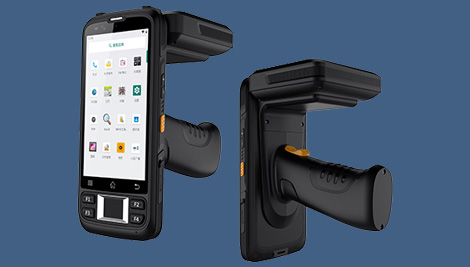
1. Pitfalls of Traditional Inventory Methods: Inefficient, Costly, Error-Ridden
Traditional inventory audits rely on manual barcode scanning or handwritten records, plagued by:
Low efficiency: Hours spent scanning items individually, especially in large warehouses (audits may take days/weeks).
High error rates: Human fatigue leads to misrecorded or missed items.
Poor real-time visibility: Delayed data updates hinder market responsiveness.
Skyrocketing labor costs: Large-scale audits require excessive manpower.
These issues cause stockouts, overstocking, and customer dissatisfaction, driving demand for advanced solutions.
2. Core Value of RFID Handheld Terminals: Smart, Fast, Accurate
RFID (Radio-Frequency Identification) uses radio waves to automatically identify tags without line-of-sight. Paired with handheld devices, it transforms inventory management:
10x faster audits: Scan hundreds of items per second (vs. barcode’s one-by-one).
99.9% accuracy: Eliminates human errors with automated data validation.
Real-time sync: Integrates with ERP/WMS for instant inventory updates.
Portable & rugged: Offline-capable, waterproof, and drop-resistant for harsh environments.
3. Industry Applications
Retail: Accelerate store/warehouse audits, reduce shelf-check time by 80%.
Manufacturing: Track raw materials in real-time to prevent production halts.
Logistics: Batch-scan parcels during sorting; integrate GPS for shipment tracking.
Asset Management: Monitor equipment lifecycle and prevent loss.
4. Technical Edge: Why RFID Outperforms
Bulk reading: Scan 100+ tags simultaneously (no sequential scanning).
Material penetration: Reads through cardboard, plastic, etc.
Enhanced data storage: Tags store expiry dates, batch numbers, etc.
Encryption: Secure data transmission with role-based access.
5. Choosing the Right RFID Terminal
Key considerations:
Frequency/distance: UHF (860-960MHz) for long-range warehouse use.
OS compatibility: Android/Windows support for system integration.
Battery life: 8+ hours for shift-long operations.
Vendor support: Prioritize suppliers with 24/7 technical service.
Upgrade to RFID Today
In the digital transformation era, RFID handheld terminals are no longer optional but essential for competitive edge. Download our free RFID Smart Warehouse Whitepaper to start optimizing your inventory now!