

In the era of consumption upgrades and e-commerce boom, consumer anxiety about product authenticity grows exponentially. From baby products to luxury goods, from drug safety to food traceability, counterfeiting causes global businesses over $300 billion in annual losses. Traditional anti-counterfeiting methods like laser labels and QR code systems now face severe challenges from mass forgery and data tampering. Enterprises urgently need a solution that penetrates the entire supply chain with real-time, trustworthy data - handheld anti-counterfeiting PDA devices are becoming the game-changer.
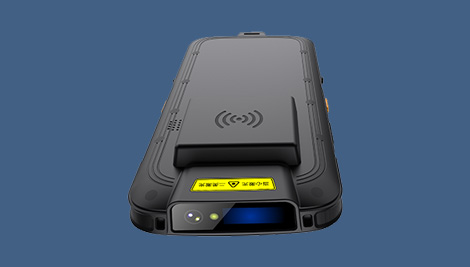
Three Critical Flaws in Traditional Anti-Counterfeiting Systems
1.Physical Security Vulnerabilities
2.Laser holograms and special ink printing can be replicated within 30 minutes by professional counterfeiters using scanners and chemical reagents.
3.Data Silos in Traceability
4.Centralized QR code systems fail to provide real-time product flow visibility. A liquor company once suffered price system collapse due to unauthorized distributor sales while the system showed "normal circulation."
5.Manual Verification Inefficiency
6.Warehouse staff using handheld scanners cannot handle daily throughput of 10,000+ items. A cross-border e-commerce warehouse once accidentally let $5M counterfeit parts enter genuine channels.
How Handheld PDA Devices Revolutionize Traceability?
Breakthrough 1: Hardware-Level Encryption
Devices with SM7 cryptographic algorithm enable local data encryption before cloud upload. A medical device manufacturer achieved 100% tamper detection rate.
Breakthrough 2: Multimodal Data Capture
Integrated RFID, HD camera, and NFC simultaneously read electronic tags and physical features. A tea brand reduced fake product identification from 7 days to 3 seconds by creating "digital fingerprint" databases.
Breakthrough 3: Blockchain Timestamping
Built-in blockchain modules instantly record data hashes. An imported beef supplier saw 40% faster customs clearance with 38 inspection metrics visible to consumers via scan.
Six Application Scenarios
1.Cross-border E-commerce
2.Automated e-lock verification with GPS tracking reduced customs disputes by 65% for a platform.
3.Pharmaceutical Cold Chain
4.Temperature sensors paired with PDAs achieved 0.01% drug spoilage rate (from 3.2%) through 2°C-8°C precision control.
5.Agricultural Traceability
6.GPS-recorded harvest locations to multi-point verification created trusted data chains, boosting organic vegetable repurchase by 37%.
7.Industrial Parts Control
8.Unique device-code binding stabilized auto part pricing system compliance from 68% to 99.9%.
9.Event Ticketing
10.Offline verification eliminated scalped tickets while tripling entry efficiency for a major exhibition.
ROI Analysis (Mid-sized Food Company Example)
Initial Investment: 50 devices (with software)
Annual Benefits:
$17K saved on label costs
$11K reduced spoilage losses
15% price premium from consumer trust
$7K ad revenue from scan pages
ROI Period: 3-6 months
Strategic Value: A Milk powder brand increased scan rates from 3% to 28% with 40% shorter repurchase cycles.
Future Trends
1.AIoT integration with smart cameras/AGVs
2.Privacy-preserving federated learning for cross-enterprise collaboration
3.Modular upgradable designs extending device lifespan by 3+ years
Conclusion: These PDAs have evolved from tools to strategic assets for building digital trust. When consumers scan to see a product's journey from raw materials to shelf, brand relationships transform fundamentally.