

In modern business operations, fixed assets are a crucial component of a company's core assets. Their accurate and efficient inventory management is directly related to cost control, resource optimization, and compliant operations. Traditional fixed asset inventory methods often rely on manual records, paper ledgers, or Excel spreadsheets, which are not only time-consuming and labor-intensive but also prone to human error, leading to data inaccuracies that affect management decisions. The emergence of the Android 15 5G Handheld PDA (Personal Digital Assistant) has brought innovative solutions to enterprise fixed asset management, becoming a key tool for enhancing inventory efficiency and accuracy.
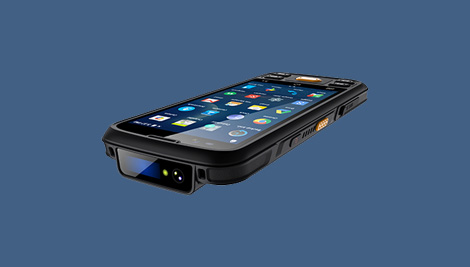
I. The Core Value of Handheld PDAs: From "People Finding Assets" to "Assets Finding People"
A Handheld PDA is a mobile intelligent device that integrates data collection, processing, and transmission. Its core value lies in realizing the "mobilization, intelligence, and real-time capabilities" of fixed asset inventory. In the traditional inventory model, staff need to carry paper lists to check assets one by one, which is inefficient and prone to missed or incorrect counts. In contrast, a PDA, through its built-in barcode scanning module, can quickly read barcode information on asset tags and automatically match it with asset records in the backend database, achieving a precise "one item, one code" correspondence. This "scan-and-get" operation mode reduces inventory time to one-third or one-half of the traditional method, while significantly lowering the human error rate.
II. Specific Application Scenarios of PDAs in Fixed Asset Management
Daily Inspection and Periodic Inventory
Companies can use PDAs to formulate periodic inventory plans, such as quarterly inventories or annual comprehensive checks. After staff scan asset barcodes with the PDA, the system automatically compares physical items with book data, displays discrepancies in real-time (e.g., changes in asset location, abnormal status, information mismatch), and generates variance reports for management analysis. This dynamic tracking mechanism can promptly identify issues like asset loss, idleness, or abnormal usage.
Full Lifecycle Asset Management
The Android 15 5G PDA supports not only the inventory process but also the entire asset lifecycle: "procurement -> warehousing -> assignment -> transfer -> maintenance -> disposal." For example, initial information is entered via the PDA when an asset is received; an asset is assigned to an employee by scanning their ID badge and the asset barcode; location and responsible person are updated during transfer; fault details and repair results are recorded during maintenance; and approval workflows are triggered and status updated upon disposal. All operations are synchronized in real-time with the management system through the PDA, forming a complete asset record.
Multi-Scenario Data Collection and Collaboration
PDAs support offline operation mode. Even in environments with poor network signals, such as warehouses or workshops, data can be collected and stored locally, automatically syncing to the cloud once connectivity is restored. Furthermore, through wireless transmission technologies like Bluetooth and WiFi, PDAs can interact with devices like printers and electronic tags, enabling rapid printing, updating, and tracking of asset labels to meet the collaborative management needs of various scenarios and cross-departmental operations.
III. Implementation Effects and Advantage Analysis of PDA Solutions
Efficiency Improvement and Cost Savings
Taking a manufacturing enterprise as an example, after implementing a PDA inventory system, the annual fixed asset inventory cycle was reduced from 15 days to 5 days, labor costs decreased by 40%, and inventory accuracy increased to over 99%. Meanwhile, through real-time data synchronization, managers can grasp asset distribution, usage status, and value changes at any time, providing a scientific basis for resource allocation and budget planning.
Compliance Assurance and Risk Prevention
In scenarios such as financial audits and internal controls, the real-time, accurate data provided by PDAs effectively supports corporate compliance requirements. For instance, the system can automatically generate asset detail lists, depreciation calculation tables, and inventory reports that comply with accounting standards, avoiding the risk of account-physical discrepancies caused by manual statistics. Additionally, by analyzing asset usage frequency and idle rates, companies can optimize asset allocation and reduce redundant purchases and resource waste.
User Experience and Management Transparency Enhancement
PDA interfaces are simple and intuitive. Ordinary employees can use them after minimal training, lowering the technical barrier. Simultaneously, the system supports multi-level permission management, ensuring data access security and traceability. Management can view visual reports, such as asset distribution heat maps and usage trend analysis, in real-time via PC or mobile devices, realizing a "data-driven decision-making" management model.
IV. Key Considerations for Choosing a PDA Solution
When selecting a Handheld PDA, enterprises need to focus on the device's durability, system compatibility, data security, and after-sales support capabilities. For example, industrial-grade PDAs typically have an IP65 or higher dust and water resistance rating and can withstand drops from 1.5 meters, adapting to complex environments like workshops and warehouses. The system needs to support seamless integration with existing enterprise management systems like ERP and OA to avoid data silos. Data transmission should use encryption protocols to protect asset information security. Suppliers need to provide ongoing technical updates and localized service support to ensure the system's long-term stable operation.
Conclusion
The Android 15 5G Handheld PDA, as an intelligent tool for fixed asset management, is gradually becoming a vital carrier for corporate digital transformation. It not only solves the efficiency bottlenecks and data distortion issues of traditional inventory models but also, through full-process, real-time management methods, drives enterprise asset management towards refinement and scientific development. In the future, with the deep integration of technologies like the Internet of Things (IoT) and big data, the functions and application scenarios of PDAs will continue to expand, creating greater management value and economic benefits for enterprises. For companies pursuing efficiency, compliance, and sustainable development, deploying Handheld PDAs has become an inevitable choice for enhancing asset management standards.