

In the textile industry, fabric lot management is a core aspect of production and the supply chain. Due to the characteristics of fabrics—diverse specifications, numerous lots, and frequent turnover—traditional manual recording methods are prone to issues like information delays, data confusion, and inventory inaccuracies, leading to constrained production efficiency and increased costs. With the proliferation of digital tools, the deep integration of ERP (Enterprise Resource Planning), WMS (Warehouse Management System), and handheld PDA (Personal Digital Assistant) terminals is now building a new model of efficient and precise lot management for textile enterprises.
I. Analyzing the Pain Points of Lot Management: Limitations of the Traditional Model
Textile companies often face multiple challenges in fabric management: Lot information relies on paper documents, which are easily lost or misrecorded; delayed inventory data updates cause production plans to become disconnected from actual stock; inbound and outbound operations depend on manual verification, being inefficient and error-prone; and lot traceability is difficult, impacting quality control and after-sales response. These pain points not only increase operational costs but may also lead to production interruptions or customer complaints due to information gaps.
II. ERP and WMS: The Digital Foundation for Lot Management
The ERP system, as the central hub for enterprise resource integration, can connect fabric lot information end-to-end with production, procurement, sales, and other links. For example, by setting lot attribute rules through ERP modules, key information such as raw material source, production date, and process parameters for each fabric roll is recorded, forming a traceable digital archive. Simultaneously, ERP can synchronize order demand and inventory status in real-time, dynamically adjusting production schedules to avoid material shortages or surpluses caused by information delays.
WMS focuses on the refined management of warehouse scenarios. By defining dimensions such as location codes, lot attributes, and inventory status, WMS enables precise location tracking and status monitoring of fabrics. During inbound processes, the system automatically matches lot rules and assigns optimal storage locations; during outbound, based on the First-In-First-Out (FIFO) principle or customer order requirements, it prioritizes selecting the corresponding fabric lots, reducing human intervention errors. Additionally, WMS's inventory alert function can provide real-time feedback on low-stock or expiring batches, supporting companies in formulating replenishment or promotion strategies proactively.
III. Handheld PDA Terminal: The "Digital Touchpoint" for On-Site Operations
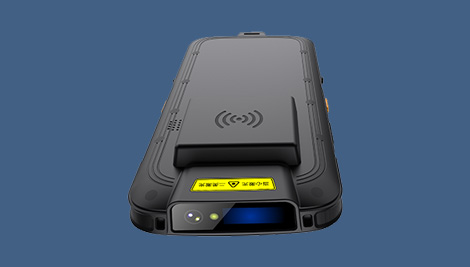
The handheld PDA terminal, as a mobile data collection tool, is a key bridge connecting systems and on-site operations. During fabric inbound, warehouse personnel scan fabric barcodes using the PDA; the system automatically verifies lot information and updates inventory data, eliminating the need for paper records throughout the process. During inventory counts, the PDA supports scanning to check differences between actual stock and system data, enabling quick inventory corrections. When issuing materials for production, workshop personnel use the PDA to query lot availability and pick specified fabric lots as needed, ensuring traceability of production materials.
The real-time synchronization capability of the PDA is particularly crucial. In the traditional model, on-site operation data required manual entry into the system, posing risks of time lags and misrecording. However, the PDA, via wireless connectivity, can instantly upload operational data to ERP and WMS, achieving closed-loop management where "operation equals recording." This real-time nature not only improves data accuracy but also allows management to monitor inventory dynamics through the system in real-time and respond quickly to exceptions.
IV. Synergistic Effect: From Point Optimization to Full-Chain Efficiency
The collaborative application of ERP, WMS, and PDA achieves end-to-end digitalization from planning and execution to monitoring. For example, when a customer urgently adds an order, ERP can quickly analyze existing inventory lots. Combined with WMS's inventory location data and PDA's real-time operational data, it accurately matches available lots and generates picking instructions. Workshop personnel then receive the instructions via the PDA and directly complete the picking operation—the entire process is efficient and transparent.
In quality traceability scenarios, if a certain fabric lot fails inspection, the system can quickly trace production records, raw material suppliers, and the movement path through the lot code, pinpointing the source of the problem and triggering a recall process. This end-to-end traceability not only enhances quality control but also strengthens customer trust in the enterprise.
V. Implementation Points and Value Realization
To achieve effective synergy among these three systems, enterprises need to focus on system integration and process optimization. Firstly, ensure unified data formats and interface standards for ERP, WMS, and PDA to avoid information silos. Secondly, customize configurations such as lot rules and operation paths according to the company's actual workflows to ensure the system fits business needs. Thirdly, strengthen personnel training to improve the proficiency and standardized awareness of on-site operators regarding digital tools.
Through this model, textile enterprises can significantly enhance lot management efficiency: inventory accuracy rises to over 99.9%, inbound and outbound operation times are reduced by 50%, lot traceability response time shrinks from hours to minutes, while manual entry errors and communication costs are reduced. More importantly, digital lot management provides solid data support for building lean production and flexible supply chains, helping companies achieve cost reduction, efficiency gains, and quality upgrades in the fiercely competitive market.
In the wave of digital transformation in the textile industry, the deep integration of ERP, WMS, and handheld PDA terminals is paving a new path towards efficient, precise, and traceable lot management for enterprises. Through system synergy and process optimization, companies can not only solve the pain points of traditional management but also build future-oriented digital competitiveness to seize the initiative in the intense market competition.