

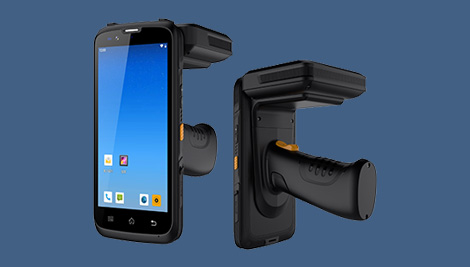
In the critical phase of intelligent and lean transformation in the electronics manufacturing industry, 5G UHF smart handheld terminals have become a core tool for optimizing production processes and upgrading quality control, leveraging their high-speed data transmission, precise identification, and multi-scenario adaptability. Based on industry practices and technical characteristics, this article systematically elaborates on the innovative application paths of this equipment in electronics manufacturing.
I. Technical Characteristics: Integration of High Speed, Precision, and Multi-Scenario Adaptability
5G technology endows handheld terminals with ultra-low latency (as low as 1 millisecond), high-bandwidth transmission, and large-scale device connectivity, combined with UHF RFID technology (840-960MHz frequency band), enabling non-contact batch reading of electronic tag data. For example, in electronic component warehouses, the device can scan hundreds of tags at once, with a recognition distance of up to 25 meters, improving efficiency by over five times compared to traditional barcode scanning. Its drop-resistant and waterproof design (capable of withstanding 1.5-meter drop impact) and high-brightness screen further adapt to complex working environments.
II. Core Application Scenarios: Practical Paths to Efficiency Improvement Across Processes
Warehouse Logistics Management: Through real-time dynamic inventory functions, the device can quickly obtain goods' locations and quantities, reducing manual errors. In the electronic component supply chain, combined with 5G networks, it enables second-level synchronization of inbound and outbound data. For instance, one enterprise reduced warehouse inventory time from three days to four hours using this technology, with inventory accuracy increasing to 99.99%.
Production Process Monitoring: In processes such as SMT placement and DIP plug-in, handheld terminals can collect material consumption and equipment status data in real-time. For example, a smart terminal enterprise deployed a 5G+UHF system, reducing the time from receipt to online operation to 11 hours, cutting line-side warehouse inventory days to one day, and improving material picking efficiency by 50%.
Quality Traceability System: By binding electronic tags, the device can track material transfers, repairs, and disposal statuses, forming a full lifecycle traceability chain. In the consumer electronics field, combined with 5G's low-latency characteristics, it enables 0.01-millimeter precision mounting quality monitoring, reducing defective product repair time by 3.6 days.
Equipment Collaborative Operations: In flexible production lines, handheld terminals can coordinate with AGVs and robotic arms, transmitting scheduling commands in real-time via 5G networks. One enterprise implemented this solution to achieve rapid production line reconfiguration, increasing overall equipment utilization by 7% and capacity by 20%.
III. Industry Practice Cases: From Demonstration Factories to Ecosystem Construction
A smart terminal enterprise in Shenzhen established a smart manufacturing demonstration factory based on 5G+gigabit fiber optics, connecting five domestic R&D centers, over 20 EMS factories, and more than 3,000 stores. By deploying 5G UHF handheld terminals, it achieved end-to-end coordination from R&D design to logistics distribution. Specific results include: "pull-based precise delivery" in the logistics chain shortened to 11 hours, warehouse space utilization increased by 40%, material picking efficiency improved by 50%, and labor costs reduced by 18%.
In the precision component manufacturing sector, one enterprise built a digital platform to horizontally integrate equipment OT and manufacturing system IT, achieving full-process traceability from sales quotations to financial accounting. This solution increased R&D efficiency by 20%, shortened production cycles by 30%, and achieved a quality yield rate of 99.99%.
IV. Future Trends: Intelligent Upgrades and Ecosystem Collaboration
With the integration of AI and big data technologies, 5G UHF handheld terminals are evolving from single data collection tools to intelligent decision-making terminals. For example, by integrating intelligent algorithms, the device can automatically identify material defect types and generate optimization suggestions based on historical data. In ecosystem construction, hardware manufacturers, software developers, and service providers are forming collaborative networks to promote closed-loop management from device to cloud.
Driven by policy support and industrial demand, 5G UHF handheld terminals will continue to deepen their application in electronics manufacturing. Through technological iterations and scenario innovations, they will help enterprises achieve comprehensive optimization of efficiency, cost, and quality, building an efficient, flexible, and traceable smart manufacturing system.