

Years ago, the global spread of the COVID-19 pandemic was still vivid in memory. Nucleic acid testing, as a core means of precise prevention and control, saw its efficiency and accuracy directly impact the timeliness of outbreak response. In traditional nucleic acid testing processes, manual information registration, sample sorting, and data entry suffered from low efficiency, high error rates, and data silos, especially in large-scale screening scenarios where human and time costs increased exponentially. The introduction of industrial-grade handheld PDAs (Personal Digital Assistants), with their professional hardware performance and customized software systems, injected digital momentum into the nucleic acid testing workflow, becoming a vital tool in building an efficient defense line for epidemic control.
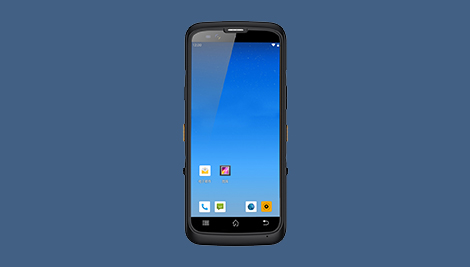
I. Technical Features of Industrial-Grade PDAs: Designed for High-Intensity Epidemic Scenes
1.Rugged Design, Adaptable to Complex Environments
2.Nucleic acid testing scenarios often include outdoor temporary sites, mobile lab units, and high-risk isolation zones, requiring devices with extreme environmental adaptability. Industrial-grade PDAs feature an IP65 dustproof and waterproof rating, resisting rain and sweat erosion, with 1.5-meter drop protection ensuring stable operation during frequent movement. Their operating temperature range of -20°C to 60°C allows them to withstand northern winter cold and southern summer heat, meeting all-weather operational needs.
3.High-Performance Scanning Engine, Breaking Data Collection Bottlenecks
4.Traditional manual entry of ID cards and test tube barcodes was inefficient and error-prone. Industrial-grade PDAs are equipped with professional 2D imaging scanners, supporting 0.1-second rapid recognition, capable of scanning barcodes through plastic bags, glass, and other media, maintaining over 99.9% recognition rate even under strong light or smudged conditions. Combined with NFC modules, they enable contactless reading of health codes and electronic IDs, reducing cross-infection risks.
5.Industrial-Grade System Architecture, Ensuring Data Security and Smooth Operation
6.Based on a deeply customized Android system, certified by GB/T standards, they support encrypted data transmission and local storage. With hardware configurations starting at 4GB RAM and 64GB ROM, paired with octa-core processors, they can simultaneously run multiple tasks such as nucleic acid testing management systems, health code verification platforms, and sample tracking systems, avoiding process interruptions due to lag.
II. Empowering Practices of Industrial-Grade Handheld PDAs in the Full Nucleic Acid Testing Process
1.Information Collection: From "Manual Registration" to "Second-Level Entry"
2.At testing site entrances, staff use PDAs to scan individuals’ ID cards or health codes, automatically linking pre-registered information and completing facial recognition comparisons in real-time, with data uploaded to provincial nucleic acid testing platforms. For elderly individuals without smartphones, OCR technology extracts ID information, eliminating manual input entirely. A single device can handle 300 person-times per hour, improving efficiency by 5 times compared to traditional methods.
3.Sample Management: Building a Full-Chain Traceability System
4.Each sampling tube is labeled with a unique traceability code, scanned by PDAs to automatically bind sampling time, location, and operator details. During sample transport, GPS and electronic fence technologies monitor vehicle trajectories in real-time. Upon laboratory arrival, PDAs scan again to confirm receipt, forming a closed-loop data chain from "sampling point to transport vehicle to lab." Data from a regional health commission showed sample loss rates dropping from 0.8% to 0.01% with PDA use.
5.Data Coordination: Breaking Information Silos
6.In traditional models, test results required manual entry into different systems, often causing delays. Industrial-grade PDAs support 4G/5G full-network compatibility and Wi-Fi 6 dual channels, enabling real-time synchronization of sampling data to CDC big data platforms. After testing, results are encrypted and transmitted back via PDAs, allowing residents to check instantly via health code mini-programs. In a provincial mass testing scenario, this model reduced reporting cycles from 12 hours to 2 hours.
III. Management Efficiency Leap Brought by Industrial-Grade Handheld PDA Applications
1.Human Cost Optimization
2.In a region with a daily testing volume of 100,000 people, traditional methods required 300 data entry personnel, while PDAs needed only 50 operators, reducing labor costs by 83%. Standardized procedures minimized human errors, boosting data accuracy to 99.99% and avoiding re-testing costs due to mistakes.
3.Enhanced Emergency Response Capability
4.During sudden outbreaks requiring mass testing, PDAs’ portability and rapid deployment stood out. Devices could be pre-loaded with testing systems and operational within 30 minutes on-site, paired with mobile power for 24-hour continuous operation, supporting the "fast against fast" control strategy.
5.Data-Driven Decision Support
6.Real-time data collected by PDAs generated multidimensional analysis reports, including site foot traffic, sample backlogs, and positive case distribution heatmaps, aiding command centers in dynamically allocating resources. One city, during a resurgence, increased testing capacity from 50,000 to 200,000 tubes daily using this system.
IV. Future Outlook: Evolution from Tool to Ecosystem
With advancements in 5G and AIoT technologies, industrial-grade PDAs are evolving into intelligent platforms. Integrated AI image recognition algorithms can automatically assess sampling compliance; IoT technology enables real-time reagent monitoring and automatic replenishment alerts; and edge computing allows preliminary local analysis, reducing cloud pressure. These innovations will further shift nucleic acid testing from "labor-intensive" to "technology-intensive."
In today’s normalized epidemic prevention, industrial-grade handheld PDAs are no longer mere data collection tools but foundational nodes in building a smart epidemic control ecosystem. Their technology-driven efficiency innovations provide robust safeguards for public health security, reflecting the critical value of digital tools in major public events. As technological boundaries continue to break, such specialized devices will demonstrate their potent vitality in "using technology to combat uncertainty" across more fields.