

In the wave of digital transformation in the healthcare industry, the level of informatization management has become a critical indicator of a medical institution's overall strength. Traditional healthcare management models often suffer from issues such as data silos, cumbersome processes, and high rates of human error. The deep integration of RFID (Radio Frequency Identification) technology with Android smart terminals is providing innovative solutions for building smart healthcare systems. This article explores how RFID Android PDA handheld devices serve as core tools in advancing healthcare informatization, based on technical principles, application scenarios, and industry practices.
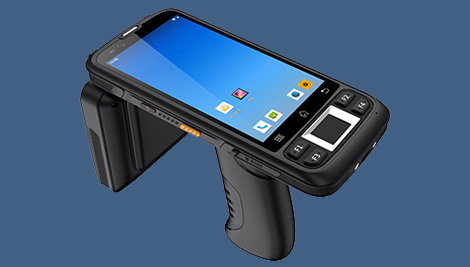
Technical Empowerment: The Synergy of RFID and Android Systems
1. Adaptability of RFID Technology in Healthcare Scenarios
RFID technology automatically identifies targets and retrieves data via radio signals, featuring non-contact operation, rapid reading, and simultaneous multi-tag recognition. Its advantages are particularly prominent in healthcare settings:
Asset Tracking: By attaching RFID tags to medical equipment, consumables, and medications, dynamic lifecycle management can be achieved, overcoming the drawbacks of traditional barcodes that are prone to wear and require manual scanning.
Patient Identity Verification: Embedding RFID tags into patient wristbands or medical record folders, combined with real-time reading via handheld devices, eliminates the risk of identity confusion, ensuring medical safety in high-intensity scenarios like emergency rooms and operating theaters.
Medication Circulation Monitoring: From warehouse intake to pharmacy distribution, RFID technology records key information such as drug batches, expiration dates, and flow directions, enabling drug traceability and anti-counterfeiting.
2. Openness and Customization Advantages of the Android System
Compared to traditional industrial PDAs with closed systems, the Android platform offers core benefits:
Ecosystem Compatibility: Supports seamless integration with mainstream healthcare systems like HIS (Hospital Information System), LIS (Laboratory Information System), and PACS (Picture Archiving and Communication System), breaking down data barriers.
Application Development Flexibility: Medical institutions can customize functional modules according to their needs, such as adding voice interaction or image recognition capabilities.
User Experience Optimization: Features like touch control and multi-tasking reduce the learning curve for medical staff and enhance device efficiency.
Application Scenarios: From Process Optimization to Management Upgrades
1. Refined Control of Medical Assets
Traditional asset inventory relies on manual scanning of each item, which is time-consuming and prone to omissions. RFID-equipped Android PDAs enable "batch reading + positioning navigation" functions:
3-Second Asset Inventory in Entire Wards: Medical staff can move through wards with the device, automatically identifying all tagged assets within range and syncing data to backend systems.
Intelligent Alerts and Scheduling: When equipment is illegally removed from designated areas or stock falls below thresholds, the system triggers automatic alerts and generates replenishment suggestions. Practical data from a hospital showed an 80% increase in asset inventory efficiency and a 35% reduction in asset idle rates.
2. Closed-Loop Management of the Entire Patient Journey
From admission registration to discharge settlement, RFID Android PDAs build a patient information highway:
Triage Phase: Nurses scan patient RFID wristbands to automatically retrieve key information like electronic medical records and allergy history, increasing triage accuracy to 99%.
Operating Room Safety Verification: Pre-surgery, the device scans both patient wristbands and surgical instrument package tags for dual verification, preventing medical accidents.
Ward Rounds: Medical staff use the handheld device to record round data and upload vital signs and medication details in real time, reducing paper documentation transfer time.
3. Intelligent Transformation of the Pharmaceutical Supply Chain
Addressing challenges in medication management such as expiry control and temperature monitoring, RFID technology enables full-chain visibility:
Smart Medicine Cabinet Management: Drugs are bound with RFID tags upon intake, and handheld devices scan them for batch acceptance, with near-expiry items automatically prioritized for use.
Cold Chain Transportation Monitoring: During the transport of vaccines and blood products, the device collects real-time temperature and humidity data, sending immediate alerts via 4G/5G networks if anomalies occur.
Medication Verification: Nurses scan patient wristbands and drug labels during dispensing, with the system automatically cross-referencing prescriptions to intercept medication errors.
Core Advantages: Solving Pain Points in Healthcare Management
1. Data Real-Time: From "Post-Event Recording" to "Real-Time Decision-Making"
Traditional management models suffer from data collection delays, whereas RFID Android PDAs enable "collect and upload immediately." Management can view real-time metrics like equipment utilization rates and patient flow via dashboards, providing precise basis for resource allocation.
2. Operational Accuracy: 90% Reduction in Human Error Rates
In infusion management, for example, manual checks often lead to misidentification errors. The RFID-Android system ensures triple binding of patients, medications, and prescriptions, reducing error rates from an industry average of 2.3% to near zero.
3. Work Efficiency Improvement: 60% Reduction in Single-Process Time
A hospital laboratory's practice showed that using handheld devices for sample sorting increased daily processing capacity from 1,200 tubes to 2,000 tubes, with medical staff reducing their daily walking distance by 40% and significantly lowering work intensity.
Implementation Path: From Tool Application to System Restructuring
Medical institutions deploying RFID Android PDAs should follow a three-phase strategy:
Pilot Validation Phase: Conduct small-scale tests in high-frequency scenarios like emergency departments and pharmacies to verify device stability and system compatibility.
Process Reengineering Phase: Optimize operational protocols based on pilot data, such as redesigning drug delivery routes and adjusting nurse rounding frequencies.
Ecosystem Integration Phase: Connect handheld device data with regional healthcare information platforms, participating in resource sharing and remote consultations within medical alliances.
Conclusion
Against the backdrop of an aging population and prominent contradiction between supply and demand in medical resources, RFID Android PDAs represent not only innovation at the tool level but also infrastructure driving the transition from "experience-driven" to "data-driven" healthcare management models. Through technological empowerment and process reengineering, medical institutions can achieve multiple goals: cost reduction, efficiency gains, quality improvement, and enhanced patient experience, moving towards a precise, humanized, and sustainable era of smart healthcare.