

Against the backdrop of accelerating smart transportation construction, the ETC (Electronic Toll Collection) Handheld PDA, as a core tool for mobile toll collection and management, is profoundly transforming operational models in scenarios such as highways, parking lots, and logistics parks. This intelligent terminal, integrating technologies like RFID, 4G/5G communication, and high-precision positioning, not only achieves portable upgrades to traditional toll collection equipment but also builds a digital management system for human-vehicle-road collaboration through functional innovations. This article will provide an in-depth analysis from three dimensions—technical architecture, core functions, and scenario applications—on how the ETC Handheld PDA becomes the "Swiss Army Knife" of traffic operation management.
I. Technical Architecture: Multi-Mode Integrated Mobile Intelligent Platform
1. Hardware Layer: Professional-Grade Configuration Supports Complex Scenarios
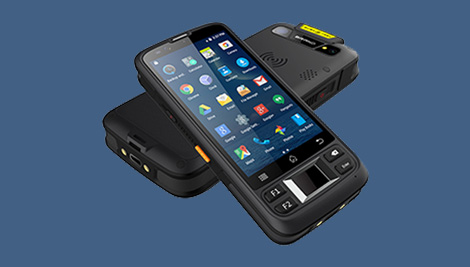
The ETC Handheld PDA adopts an industrial-grade triple-protection design (waterproof, dustproof, and shockproof), equipped with high-performance processors and large-capacity batteries to meet 7×24 hours of continuous operation requirements. Its core hardware modules include:
ETC Read/Write Module: Supports the national standard GB/T 20851 protocol, compatible with 5.8GHz microwave communication, with a recognition distance of over 10 meters, ensuring stable transactions in high-speed vehicle passage scenarios.
Multi-Mode Communication Module: Integrates 4G/5G full-network support, Wi-Fi 6, and Bluetooth 5.2, enabling real-time data transmission and device coordination.
High-Definition Camera and Scanning Engine: Supports OCR license plate recognition, QR code/barcode scanning, meeting needs for contactless payment and ticket management.
High-Precision Positioning Module: Compatible with BeiDou + GPS dual-mode positioning, with meter-level accuracy, providing support for path restoration and trajectory tracking.
2. Software Layer: Open Ecosystem Drives Scenario Innovation
Based on a deeply customized Android operating system, it possesses the following characteristics:
Multi-Task Parallel Processing: Supports simultaneous operations such as ETC transactions, license plate recognition, and ticket printing, avoiding congestion during peak hours.
Offline Disaster Recovery Capability: Automatically caches data during network interruptions and synchronizes seamlessly after recovery, ensuring business continuity.
API Open Interfaces: Can interface with third-party platforms like highway toll systems, urban parking platforms, and logistics management systems to achieve data interoperability.
II. Core Functions: From Single Toll Collection to Full-Process Control
1. Mobile Toll Collection and Inspection
Dynamic Toll Collection: At highway exits, temporary toll stations, and other scenarios, staff use the handheld device to scan vehicle ETC tags, complete deductions within 0.3 seconds, and raise barriers for passage, improving traffic efficiency by 300%.
Evasion Inspection: Automatically identifies vehicles with unpaid fees or fake plates through blacklist database comparisons, triggering audible and visual alarms and locking vehicle positions.
Multi-Media Payment: Supports various payment methods including ETC cards, WeChat Pay, Alipay, and digital RMB, meeting diverse user needs.
2. Comprehensive Vehicle Information Collection
Intelligent License Plate Recognition: The built-in algorithm for license plate recognition achieves a recognition rate of 99.9% even under complex lighting conditions, automatically associating data such as vehicle type and axle count.
OBU Status Detection: Real-time reading of On-Board Unit (OBU) battery level, signal strength, and transaction records, warning of device failure risks.
Axle Type Recognition and Weight Integration: In overweight control scenarios, automatically collects data such as axle count, total weight, and limit weight via external weight sensors, with automatic interception of overweight vehicles.
3. Emergency Management and Dispatch Command
Special Situation Handling: In cases of ETC transaction failures or vehicles without cards, quickly switches to MTC (Manual Semi-Automatic Toll Collection) mode, generating QR code payment links after entering license plate and vehicle type.
Path Restoration: Automatically generates passage paths and fee lists based on vehicle travel trajectories and gantry data, resolving cross-province billing disputes.
Emergency Command: In scenarios like traffic accidents or natural disasters, enables cross-department collaborative rescue through built-in intercom functions and cluster dispatch systems.
4. Data Empowerment and Decision Support
Real-Time Dashboard: Management can view key indicators such as traffic flow, toll revenue, and device status across sections via mobile terminals, dynamically adjusting personnel deployment.
Heat Map Analysis: Generates regional traffic flow heat maps based on vehicle positioning data, providing data support for network planning and congestion management.
User Profiling: Builds user profiles through transaction records and passage frequency data, offering insights for precision marketing and service optimization.
III. Scenario Applications: From Highways to Urban Endpoints
1. Highway Scenarios
Mobile Toll Stations: Rapidly deploy Handheld PDAs as emergency toll lanes during peak traffic periods like holidays to alleviate vehicle pressure.
Green Channel Inspection: Scans fresh produce transport vehicles via the device, automatically comparing cargo type and weight for quick green channel exemption audits.
Entry Overweight Control: Integrates weight modules at toll station entrances, automatically intercepting overweight vehicles and guiding them to return lanes.
2. Urban Parking Scenarios
Roadside Parking Management: Inspectors use the device to scan license plates, automatically generating parking orders and pushing them to the owner's app, reducing manual intervention.
Parking Lot Self-Service Payment: Owners complete payments by scanning dynamic QR codes with the device, enabling exit without stopping.
Illegal Parking Enforcement: Law enforcement personnel capture images of illegally parked vehicles, with the device automatically associating license plate and location information to generate electronic fines.
3. Logistics Park Scenarios
Monthly Pass Management: Reads truck ETC tags via the device, automatically verifying monthly pass validity and vehicle permissions for unattended access.
Cargo Tracking: Combined with RFID technology, scanning pallet tags retrieves end-to-end data such as cargo origin, destination, and temperature/humidity.
Driver Authentication: Dual verification via facial recognition and ETC tags ensures human-vehicle consistency, preventing proxy driving violations.
IV. Industry Trends: Evolution from Tool to Ecosystem
1. 5G+AIoT Empowerment
With the popularization of 5G networks, the ETC Handheld PDA will evolve into a mobile node of Roadside Units (RSUs), enabling real-time information interaction in vehicle-road collaboration scenarios. For example, on autonomous vehicle test sections, the device can push V2X information such as traffic light status and construction warnings to vehicles.
2. Carbon Trading Integration
Combined with vehicle emission data, future devices may integrate carbon credit calculation functions, providing data credentials for freight companies participating in carbon trading markets and promoting green logistics development.
3. Credit System Construction
By recording data on vehicle passage, fee payment, and violations via blockchain technology, a credit evaluation system in the transportation sector can be built, offering benefits like priority passage and fee discounts for trustworthy users.
Conclusion
The evolution of the ETC Handheld PDA is essentially a microcosm of the digital transformation in the transportation industry. From a single toll collection tool to a full-process management platform, and from hardware stacking to data intelligence, this device is redefining the interaction between humans, vehicles, and roads. As technology integration and scenario deepening progress, its role will upgrade from an "execution terminal" to a "decision hub," providing key support for building a safe, efficient, and green smart transportation system. For operators, how to mine commercial value from device data and optimize user experience will become the core competitiveness in the next phase.