

Driven by accelerated globalization and surging air travel demand, airport operations face unprecedented challenges. Rising passenger volumes, increased flight density, and upgraded service standards have rendered traditional management models inadequate for meeting efficient, precise, and secure operational needs. As a critical infrastructure for smart airport development, Zebra data collector PDAs are reshaping every aspect of airport operations with their exceptional data capture capabilities, real-time transmission performance, and industrial-grade reliability, becoming a core tool for driving industry digitalization.
I. Core Pain Points and Solutions for Smart Airport Operations
Modern airports, as urban transportation hubs, face exponentially growing operational complexity. Baggage handling systems must manage precise matching for tens of thousands of luggage items; security checks must balance efficiency and safety; ground service teams require real-time responses to flight dynamics; equipment maintenance demands predictive management... Traditional approaches relying on manual logs, paper documents, and isolated systems lead to data silos, delayed responses, and experience-dependent decision-making. For instance:
A 0.01% reduction in baggage mishandling saves airlines millions in costs.
Cutting 1 minute from security queues boosts passenger satisfaction by 3%-5%.
These statistics underscore airports’ urgent need for real-time data capture, dynamic collaborative management, and intelligent decision support.
II. Technical Advantages of Zebra Data Collector PDAs
Zebra PDA series are engineered for high-intensity industrial environments, perfectly aligning with airport operational needs:
1. Omni-scenario Data Capture
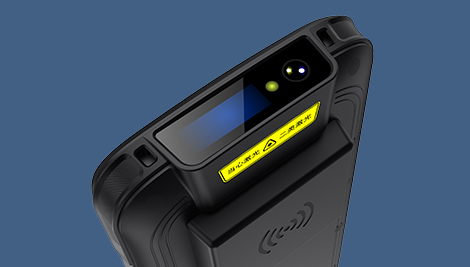
Integrated multimodal modules: 1D/2D barcode scanning, RFID reading/writing, NFC recognition, HD cameras.
Patented scanning engine decodes damaged, curved, or low-contrast barcodes with >99.9% accuracy under extreme conditions (e.g., glare, low temperatures).
2. Real-time Data Transmission & Cloud Syncing
Dual 5G/Wi-Fi 6 support with <50ms upload latency for baggage tracking and flight scheduling.
Intelligent routing algorithms ensure data continuity in complex electromagnetic environments.
3. Industrial-Grade Durability
IP65-rated dust/water resistance; withstands 1.5-meter drops.
Operates at -20°C to 60°C (-4°F to 140°F) with low-temp batteries and thermal management.
4. Smart OS & Development Platform
Custom Android OS supports seamless integration with airport apps (e.g., FMS, GMS).
SDK toolkit enables custom modules for deep process integration.
III. Scenario-based Applications in Smart Airports
1. End-to-End Baggage Tracking
Check-in: Staff scan baggage tags & boarding passes, binding data to central databases.
Sorting: PDAs auto-route luggage; flag anomalies (e.g., oversized/dangerous items).
Transfer: RFID batch-reading cuts transfer time and mishandling rates.
Arrival: Real-time baggage status updates via airport apps.
2. Intelligent Ground Service Dispatch
Task assignments (cabin cleaning, refueling) pushed to PDAs with flight details.
QR code scans confirm operations, preventing missed tasks via geotagged logs.
Real-time shuttle tracking optimizes dispatch frequency.
3. Streamlined Security Checks
ID/boarding pass scans cross-reference watchlists and flight data.
Queue analytics dynamically adjust checkpoint openings, cutting wait times by 30%.
4. Predictive Equipment Maintenance
Staff scan QR codes on conveyors/jet bridges to access SOPs.
Vibration/temperature data triggers work orders.
Historical logs build asset health profiles for procurement decisions.
IV. Long-term Value & Industry Trends
Zebra PDAs deliver lasting digital transformation benefits:
Data Assetization: Build passenger/flight/equipment databases for strategic decisions.
Process Standardization: Embed SOPs to achieve 99.9% compliance and 3-day staff onboarding.
Enhanced Emergency Response: Resource mapping via PDAs enables crisis plans within 5 minutes.
Future Outlook: Integration with AI-driven predictive analytics and IoT ecosystems will further automate decision-making, while augmented reality (AR) interfaces on next-gen PDAs may revolutionize field operations. This evolution positions Zebra devices as the backbone of Industry 4.0-ready airports.