

In the wave of intelligent transformation in the power industry, the efficiency and safety of inspection operations remain core concerns. Traditional manual inspection methods, reliant on paper records and visual observation, face challenges such as data delays, high rates of missed inspections, and management blind spots. With breakthroughs in IoT technology, handheld data collectors based on RFID (Radio Frequency Identification) technology are becoming the new generation of intelligent tools in the power inspection field. This article will deeply analyze how this innovative solution reshapes the power inspection system from three dimensions: technical principles, application scenarios, and value demonstration.
I. Technology Integration: Collaborative Innovation of RFID and Handheld Devices
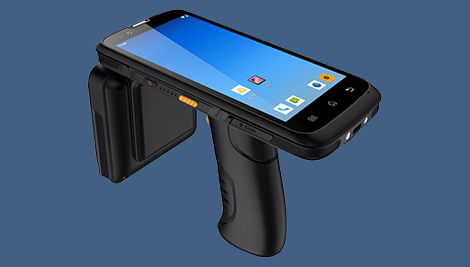
RFID technology enables non-contact data interaction via radio signals, with core advantages including rapid identification, batch reading, and strong environmental adaptability. When combined with industrial-grade handheld devices, it forms an intelligent terminal specifically designed for power inspection:
Breakthrough in Hardware Adaptability
Power inspection scenarios often involve extreme environments such as high temperatures and strong electromagnetic interference. Professional-grade handheld devices feature IP65 protection ratings, high-temperature-resistant screens, and anti-slip handles, ensuring stable operation in complex settings like substations and transmission towers. The built-in UHF RFID module can penetrate obstacles such as metal and liquids, achieving fast tag recognition within a 3-25 meter range. A single scan can complete the information collection of multiple devices.
Integrated Data Collection and Processing
The device integrates high-precision GPS and BeiDou dual-mode positioning modules to record inspection point coordinates in real time. Equipped with an industrial-grade scanning engine, it supports the reading of various identifiers including 1D/2D barcodes and NFC. Through edge computing capabilities, the handheld device can perform data validation and generate anomaly warnings locally, avoiding delays caused by network transmission dependencies.
Multi-Mode Communication Ensures Data Connectivity
It supports 4G/5G, Wi-Fi, Bluetooth, and other communication methods, allowing inspection data to be synchronized in real time with backend management systems. In areas without network coverage, the device automatically activates offline storage mode and resumes data transmission once the signal is restored, ensuring data integrity.
II. Scenario Innovation: Leap from Manual Inspection to Intelligent Management
In practical power inspection operations, the 25-meter RFID handheld data collector has established standardized application processes, significantly improving operational standardization:
1.Full Lifecycle Management of Equipment Assets
Intelligent Inventory: In scenarios such as substations and distribution rooms, inspectors use the device to scan RFID tags, completing the reading of information such as equipment model, commissioning date, and maintenance records within 3 seconds, boosting efficiency by 80% compared to traditional methods.
Anti-Misoperation Mechanism: Through NFC near-field communication, operation permissions are verified, preventing unauthorized personnel from performing high-risk operations like circuit breaker switching, thereby reducing human error risks.
2.Quality Control in Line Inspection
Trajectory Visualization: The system automatically compares preset inspection routes with actual trajectories, issuing real-time alerts for anomalies such as missed inspections or detours, increasing the completion rate from 75% to 99.9%.
Closed-Loop Management of Hidden Dangers: When issues like tower tilting or insulator damage are detected, photos/videos taken with the device are linked to RFID tags, and the backend automatically generates work orders dispatched to repair teams, shortening the handling cycle by 60%.
3.Specialized Applications in Unique Scenarios
Night Emergency Repairs: The device is equipped with a strong flashlight and infrared temperature measurement module, enabling precise positioning of fault point RFID tags in dark environments and rapid diagnosis of equipment overheating issues combined with thermal imaging.
Underground Utility Tunnel Inspection: The UHF RFID's ability to penetrate concrete makes asset management of hidden cables possible, complemented by the handheld device's rugged design, addressing challenges in humid, confined spaces.
III. Value Elevation: From Efficiency Gains to Decision Empowerment
The application of the 25-meter RFID handheld data collector is driving power inspection towards digitalization and predictive maintenance:
Data Assetization
Structured data (e.g., equipment temperature, vibration parameters) and unstructured data (e.g., on-site photos) collected by the device form a complete digital twin, providing the foundation for building equipment health index models. Practices in a provincial grid company show that fault prediction accuracy based on historical data reaches 82%, facilitating the shift from scheduled maintenance to condition-based maintenance.
Management Refinement
Through visual dashboards such as inspection route heat maps and equipment defect distribution maps, managers can accurately identify high-risk areas and optimize resource allocation. After implementation in a municipal power supply bureau, annual invalid inspection mileage was reduced by 12,000 kilometers, equivalent to saving the workload of three dedicated inspectors.
Safety Systematization
The built-in electronic fence function triggers audio-visual alarms when inspectors enter high-voltage danger zones; it can automatically Identification abnormal statuses and initiate emergency contacts, increasing operational safety by a factor of
IV. Future Outlook: Technology Convergence Driving Industry Innovation
With the maturation of digital twin and AIoT technologies, RFID handheld data collectors will exhibit three major development trends:
Multi-Technology Collaboration: Integration of lidar and UWB high-precision positioning to achieve millimeter-level spatial modeling of substation equipment, supporting innovative applications like AR inspections.
Deepened Edge Intelligence: Built-in lightweight AI algorithms enable capabilities such as partial discharge pattern recognition and automatic meter reading verification, reducing backend computational load.
Open Ecosystem Construction: Through standardized interfaces, deep integration with grid PMS and ERP systems forms a full lifecycle data flow covering design, construction, and maintenance.
In the context of new power system construction, the 25-meter RFID handheld data collector has evolved from a simple data collection tool to a hub connecting the physical and digital worlds. Its value is reflected not only in the quantitative improvement of inspection efficiency but also in the qualitative leap towards "active prevention and intelligent decision-making" in the power industry. With the deepened application of 5G+Industrial Internet, this intelligent terminal will continue to unleash data potential, safeguarding the safe operation of energy infrastructure.