

In today's era of rapid technological advancement, smart operations have become a key approach for airports to enhance service quality and optimize operational efficiency. Among the enabling technologies, the Handheld Data Terminal (PDA), with its powerful functionality and convenience, plays an indispensable role in various aspects of airport operations, injecting strong momentum into the airport's smart transformation.
I. The Intelligent "Steward" for Baggage Management
Baggage management has always been a complex and critical task in airport operations. Traditional baggage check-in, sorting, and transfer processes rely heavily on manual labor, which is not only inefficient but also prone to issues like mishandled or missed baggage. The advent of the Handheld Data Terminal (PDA) has fundamentally changed this situation.
When passengers check in their baggage, staff use the PDA to scan the baggage tag, instantly linking the baggage information with the passenger's flight details and uploading it to the system. Throughout the subsequent baggage transportation process, staff can track the baggage location anytime, anywhere via the PDA, ensuring it travels on the same flight as the passenger. For example, during baggage sorting, staff use the PDA to quickly scan the barcode on the baggage tag. The PDA automatically identifies the destination information and, based on the system's optimized routing plan, guides staff to accurately place the baggage onto the corresponding conveyor belt. This process significantly improves sorting efficiency and reduces manual sorting error rates. Statistics show that after implementing PDAs, baggage sorting time has been reduced by an average of 30% - 40%, effectively lowering passenger complaints due to baggage mishandling and enhancing the passenger travel experience.
II. The Efficient "Accelerator" for Cargo Transportation
Airport cargo operations are equally busy, demanding extremely high levels of timeliness and accuracy. The PDA plays the role of an efficient "accelerator" in cargo transportation management.
When cargo arrives at the warehouse, staff use the PDA to scan the cargo barcode or RFID tag, quickly inputting cargo information including name, quantity, weight, shipper, consignee, etc., and upload it in real-time to the warehouse management system. During inventory checks, the PDA proves invaluable. Staff simply walk through the warehouse with the PDA to quickly read cargo information and complete inventory counts. Compared to traditional manual methods, efficiency increases several-fold, and inventory error rates are drastically reduced. At the cargo outbound and aircraft loading stages, staff use the PDA again to verify information, ensuring cargo is shipped accurately and preventing mis-shipments or omissions. For instance, after introducing PDAs, one airport saw an overall cargo transportation efficiency increase of 25%, effectively boosting the competitiveness of its air cargo operations.
III. The Precise "Commander" for Airport Vehicle Dispatch
Airports host numerous vehicles, including shuttle buses, tow tractors, baggage carts, etc. Efficiently dispatching these vehicles to ensure smooth ground traffic is a major challenge in airport operations management. The PDA provides a precise solution for airport vehicle dispatch.
Each airport vehicle is equipped with an RFID tag. Staff can use the PDA to locate vehicles in real-time and monitor their operational status, such as whether they are in service, their speed, etc. Based on flight schedules and actual needs, dispatchers use the PDA to map vehicle distribution and quickly allocate vehicles on demand. Simultaneously, the PDA allows for tracking vehicle utilization rates, optimizing parking spot distribution, and improving the efficiency of vehicle resource usage. For example, during peak hours, dispatchers use the PDA to promptly allocate shuttle buses, ensuring passengers reach their boarding gates quickly and orderly, reducing wait times and enhancing service quality.
IV. The Reliable "Little Helper" for Equipment Inspection
Airports have a vast number of equipment and facilities, such as boarding bridges, lighting systems, and air conditioning systems. Regular inspection and maintenance of this equipment are crucial for ensuring normal airport operations. Traditional inspection methods, relying on manual records, were prone to missed inspections and inaccurate recordings. The application of PDAs has made equipment inspection work smarter and more standardized.
Before starting an inspection, personnel receive their inspection tasks via the PDA, including the list of equipment to inspect, the inspection route, and standards. Upon reaching the equipment location, they use the PDA to scan the equipment's QR code or RFID tag to read its information and record its operational status and any potential faults. If problems are found, inspectors can immediately report them to the maintenance department via the PDA by taking photos or uploading text descriptions. Maintenance personnel, upon receiving the notification, can quickly prepare tools and spare parts based on the detailed information provided by the PDA and proceed to the site for repairs. The use of PDAs not only improves the efficiency and accuracy of equipment inspections but also enables real-time recording and analysis of inspection data. This provides a solid basis for preventive maintenance of equipment, effectively reducing failure rates and safeguarding the safe operation of the airport.
V. The Thoughtful "Little Assistant" for Passenger Service
Beyond its vital role in operations management, the PDA also contributes significantly to enhancing the passenger service experience.
During check-in, staff use the PDA to process passengers, quickly print boarding passes, and simultaneously check flight information, seat assignments, and answer passenger inquiries. While passengers wait, staff use the PDA to stay updated on real-time flight dynamics, such as gate changes or delays, and promptly inform passengers, ensuring they receive accurate information promptly and can arrange their schedules accordingly. For special passengers, such as the elderly, children, or passengers with disabilities, staff use the PDA to record their specific needs and track them throughout the service process, ensuring they receive attentive and considerate care. For example, after one airport implemented PDAs for serving special passengers, passenger satisfaction increased by 15%, effectively enhancing the airport's service image.
VI. Powerful Functions Forge Outstanding Performance
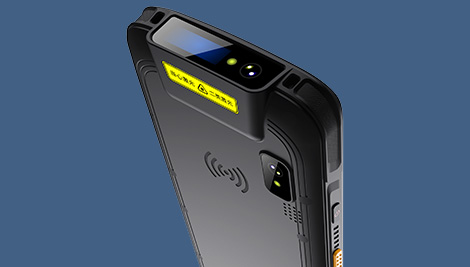
The reason why the Handheld Data Terminal (PDA) can play such a crucial role in the smart operations of airports stems from its powerful core functionalities: efficient barcode scanning, rapid RFID identification, convenient NFC communication, robust data processing capabilities, real-time information transmission, and user-friendly design. These comprehensive features enable the PDA to become a versatile and powerful tool across various airport operational scenarios, ultimately forging outstanding performance in driving the intelligence and efficiency of airport operations.