

With the continuous explosive growth of the e-commerce economy, China's total social logistics value is projected to exceed 38 trillion yuan in 2025. Traditional logistics sorting and transfer models are facing unprecedented efficiency bottlenecks. Industry research indicates that the average error rate for manual sorting is as high as 1%-3%, and during peak periods like "Double 11," sorting efficiency in some warehouses drops by over 40%. This operation mode reliant on manual experience not only struggles to meet the daily processing demands of tens of millions of parcels but also, due to issues like inventory backlog and delivery delays caused by information lag, becomes a core pain point restricting the competitiveness of logistics enterprises.
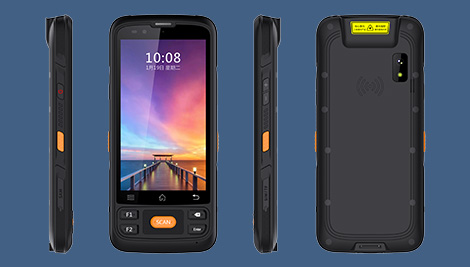
In this context, PDA (Portable Data Assistant) data collectors, as a key enabler of full-link digitalization in logistics, are becoming a breakthrough to solve industry dilemmas with their powerful real-time data processing capability and multi-scenario adaptability. By integrating cutting-edge technologies like barcode scanning, RFID recognition, and 5G communication, PDA devices construct a complete data closed loop from order generation to parcel signing, promoting a paradigm shift in logistics operations from "experience-driven" to "data-driven."
Four Major Efficiency Gaps in Traditional Sorting and Transfer
1.Severe Information Silos
Manual sorting relies on paper documents and manual entry, causing update delays of over 30 minutes for parcel information across warehousing, transportation, and distribution stages. Research from a logistics company shows that misplaced and missed shipments due to information asynchrony account for up to 27%, directly impacting customer satisfaction.
2.Clear Efficiency Ceiling
A manual sorter handles about 1,200 items per day on average, whereas an intelligent sorting system using PDA devices can achieve 3,500 items per person daily, nearly tripling efficiency. In traditional models, the sorting link constitutes over 40% of the total logistics lead time, becoming a key bottleneck constraining delivery speed.
3.Intensifying Cost Control Pressure
Labor costs account for over 55% of logistics companies' operational expenses, with an annual growth rate exceeding 8%. Estimates from one enterprise suggest that fully adopting PDA devices could reduce labor costs by 18%, while also cutting losses from missorting-related returns by approximately 12%.
4.Lagging Response to Exception Handling
When exceptions like damaged parcels or address changes occur, the traditional model requires multi-level manual communication and coordination, with an average handling time exceeding 4 hours. PDA's real-time data interaction function can compress exception response time to within 15 minutes.
The Intelligent Solution from Handheld PDA Data Collectors
As industrial-grade mobile data terminals, PDAs build an intelligent neural center for logistics operations through hardware innovation and software synergy:
1.Omni-scenario Data Capture Capability
Equipped with industrial-grade scanning engines, capable of recognizing wrinkled barcodes (recognition rate ≥99.9%), supporting multi-medium data capture including 1D/2D barcodes and RFID tags.
Integrated GPS + BeiDou dual-mode positioning system achieves real-time parcel tracking accuracy ≤5 meters, meeting stringent requirements for cross-border logistics and cold chain transportation.
2.Real-time Data Interaction Platform
Seamless integration with WMS and TMS systems via 5G/Wi-Fi communication modules, with data update delays for order information, inventory status, and vehicle dispatch <2 seconds.
Supports edge computing functionality, capable of storing 100,000 data entries offline in network-deprived environments, automatically syncing to the cloud upon network restoration.
3.Ergonomic Industrial Design
IP67-rated waterproof and dustproof housing allows stable operation in extreme environments from -20℃ to 50℃, suitable for cold storage and high-temperature warehouses.
5-inch anti-condensation touchscreen supports gloved operation; optimized key stroke design improves one-handed operation efficiency by 30%.
4.Intelligent Decision Support System
Built-in machine learning algorithms predict sorting peaks based on historical order data, automatically optimizing storage location layouts and staff scheduling. After implementation in an e-commerce warehouse, picking path length was shortened by 40%, and sorting efficiency increased by 2.8 times.
Anomaly early warning system monitors device status, battery level, etc., pushing maintenance reminders 30 minutes in advance to ensure operational continuity.
Intelligent Restructuring Practice Across the Logistics Chain
1.Precision Control in Inbound Logistics
Staff scan product barcodes via PDA, automatically retrieve order information, and generate electronic labels. The system intelligently allocates optimal storage locations based on parameters like weight and volume, achieving a 60% improvement in put-away efficiency. Simultaneously, PDA updates inventory data in real-time, increasing inventory accuracy from 85% to 99.9%.
2.Efficiency Innovation in the Sorting Process
In intelligent sorting centers, PDAs collaborate with AGV robots: after scanning a parcel with a PDA, the system automatically plans the sorting path and syncs it to the robot dispatch platform. One logistics company reported a decrease in sorting error rate from 2.1% to 0.3%, and single-item sorting time reduced from 12 seconds to 4 seconds. For cold chain logistics, specialized PDAs monitor cargo status in real-time via temperature sensors, automatically triggering alerts and adjusting transport plans upon anomalies.
3.Dynamic Optimization in Transportation
With PDAs installed in delivery vehicles, the system can monitor vehicle location, fuel consumption, load, and other data in real-time. Through route planning algorithms combined with real-time traffic information, line-haul transportation costs were reduced by 15%, and on-time delivery rate increased to 98%. In cross-border logistics, PDAs support multi-language operation and compliant cross-border data transmission, improving customs clearance efficiency by 50%.
4.Experience Upgrade in the Last-Mile Delivery
When couriers use PDAs to complete parcel sign-offs, the system automatically syncs sign-off information to the customer's phone and generates an electronic proof of delivery. For special requirements (e.g., fragile items, timed delivery), PDAs ensure service quality through voice prompts and vibration alerts. Data from one company shows a 42% decrease in customer complaints and a 28% increase in repurchase rate.
Industry Innovation Trends Driven by PDA Technology
1.Deep Integration of 5G and AI
The low-latency characteristics of 5G networks (<10ms) enables PDAs to receive cloud AI instructions in real-time, allowing dynamic sorting strategy adjustments. For example, when order volume surges in a specific area, the system automatically dispatches nearby sorters for support, improving response speed by 80%.
2.Innovative Practices in Green Logistics
Combining PDAs with technologies like hydrogen-energy vehicles and biodegradable packaging promotes carbon emission reduction in logistics. A pilot project showed that after optimizing delivery routes using PDAs, the average daily mileage per vehicle decreased by 12%, and CO2 emissions were reduced by 18%.
3.Unleashing the Value of Edge Computing
Deploying lightweight AI models on the PDA end enables local processing of functions like package damage detection and weight re-checking, reducing data transmission volume by 70% and improving system response speed by 5 times.
4.Intelligent Evolution of Supply Chain Collaboration
As an information bridge between upstream and downstream supply chain partners, PDAs can share data like inventory and production plans in real-time. One FMCG enterprise, through a PDA collaboration platform, shortened supplier lead times from 7 days to 3 days and increased inventory turnover rate by 40%.
Conclusion
Handheld PDA data collectors are becoming the core engine for the digital transformation of the logistics industry with their irreplaceable technical advantages. By building a full-link data closed loop, enhancing operational efficiency, and optimizing customer experience, PDAs not only help enterprises break through the efficiency bottlenecks of traditional models but also open up new value spaces in areas like green logistics and supply chain collaboration. With the continuous empowerment of technologies like 5G and AI, PDAs will further propel the logistics industry towards intelligent and refined development, injecting strong momentum into achieving the strategic goals of "China Logistics 2030." In this wave of data-driven industry innovation, PDA devices represent not just tool innovation but a key force reshaping the logistics industry ecosystem.