

In an era defined by consumption upgrades and a growing awareness of food safety, agricultural product traceability systems have evolved from optional features to industry essentials. Data from the Ministry of Agriculture and Rural Affairs indicates that over 78% of consumers actively check traceability information when purchasing agricultural products. Traditional manual recording and isolated monitoring methods can no longer meet the demands of full-chain supervision. The emergence of the Smart Data Collector Handheld Terminal PDA, utilizing IoT technology, blockchain verification, and multi-sensor integration, builds a digital bridge covering the journey of agricultural products "from farm to fork," equipping modern agriculture with a precise data engine.
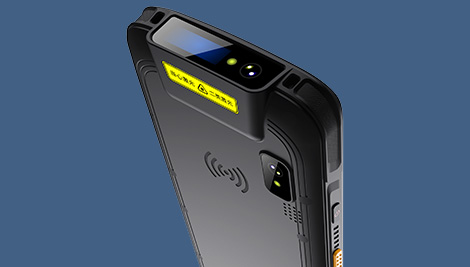
I. Hardware Innovation: Creating an All-Scenario Data Collection Tool
The Smart Data Collector Handheld Terminal PDA surpasses the functional limitations of traditional devices through three core hardware upgrades enabling groundbreaking data capture:
1.Multi-Modal Sensor Matrix
The device integrates a high-precision BeiDou positioning module (accuracy within submeter range), temperature and humidity sensors (accuracy ±0.5°C / ±2% RH), and an industrial-grade camera (13 MP, supporting QR code/barcode recognition). For instance, in fruit and vegetable cultivation, the terminal can connect with other sensors in real-time to collect 18 environmental parameters like soil EC value and pH, visualizing micro-environmental data of fields via 2.5D maps to provide quantified bases for precision farming. Its unique magnetic sensor expansion interface allows quick switching between different detection modules within 30 seconds, catering to diverse scenarios like aquaculture, processing, and storage.
2.Comprehensive Network Communication Capability
The terminal features a built-in 4G module and LoRa long-range transmission chip, enabling automatic mode switching in fields: Bluetooth 5.0 connects nearby smart irrigation systems and pest control lamps within 200 meters for real-time data sync, while 4G uploads data to the cloud platform, ensuring 99.9% connectivity even in remote mountainous areas. In cold chain logistics, the terminal collects 100 temperature/humidity data points per second. Using real-time BeiDou/GPS positioning and geofencing, it automatically identifies and alerts on transport anomalies like route deviations or prolonged stops.
3.Industrial-Grade Rugged Design
Tailored for harsh agricultural environments, the terminal boasts an IP65 dustproof and waterproof rating, withstands 1.5-meter drops, and operates reliably from -20°C to 60°C. Its 5100mAh removable battery supports 12 hours of continuous operation, complemented by a magnetic charging dock for convenient "drop-and-charge" power replenishment. Tests at a pig farm showed a failure rate below 0.3% after 18 months of continuous use in dusty, high-humidity conditions, significantly outperforming traditional portable devices.
II. Application Loop: Building a Fully Transparent Traceability System
The value of the Smart Data Collector Handheld Terminal lies in consolidating fragmented data into traceable, verifiable digital assets, playing a pivotal role throughout the agricultural product lifecycle:
1.Planting & Aquaculture: From "Experience-Based" to "Data-Driven" Farming
Pre-Production: Scanning seed/seedling tags (supporting RFID/NFC) automatically records basic data like variety name, nursery date, and quarantine info, establishing a digital cultivation file. A vegetable base in Shouguang, Shandong, saw a 70% increase in seed traceability efficiency and reduced variety mixing from 5% to 0.01% after adopting the terminal.
In-Production Management: Daily collection of irrigation logs (time, water volume), fertilizer/pesticide application (name, dosage, interval), and meteorological data (wind speed, rainfall) among 23 production log items, with data synced in real-time to a blockchain platform, forming an immutable "electronic ledger." A tea garden in Zhejiang recorded 168 tea processing steps, including precise picking times and withering temperature/humidity curves (sampled every 10 minutes), reducing quality issue traceback time from 72 hours to 15 minutes.
Post-Production Inspection: Linked with a spectrometer, the terminal enables rapid on-site testing for pesticide residues and heavy metals, generating reports in 10 seconds and automatically linking them to production data. A citrus-producing area using this feature increased field inspection coverage from 30% to 99.9%, boosting the interception rate of non-compliant products by 400%.
2.Processing & Circulation: From "Black Box" to "Visualized Flow"
Processing: In food processing plants, scanning raw material batch codes automatically retrieves environmental data and inspection reports from the cultivation stage, ensuring raw material compliance. A meat processing plant integrating the terminal into its production line recorded 19 processing data points (e.g., slaughter time, cutting specs, QC results) in real-time, raising data completeness from 65% to 99%.
Warehousing & Logistics: In cold storage management, the terminal monitors real-time temperature, humidity, and shelf load (via pressure sensors), triggering audible/visual alarms and notifying managers via mobile for anomalies. During cold chaintransport, combining BeiDou/GPS tracking with temperature/humidity curves generates a "transport environment record." A dairy company using this system saw a 62% drop in quality complaints related to transport.
Channel Integration: The terminal supports generating standardized traceability QR codes (containing PDF reports). Distributors can scan to view full-chain data, eliminating issues like loss and verification difficulties associated with traditional paper documents. A Guangdong aquatic wholesale market reduced merchant qualification review time from 3 days to 2 hours and increased product sampling pass rates by 23% after introducing the terminal.
3.Consumer End: Bridging the "Trust Gap" to Achieve "Value Resonance"
Consumers scanning the QR code with their phones access 32 traceability details, including precise geographical coordinates of the origin, key growth stage photos (e.g., fertilization day images), and original PDF inspection reports. An organic vegetable brand displaying soil test reports (covering 12 heavy metal indicators) via the terminal saw a 35% increase in repurchase rate and achieved a 40% product premium. Importantly, the terminal supports "one-click sharing" of traceability info. A grain and oil enterprise sharing their traceability story on social media saw a 210% growth in brand engagement within three months.
III. Industry Empowerment: Pioneering a New Paradigm for Agricultural Digital Transformation
The proliferation of Smart Data Collector Handheld Terminal PDAs is reshaping the operational logic of the agricultural industry chain:
1.Data-Driven Quality Control
Traditional agriculture relied on manual spot checks with a missed detection rate as high as 25%. The terminal enables "full-process data recording," allowing regulatory bodies to perform big data analysis via cloud platforms. For example, analyzing 100,000+ field data points collected by terminals helps create quality risk heat maps, directing regulatory resources precisely to high-risk areas and increasing the efficiency of dealing with problematic products by 300%.
2.Practical Value in Cost Reduction and Efficiency Gain
Calculations from a medium-sized farm showed that using the terminal reduced manual recording costs by 65% (saving 220 RMB per mu annually) and lowered the data error rate from 18% to 1.2%. In emergency responses, the terminal's rapid data retrieval capability slashed the time needed to trace pest and disease sources from 48 hours to just 2 hours, seizing the golden window for containment.
3.Building a New Commercial Credit System
Integrating blockchain technology with terminal data shifts agricultural product credibility from "reputation-based" to "data-backed." A honey enterprise recorded hive location movement trajectories (preventing "relocation fraud") and honey extraction times (ensuring mature honey) on the blockchain via the terminal, resulting in a 120% increase in export unit price. This "data as credit" model is addressing the industry challenge of high-quality products not commanding premium prices.
IV. Future Vision: Deepening Agricultural Digital Infrastructure
With the full commercial deployment of 5G and the BeiDou-3 system, Smart Data Collector Handheld Terminals are advancing into broader applications:
Hardware Iteration: Next-gen terminals will integrate satellite remote sensing data reception, directly obtaining macro-level data like crop growth and disaster warnings, forming an integrated "space-ground""three-dimensional"monitoring network with ground-collected data.
Scenario Expansion: Evolving from single-product traceability to "management of all agricultural factors," supporting composite functions like agricultural machinery dispatch (assigning tasks via terminal), agricultural supply management (inventory counting via scanning), and personnel attendance (location-based check-in), positioning the terminal as an all-around "digital assistant" for agricultural production.
Ecosystem Development: Terminal manufacturers are facilitating data interoperability with government regulatory platforms, e-commerce platforms, and financial institutions. For instance, a provincial rural credit cooperative developed a "Traceability Loan" product based on cultivation data collected by the terminal, offering interest rates 15% lower than traditional agricultural loans, thereby transforming "data assets" into "financial assets."
Conclusion: Granting Every Agricultural Product a Digital ID
The significance of the Smart Data Collector Handheld Terminal PDA extends far beyond being a highly efficient data collection device—it serves as the "last-mile" connector for agricultural digitalization, a "digital notary" for consumer trust, and crucial "infrastructure" for industry upgrade. When the irrigation records of every vegetable and the vaccination history of every pig can be accurately recorded and traced, agriculture truly transitions from a extensive model of "relying on weather" to a value-driven era of "relying on data." Driven by both rural revitalization and consumption upgrades, this "small device" is unleashing "massive energy" to reshape the future of agriculture, making safety and quality the shining digital labels of Chinese agricultural products.