

In today’s rapidly developing retail chain industry, inventory management has become a core factor affecting enterprise competitiveness. Traditional manual inventory methods are inefficient and error-prone, failing to meet the real-time and accurate data demands of modern retail enterprises. As intelligent devices specifically designed for retail scenarios, handheld terminals, with their efficient data collection capabilities, stable system performance, and scenario-specific functional design, are reshaping the warehousing and inventory processes of retail chains. This article will provide an in-depth analysis from three dimensions—technical features, application scenarios, and implementation benefits—on how handheld terminal manufacturers help the retail industry achieve digital transformation through professional solutions.
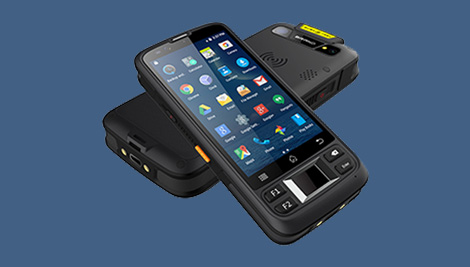
I. Handheld Terminal Technological Innovation Driven by Retail Scenario Demands
Scenario-Specific Adaptation of Hardware Configuration
The warehouse environments of retail chain enterprises are complex, ranging from ambient storage to cold chain management, and from standard shelving to irregular packaging, placing stringent requirements on equipment durability. Professional handheld terminal manufacturers adopt industrial-grade rugged standards (IP65 and above protection rating), with devices capable of withstanding 1.5-meter drop impacts and adapting to extreme temperatures from -20°C to 60°C. To meet high-intensity scanning demands, they are equipped with professional-grade scanning engines that support recognition of 1D/2D barcodes, damaged codes, reflective codes, and other special barcodes. Scanning speeds can reach over 50 times per second, ensuring fast and accurate capture in dense shelving environments.
Flexible Design of System Architecture
Based on the multi-store, cross-regional operational characteristics of retail enterprises, handheld terminals require powerful network adaptability. Devices support Wi-Fi 6 dual-band concurrency, 4G/5G full-network compatibility, ensuring real-time data synchronization to cloud management systems. For network dead zones, built-in offline cache functionality can store over 100,000 data records, automatically resuming transmission upon network restoration to ensure business continuity. At the operating system level, both Android and customized system versions are offered, meeting both standardized application needs and allowing deep customization according to specific enterprise workflows.
Humanized Upgrade of Interactive Experience
Considering the long-duration operational needs of warehouse personnel, devices employ ergonomic design, with weight controlled under 300g, and feature dual operation modes: physical scan buttons and touchscreens. The 5.5-inch high-definition display is coated with anti-glare film, ensuring clear information visibility even in bright light conditions. For cold chain scenarios, a glove touch mode is specifically developed, allowing operators to complete data entry without removing protective gear, significantly improving operational efficiency.
II. Deep Application of Handheld Terminals in Warehousing and Inventory Scenarios
End-to-End Digital Management
During goods receiving, handheld terminals scan supplier delivery note barcodes, and the system automatically verifies against purchase order information, enabling real-time checks of item quantities and specifications. For SKU-intensive merchandise like apparel and footwear, devices support batch scanning mode, capable of recognizing over 300 barcodes in a single scan. Combined with RFID technology, entire carton goods can be received in seconds. During inventory counting, the system automatically records product storage locations, generating 3D visual location maps to provide precise navigation for subsequent picking operations.
Real-Time Monitoring of Dynamic Inventory
Traditional inventory cycles are typically monthly, while handheld terminal solutions can increase frequency to daily or even real-time. By scanning shelf barcodes with the PDA, the system instantly retrieves theoretical vs. actual inventory data, automatically triggering a review process if discrepancies exceed the threshold. For high-value goods, a dual-operator cross-check inventory mechanism can be set up to ensure data accuracy. Practice data from a supermarket chain shows that after implementing this solution, inventory accuracy improved from 82% to 99.99%, and shrinkage rates decreased by 78%.
Support for Intelligent Replenishment Decisions
The system integrates algorithmic models that automatically generate dynamic safety stock thresholds based on multiple parameters: sales data, inventory turnover rates, supplier lead times, etc. When actual inventory nears the alert line, the handheld terminal pushes replenishment reminders along with pre-filled suggested order quantities. For special scenarios like promotions and holidays, replenishment strategies can be quickly adjusted to avoid both stockout losses and overstock risks.
III. Multi-Dimensional Analysis of Solution Implementation Benefits
Optimization of Labor Costs
A case from an apparel chain showed that the required staff for inventory counting per store was reduced from 8 to 3 people, and the time for a single inventory count was compressed from 12 hours to 3.5 hours. The built-in voice prompt feature shortened new employee training cycles by 60%, significantly reducing the impact of staff turnover on operations.
Leap in Operational Efficiency
Through barcode management and automated data synchronization, goods receiving efficiency was improved by 300%, and picking accuracy reached 99.9%. Practice from a 3C retailer indicates that store turnover rates increased by 42%, slow-moving inventory dropped from 18% to 0.01%, leading to an annual reduction of tens of millions in inventory holding costs.
Upgrade in Management Decision-Making
Real-time inventory data supports decision-making for procurement, marketing, and logistics departments. A supermarket group optimized product display layouts using sales data collected via handheld terminals, resulting in a 27% sales increase for key categories. System-generated inventory health reports provide quantified evidence for supplier evaluation and contract negotiations.
IV. Core Considerations for Choosing a Professional Manufacturer
Accumulated Industry Experience
An excellent manufacturer should possess over 10 years of service experience in the retail industry, familiar with the management characteristics of various sectors like apparel, FMCG, and 3C. Its solutions should be ISO9001 quality management system certified, with devices tested for MTBF (Mean Time Between Failures) exceeding 50,000 hours.
Customization Development Capability
From scanning strategy configuration to business process reengineering, the manufacturer needs rapid response capability. For instance, to meet batch management needs for fresh goods, a FIFO (First-In-First-Out) scanning strategy can be developed; for jewelry and valuables, electronic tagging and dual authorization mechanisms can be integrated.
Service Network Coverage
Nationwide service network layout is crucial, offering 7x24 technical support and a 12-hour on-site response mechanism. Equipment repair cycles should be controlled within 48 hours, with backup device plans ensuring business continuity.
V. Future Trend Outlook
As retail formats continue to evolve, handheld terminals are transitioning from simple data collection tools to intelligent terminals. The application of 5G and edge computing technologies will equip devices with localized decision-making ability; deep integration and coordination with AGV robots and smart warehousing systems will push retail logistics towards unmanned operations. Professional manufacturers are building PaaS platforms, opening device interfaces and data middle platforms to help enterprises build end-to-end digital closed loops.
In the journey of retail chain enterprises towards high-quality development, as the professional handheld terminal manufacturer, our handheld terminals are no longer mere tool replacements but have become strategic assets that reconstruct supply chain efficiency and enhance the consumer experience. Choosing a manufacturer with deep industry accumulation and technological foresight will be the key decision for enterprises to seize the opportunity in digital transformation.