

In the wave of global manufacturing, enterprises have an increasingly urgent need for real-time collection, traceability, and management of production data. Overseas Android handheld terminals PDAs, with their professional industrial-grade design, Android system adaptability, and multi-scenario compatibility, have become core tools connecting the production site to MES systems. This article will deeply analyze their technical features, application value, and compliance advantages, providing professional reference for enterprise selection.
I. Industrial-Grade Protection Design: Adapting to Harsh Production Environments
The handheld terminal adopts an IP65 protection rating design. Its sealed structure effectively prevents dust intrusion and meets level 6 water-jet protection requirements, ensuring stable operation even in humid, dusty workshop environments. The device housing uses high-strength engineering plastics and rubber cushioning structures, verified through multiple drop tests from 1.5 meters height, enabling it to withstand accidental impacts common in industrial scenarios and ensuring long-term reliability. This protective capability makes it excel in mobile operation scenarios such as automotive parts, electronic assembly, and logistics warehousing, reducing equipment failure rates due to environmental factors.
II. Core Functions: From DPM Code Scanning to MES Data Synchronization
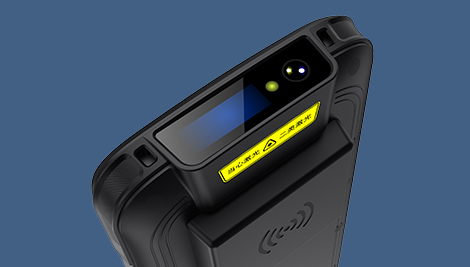
The device is equipped with a high-precision laser scanning module, specifically designed for DPM (Direct Part Marking) codes. DPM codes are typically engraved directly on metal part surfaces, offering advantages like wear resistance and high-temperature tolerance compared to traditional barcodes. The terminal uses optimized scanning algorithms to quickly identify low-contrast, small-sized DPM codes, enabling precise traceability of production batches. Scanned data is processed by the built-in Android system and synchronized in real-time to enterprise MES systems via Wi-Fi, Bluetooth, or 4G networks, forming a complete process data loop.
For process data collection, the device supports customizable data collection templates. Operators can quickly input information such as process status, inspection results, and operator IDs via touchscreen or physical buttons. The system automatically associates timestamps and device IDs to create traceable electronic records. This design reduces errors from manual paper records while meeting ISO quality management system requirements for data integrity.
III. Android System Adaptation: Open Ecosystem and Customization Capability
The use of the Android operating system is a key technical highlight. The Android system's widespread application in industrial handheld devices stems from its open app ecosystem and strong hardware compatibility. Enterprises can develop customized apps based on their needs, enabling deep integration with existing ERP, WMS, and other systems. For example, by leveraging Android's Bluetooth module, it allows quick pairing with smartwatches and wireless headphones; using Wi-Fi Direct, it enables direct data transfer between devices without routers.
The system supports multitasking and parallel processing, with the user interface customizable based on user preferences. For instance, in automotive parts production workshops, commonly used function icons can be fixed on the home screen, allowing quick switching to scanning mode or data entry interfaces via gestures. This flexibility ensures it meets basic functions while adapting to special process requirements of different enterprises.
IV. Compliance and Export Suitability
As an exportable industrial device, this terminal complies with multiple international certification standards. For electromagnetic compatibility, it passes CE and FCC certifications, ensuring legal use in European and American markets. For safety standards, it meets IEC 60950-1 requirements to protect operator safety. In terms of environmental protection, it complies with RoHS directives, restricting the use of hazardous substances. These certifications provide legal assurance for its global market circulation.
Regarding export processes, the device supports multi-language interface switching, with built-in common industrial language packs such as English, Spanish, and German, meeting the needs of multinational enterprises across regions. Additionally, the device comes pre-installed with global time zone and date systems, automatically adjusting time displays based on geographical location to prevent data recording errors due to time zone differences.
V. Application Scenario Expansion and Value Extension
Beyond basic production data collection, the terminal performs excellently in scenarios like logistics sorting, equipment inspection, and asset inventory. In logistics sorting centers, it updates sorting path information in real-time by scanning package labels. For equipment inspection, it quickly reads historical maintenance records via NFC tags. During asset inventory, it generates digital asset lists through batch scanning, improving efficiency.
From a cost-benefit perspective, the terminal reduces manual data entry errors and shortens production cycles through real-time data synchronization, enhancing overall operational efficiency. In the long term, its industrial-grade protection lowers maintenance costs, while the open Android system reduces custom development expenses, yielding a favorable return on investment.
Conclusion
The overseas Android handheld terminal PDA builds a complete solution from data collection to system integration, based on industrial-grade protection, the Android platform, and core functions of DPM code scanning and MES synchronization. Its design philosophy fully embodies the balanced pursuit of reliability, flexibility, and compliance in industrial equipment, providing reliable hardware support for manufacturing digitalization. In the future Industry 4.0 wave, such devices will continue to play a key role in data connectivity, driving production management toward smarter, more efficient evolution.