

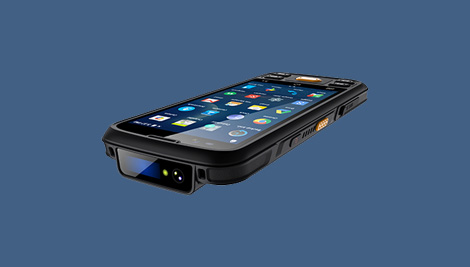
Amid the wave of digital transformation, the warehousing and logistics industry is undergoing unprecedented innovation. Traditional warehouse management relying on manual inventory counts and paper-based records can no longer meet modern enterprises' stringent demands for efficiency, accuracy, and cost control. The deep application of IoT technology has injected new momentum into this field, with IoT handheld PDAS terminals emerging as core tools for smart warehouse construction through their data capture, real-time interaction, and intelligent processing capabilities. This guide analyzes the technical features, application scenarios, and practical value of IoT handheld terminals, exploring innovative approaches to inventory management.
I. Core Challenges in Smart Warehouse Management & Technological Breakthroughs
Traditional warehouse inventory faces three persistent problems:
1.Data Latency: Time gaps between manual entry and system updates cause inventory data to diverge from actual stock status
2.Operational Inefficiency: Reliance on paper documents or barcode scanners for item-by-item scanning creates cumbersome workflows prone to errors
3.Spatial Blind Spots: Dense shelving and stacked goods complicate item location tracking, forcing reliance on experiential judgment
IoT handheld terminals integrate RFID technology, high-precision sensors, and wireless communication modules to achieve real-time mapping between physical and digital systems. Their core value lies in breaking data silos and incorporating "person-goods-location" elements into dynamic management networks, providing end-to-end visual solutions.
II. Technical Architecture & Functional Advantages of IoT Handheld PDA Terminals
1. Multimodal Data Capture
RFID Technology: Non-contact electronic tag reading supports batch identification and long-range scanning (5x faster than barcodes)
1D/2D Barcode Scanning: Compatible with existing warehouse labeling systems
Environmental Sensors: Monitor temperature, humidity, light, and vibration with automatic anomaly alerts
2. Real-time Positioning & Path Optimization
UWB Positioning: Centimeter-level accuracy for precise shelf navigation
Intelligent Routing: Generates optimal counting paths based on inventory distribution
Geofencing: Instant alerts for unauthorized zone breaches
3. Edge Computing & Cloud Integration
Local Data Processing: On-device algorithms for data validation without network dependency
Cloud AI Integration: API connectivity to WMS for stock alerts and replenishment predictions
Offline Sync: Local data caching during network outages with auto-synchronization upon recovery
III. Practical Applications in Smart Warehouse Operations
1. Dynamic Inventory Visualization
Real-time counts with <0.01% error rates
Cycle counting replacing annual audits (99.5%+ accuracy)
Automated discrepancy tracing with audit trails
2. Intelligent Picking & Replenishment
Voice-guided wave picking (70% shorter training cycles)
Automated replenishment triggered by safety stock thresholds
Cross-docking integration with TMS systems (40% faster turnover)
3. Asset Lifecycle Management
Access control via facial recognition + terminal authorization
Maintenance tracking through QR code scanning
Disposal analysis based on depreciation models
IV. Implementation Essentials
1. Hardware Selection
IP65+ rated for harsh environments
Hot-swappable batteries supporting 12h continuous operation
Ergonomic design with physical keypads
2. System Integration
RESTful APIs for ERP/WMS connectivity
Customizable interfaces for unit conversions and batch attributes
SM4 encryption with remote wipe capabilities
3. Maintenance Management
Real-time monitoring of device status and location
Comprehensive audit logs for compliance
Consumable usage analytics for cost control
V. Future Trends & Challenges
Emerging developments include:
AIoT Integration: Lightweight ML models for anomaly detection
AR Assistance: Virtual overlays for complex operations
AMR Collaboration: Transition from "man-to-goods" to "goods-to-man"
Key implementation challenges remain in data security, device compatibility, and workforce upskilling. Enterprises must establish a tripartite "technology-management-talent" framework to fully leverage IoT potential.
Conclusion
IoT handheld PDAs serve as strategic pivots for transforming inventory management from cost centers to value generators. As technology ecosystems mature, these terminals will continue driving warehouses toward greater efficiency, flexibility, and sustainability.