

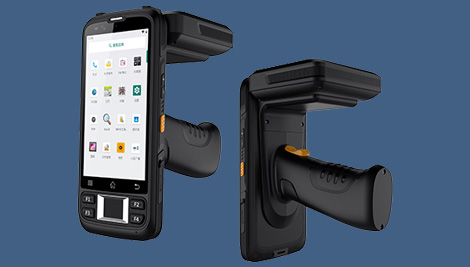
In the power and energy sector, the efficiency and accuracy of asset management directly impact the safety and stability of grid operations. With the rapid advancement of IoT technology, 20-meter Ultra-High Frequency (UHF) Handheld RFID (Radio Frequency Identification) terminals have emerged as a core tool for power asset management, leveraging their non-contact identification and high-efficiency data capture capabilities. This article explores the innovative application of handheld RFID terminals in power energy asset management, covering technical principles, implementation scenarios, value delivery, and future trends.
I. Challenges and Needs in Power Energy Asset Management
Power industry assets are characterized by large quantities, wide distribution, and complex types—spanning substation equipment, transmission line fittings, metering instruments, and emergency supplies, often encompassing dozens of categories and tens of thousands of items. Traditional methods relying on manual records, paper logs, or barcode scanning face critical pain points:
Data Latency: Manual inventory cycles are slow, delaying asset status updates and hindering real-time decision-making.
High Error Rates: Manual entry leads to omissions and inaccuracies, causing discrepancies between records and physical assets.
Low Inspection Efficiency: Paper-based inspection processes lack standardization and data traceability.
Slow Emergency Response: Locating materials during outages relies on manual searches, delaying repairs.
Handheld RFID technology provides a digital solution to these challenges.
II. Core Advantages of Handheld RFID Technology
RFID automatically identifies targets and captures data via radio signals, while handheld terminals make the process portable and intelligent. Key advantages include:
Non-Contact Identification: Eliminates manual scanning; reads multiple tags within 1-20 meters, boosting identification efficiency by 5x.
Strong Environmental Adaptability: Reliably operates near metal, liquids, and in harsh conditions like high-voltage cabinets and cable trenches.
Real-Time Data Sync: Instantly uploads asset changes to management systems via 4G/5G or Wi-Fi, enabling dynamic asset registers.
Multi-Dimensional Data Capture: Records asset location, temperature, vibration, and other parameters, supporting predictive maintenance.
III. Key Applications of 20-Meter UHF Handheld RFID in Power Asset Management
1. Full Lifecycle Management of Power Equipment
RFID enables digital tracking from procurement to decommissioning:
Procurement: Scanning RFID tags during intake automatically links equipment models, parameters, and supplier data to create digital records.
Issuance: Systems verify personnel permissions and update inventory status in real-time, preventing asset loss.
Inspections: Technicians scan tags to auto-retrieve maintenance history, log results, upload visual evidence, and close the workflow loop.
2. Smart Warehousing and Material Dispatch
RFID enables precise "bin-level" management in warehouses:
Rapid Inventory: Handheld terminals batch-read shelf tags, completing full-warehouse counts in ≤30 minutes with 99.9% accuracy.
Optimized Picking: Systems generate optimal paths based on orders, guiding staff to items faster.
Dynamic Replenishment: Monitors stock levels in real-time, triggering automatic reorders when supplies fall below safety thresholds.
3. Emergency Repair Material Response
During grid failures caused by extreme weather, RFID accelerates restoration:
Material Locating: Queries nearby warehouses or repair vehicles via RFID tags to find required items instantly.
Dispatch Verification: Scans confirm specifications and expiry dates during issuance, preventing errors.
Usage Tracking: Records consumption time, location, and purpose for post-event analysis.
IV. Demonstrated Value and Results
Industry implementations confirm transformative efficiency gains with handheld RFID:
80% Faster Inventory: Cycle time reduced from 3 days to 6 hours, cutting labor costs by 60%.
99.9% Record-Accuracy: Automated checks reduce human errors by 90%.
50% Shorter Inspections: Standardized workflows cut per-inspection time from 2 hours to 1 hour.
30% Quicker Emergency Response: Material dispatch time drops from 45 to 30 minutes, accelerating power restoration.
Conclusion
The 20-meter UHF Handheld RFID terminal, with its real-time capability, precision, and efficiency, is reshaping power energy asset management. It shifts from "static record-keeping" to "dynamic asset sensing," and from "experience-driven inspections" to "data-informed intelligence." As the technology evolves, RFID will play an increasingly vital role in building next-generation power systems.