

Within the energy sector, asset inspection remains critical for grid reliability. Legacy approaches relying on manual logs, paper forms, and experiential assessments suffer from inefficiency, data vulnerability, and delayed risk identification. Leveraging mature IoT and 5G technologies, rugged handheld terminals now redefine power inspections through precision, intelligence, and operational resilience. This whitepaper examines how industrial PDAs transform energy asset management via three pillars: engineered durability, field applications, and quantified ROI.
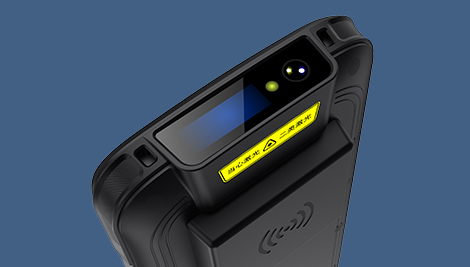
I. Engineered for Extreme Field Environments
Power inspection demands uncompromising performance in harsh conditions. Industrial handhelds deliver through:
MIL-STD-810H & IP65 Compliance: Operates at -20°C to 60°C, survives 1.5m drops, resists dust/water ingress. ATEX/IECEx variants available for explosive atmospheres.
Multi-Sensor Data Capture:
UHF RFID reading at 15m range
Low-light optimized F1.6 camera with focus assist
Unified interface for thermal imagers, partial discharge detectors
Uninterrupted Connectivity: Dual-SIM 5G, dual-band Wi-Fi 6, Bluetooth 5.2 with edge data buffering.
Hot-swappable 5000mAh batteries supporting QC3.0 fast charging (4h runtime per 35-min charge).
II. Deployment Scenarios: Grid to Substation
1. Transmission Line Inspection
GIS-optimized patrol routing
On-device AI identifying 20+ defects (corona rings, insulator contamination, conductor damage)
LiDAR-based clearance analytics for vegetation management
2. Substation Asset Management
NFC/RFID-driven equipment lifecycle tracking
Integrated infrared thermography (accuracy: ±2°C)
Partial discharge mapping (<10cm spatial precision)
3. Emergency Response Operations
Automated trouble ticket dispatch with historical repair logs
Real-time 5G video collaboration for remote expert guidance
Smart inventory management via QR code scanning
III. Operational KPIs: Quantified Outcomes
40% faster inspections: Digital workflows reduce per-circuit time from 3.2h to 1.9h
3x defect sensitivity: Early-stage failure detection rate increases to 38% (from 12%), slashing outages by 52%
25% lower TCO: Predictive maintenance reaches 78% penetration, extending asset lifespan 2-3 years ($16M annual savings per GW-scale plant)
IV. Next-Gen Evolution: Intelligence Convergence
AR-guided maintenance with BIM overlay
Failure probability forecasting (30-day horizon)
Power loss analytics for carbon footprint optimization
Rugged handhelds catalyze the strategic shift from reactive restoration to predictive grid management, establishing foundational infrastructure for energy transition.