

Today, with the rapid development of the logistics industry, warehouse management efficiency directly affects enterprises' operational costs and customer satisfaction. As a key device connecting physical objects and digital systems, PDA handheld terminals are becoming the core tool for modern warehouse inbound management due to their portability, accuracy, and real-time capabilities. This article will deeply analyze how warehouse PDA handheld terminal manufacturer equipment empowers the optimization of the entire logistics inbound process from three dimensions: device characteristics, application scenarios, and implementation points.
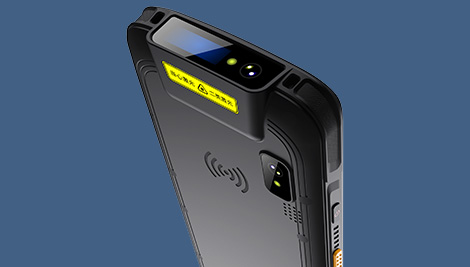
I. Technical Advantages of PDA Handheld Terminals and Equipment Selection Logic
The requirements for data collection devices in logistics warehouse scenarios are far higher than in ordinary commercial scenarios. In the inbound link handling thousands of goods daily, the equipment needs to simultaneously meet the following core requirements:
Industrial-grade protection design
The warehouse environment is complex and variable; devices must have IP65-rated dustproof and waterproof performance and withstand a 1.5-meter drop impact. Test data from a professional manufacturer shows that their equipment can still operate stably in temperature ranges from -20°C to 60°C and 95% humidity environments, which directly ensures applicability in cold chain storage and open-air storage yard scenarios.
Long-lasting battery solution
Equipment with a detachable dual-battery design can achieve 24-hour continuous operation. Through an intelligent power management system, the device can automatically adjust power consumption based on scanning intensity; actual tests show it can maintain over 8 hours of working time in continuous scanning mode.
High-precision data collection capability
Equipment equipped with professional-grade scanning engines can achieve a 99.8% recognition rate for damaged barcodes and reflective film barcodes. Actual test data from an enterprise shows that after using PDA, the barcode misreading rate decreased from 3.2‰ with traditional handheld devices to 0.01‰, and daily recheck workload reduced by 70%.
Wireless communication stability
Support for dual-band Wi-Fi 6 and 4G/5G full-network compatibility enables seamless roaming switching within a 5000㎡ warehouse. A third-party test report indicates that the signal attenuation rate in dense metal shelf areas is 37% lower than the industry average, ensuring reliability of real-time data upload.
II. Six Core Application Scenarios of Warehouse PDA Handheld Terminal Manufacturer Equipment in Inbound Operations
Pre-arrival notification processing
Through integration with the TMS system, PDA can obtain electronic shipping information in advance. Receiving personnel scan container numbers or license plate numbers, and the system automatically compares with the appointment list, achieving:
Rapid check-in for arriving vehicles
Intelligent pre-allocation of goods attributes (e.g., temperature-controlled zones, hazardous material zones)
Dynamic scheduling of dock resources
Goods counting and acceptance
Adopting the "three-step verification method" to ensure data accuracy:
Scan the logistics unit barcode (SSCC) to obtain the system's expected list
Scan each item's barcode for actual receipt verification
Take exception photos as evidence for discrepant items
Actual test data from an e-commerce warehouse shows that this process improves counting efficiency by 40% and reduces missed inspection rates from 0.8% to 0.05%.
Batch attribute management
Through PDA's custom field entry function, the following can be recorded simultaneously:
Production date/expiration date
Inspection report number
Supplier batch number
This data will be automatically linked to the WMS system, providing foundational support for subsequent inventory turnover strategies.
Intelligent location allocation
Combined with RFID positioning technology, the equipment can achieve:
Real-time acquisition of vacant location information
Recommendation of optimal storage locations based on goods attributes (size, weight, turnover rate)
Automatic planning of the best putaway path
After application in an auto parts warehouse, shelf utilization increased by 28%, and picking paths shortened by 35%.
Inspection information collection
Through external Bluetooth detection devices, it can achieve:
Real-time upload of temperature and humidity recorder data
Appearance defect image capture
Automatic measurement of weight/volume
This data will automatically generate electronic inspection reports, replacing traditional paper document circulation.
System data synchronization
Using an edge computing architecture, the device can store over 5000 operation records offline and automatically complete data retransmission after network recovery. Tests in a pharmaceutical warehouse show that this mechanism maintains system data integrity at 99.99%.
III. Five Key Elements for Efficient Implementation of PDA Systems
Process adaptability design
A three-level mapping mechanism must be established:
Business scenario → Functional module
Functional module → Device configuration
Device configuration → Operation interface
For example, mapping the "fresh produce acceptance" scenario to "low-temperature scanning mode," automatically increasing screen brightness and disabling auto-sleep.
Operation interface optimization
Follow the "three-click principle" for interaction design:
Core functions no more than three-level menus
Common operations support custom shortcuts
Key data uses high-contrast color schemes
After customizing the interface at an enterprise, new employee training cycles shortened by 60%.
Network architecture planning
It is recommended to adopt a "cellular" deployment scheme:
Deploy enterprise-grade APs in the main warehouse
Set directional antennas in the dock area
Use anti-condensation POE switches in cold storage
Actual tests show this solution can reduce network coverage blind spots by 92%.
Operation and maintenance management system
Establish a three-level maintenance mechanism:
Daily inspection: Operators self-check device status
Weekly inspection: IT personnel update system versions
Monthly inspection: Professional engineers perform deep maintenance
Develop a device health monitoring APP that can obtain in real-time:
Battery health
Scan head wear level
Memory usage rate
Personnel training system
Design a "3+X" training course:
Basic operations: 3-hour standardized course
Exception handling: Scenario simulation drills
Efficiency optimization: Customized skill training
X represents specialized modules developed based on job requirements, such as inspectors needing to learn image capture standards.
IV. Future Development Trends
With the deepening application of IoT technology, PDA handheld terminals are evolving from single data collection devices to smart warehouse hubs:
Augmented reality assistance: Through optical see-through display technology, projecting operation guidance directly onto physical objects
Voice control interaction system: Enabling contactless operation in clean environments or when wearing gloves
Automatic charging system: Combining with AGV technology to achieve automatic device return for charging
An industry innovator has developed a PDA integrated with UWB precise positioning, enabling:
Personnel movement heatmap analysis
Collision prevention warnings
Smart work order push
Tests show it can increase warehouse space utilization by 15%.
In the current era of accelerated digital transformation, warehouse PDA handheld terminal manufacturer equipment is no longer just simple scanning tools but the nerve endings for building smart warehouses. Through scientific selection, meticulous implementation, and continuous optimization, enterprises can fully unleash their enabling value, building hard-to-replicate operational advantages in the fierce market competition. With the deep integration of 5G and industrial internet, this innovation in warehousing triggered by handheld terminals is redefining the efficiency boundaries of modern logistics.