

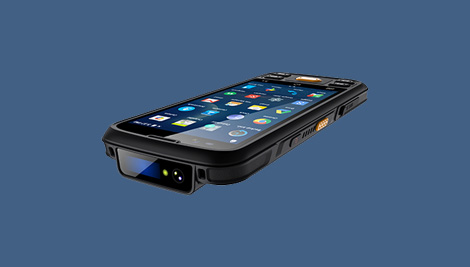
In the modernization of agriculture, the livestock farming industry is undergoing profound innovation, transitioning from traditional extensive management to refined operations. With the proliferation of IoT technology and breakthroughs in mobile terminal performance, professional-grade PDA handheld terminals based on the Android system have become core tools for ranch management. These devices not only revolutionize traditional paper-based recording methods, but the ultra-high frequency RFID mobile PDA Android handheld terminal also builds an efficient, precise, and traceable modern management system for livestock enterprises through real-time data collection, intelligent decision support, and other functions.
I. Mobile Data Collection: Reconstructing Ranch Information Flow
1.1 All-Scenario Data Entry Capability
Modern livestock management requires comprehensive monitoring of individual animal information, environmental parameters, and production processes. The mobile PDA Android handheld terminal, through customized development, integrates ultra-high frequency RFID reading modules, barcode scanning engines, high-precision Beidou/GPS positioning, and other functions, enabling:
Ear Tag Information Second-Level Reading: Rapid identification of electronic ear tags via NFC technology, automatically linking to livestock pedigrees and vaccination records.
Real-Time Environmental Parameter Collection: Connecting to sensors like temperature-humidity detectors and ammonia monitors to build a digital twin of the breeding environment.
Mobile Inspection System: Achieving paperless operations in key areas such as feed distribution, milk production monitoring, and disease screening.
1.2 Smart Form System
Leveraging the open ecosystem of the Android system, the terminal can be equipped with customized inspection apps. Through interactive methods like drop-down menus, voice input, and handwritten signatures, it accommodates the operational habits of workers with varying education levels. The system supports offline caching, ensuring data collection can be completed even without network connectivity, with automatic synchronization to the cloud database upon signal restoration.
II. Precision Livestock Management: Six Core Application Scenarios
2.1 Dynamic Management of Individual Health Records
Each device can store tens of thousands of livestock records. By scanning ear tags, complete archives including birth dates, breed characteristics, reproduction history, and medication records can be retrieved. During veterinary inspections, vital signs such as body temperature and respiratory rate can be recorded on-site, with the system automatically comparing against standard value ranges and generating health assessment reports.
2.2 Breeding Optimization
During the breeding season, staff use handheld terminals to record key data such as estrus behavior and semen quality. The system recommends optimal breeding schemes through algorithms. For technologies like embryo transfer, bidirectional traceability between donor and recipient information is achieved, significantly improving reproduction success rates.
2.3 Precise Feed Control
By connecting to smart silo systems, the terminal displays parameters like daily ration formulas and feed intake for each animal. Dynamic adjustments are implemented for different growth stages (e.g., calf, fattening, lactation), reducing feed waste while ensuring nutritional accuracy.
2.4 Epidemic Prevention System
Electronic vaccination records are established, with reminder cycles set. When suspected cases are identified, staff can take on-site photos of symptoms and enter clinical test data. The system automatically matches disease databases to provide preliminary diagnostic suggestions and generates isolation and treatment guidelines.
2.5 Full Lifecycle Management of Ranch Assets
From fencing to equipment, each asset is bound to a unique electronic tag. Regular scanning and inventory checks enable real-time tracking of device location, usage status, and maintenance records, with preset depreciation models automatically generating asset valuation reports.
2.6 Mobile Office Collaboration
Managers can approve purchase requests, review production reports, and assign tasks via the terminal. For larger ranches, UWB precise positioning functions allow real-time viewing of inspector location trajectories, optimizing human resource allocation.
III. Professional-Grade Hardware Configuration: Tackling Complex Breeding Environments
3.1 Military-Grade Protection Design
For the unique ranch environment, ultra-high frequency RFID mobile PDA Android handheld terminals meet IP65 dustproof and waterproof standards and withstand 1.5-meter drop impacts. Screens use Corning Gorilla Glass, supporting glove touch and wet-hand operation to ensure stable performance in humid, dusty conditions.
3.2 Long-Endurance Solutions
Built-in removable high-capacity batteries, combined with intelligent power management systems, support over 10 hours of continuous use. Fast-charging technology allows a 30-minute charge to meet all-day operational needs.
3.4 4G/5G Dual-Mode Communication
Equipped with high-performance processors, the terminal maintains stable network connectivity even in remote ranches. Dual-SIM support enables simultaneous access to IoT private networks and public networks, ensuring data transmission security.
IV. System Integration Advantages: Building a Digital Breeding Ecosystem
4.1 Open API Interfaces
The mobile PDA Android handheld terminal seamlessly integrates with existing ranch ERP systems, financial software, and e-commerce platforms, breaking down information silos. Standardized data interfaces enable full-chain traceability from breeding to sales.
4.2 Big Data Analytics Platform
Raw collected data is cleaned and uploaded to the cloud, where machine learning algorithms uncover production patterns. Examples include feed conversion rate models, disease early-warning models, and estrus cycle prediction models, providing data support for management decisions.
4.3 Multi-Terminal Coordination Mechanism
Data synchronizes in real-time across handheld terminals, PC management ends, and mobile apps. Managers can grasp production dynamics through multi-dimensional reports (e.g., daily, weekly, and monthly trends) and adjust strategies promptly.
V. Typical Application Case: Practice at a Large Ranch
A large-scale ranch in Inner Mongolia, with tens of thousands of cattle, achieved the following after deploying the ultra-high frequency RFID mobile PDA Android handheld terminal system:
Ear tag identification accuracy increased to 99.9%
Vaccination record completeness significantly improved by 60%
Feed waste rate reduced by 23%
Response time for detecting abnormal individuals shortened to within 30 minutes
Daily inspection efficiency for managers tripled
The ranch's technical lead stated: "After deploying the equipment, we truly achieved 'control of the entire ranch with one device.' Now, we can access each cow's records anytime, and decisions rely on data, not experience. This is what a modern ranch should look like."
VI. Future Development Trends: Deep Empowerment for Industry Upgrading
With the maturity of 5G+Industrial Internet technologies, Android handheld terminals will demonstrate greater value in the livestock sector:
Edge Computing Capability Enhancement: Enabling partial data preprocessing on the terminal side to reduce cloud transmission pressure.
AR-Assisted Systems: Realizing visual inspections of equipment status via external modules.
Blockchain Certification: Recording key operations on-chain to build tamper-proof breeding credit systems.
Intelligent Early-Warning Systems: Establishing multi-dimensional data-based disease transmission models for preemptive epidemic prevention.
Against the backdrop of rural revitalization strategies, intelligent equipment like the ultra-high frequency RFID mobile PDA Android handheld terminal is reshaping the livestock industry's value chain. By deeply integrating mobile information technology with traditional breeding experience, it not only significantly boosts production efficiency but also drives the entire industry toward standardization, digitization, and intelligence. For livestock enterprises, this is not just an upgrade of management tools but a strategic choice for building core competitiveness.