

Amid the digital transformation wave in manufacturing, touchscreen export-oriented handheld terminal PDAs are becoming core tools for material traceability systems, leveraging precise data capture and adaptable scenario compatibility. By integrating physical identification technologies like barcodes and RFID, these devices establish traceability networks covering the entire production process. This not only meets mandatory regulatory requirements for tracking material flows (e.g., environmental compliance) but also achieves qualitative leaps in efficiency through real-time data collection.
I. Core Technical Features: Building Reliable Traceability Foundations
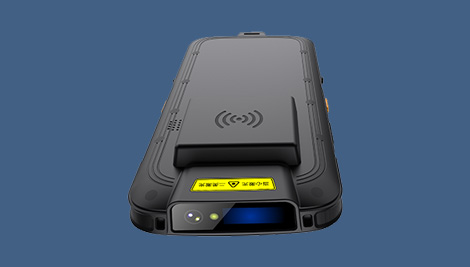
The industrial-grade rugged PDA features IP65 protection, operating stably from -20°C to 60°C. Its dust/water resistance ensures continuous performance in harsh environments like metalworking and chemical plants. The scanning module decodes 3mil high-density barcodes with dynamic focus algorithms, enabling accurate 0.3–5m range reading—solving traditional scanning failures on reflective surfaces or worn barcodes. Integrated 4G/5G dual-mode communication and Wi-Fi 6E ensure second-level data synchronization in complex factory settings, eliminating traceability delays.
II. Full-Process Applications: From Inbound Materials to Finished Goods
Inbound Inspection: Scanning supplier barcodes auto-verifies purchase orders vs. physical goods, enabling instant "arrival-inspection" workflows. Automotive parts manufacturers report 40% faster verification and <0.01% error rates.
Production Tracking: Scanning process barcodes records operation time, equipment parameters, and personnel data, creating digital production records. Quality issues are traced to specific stations/batches in <15 minutes (vs. hours).
Warehouse Management: Batch scanning and dynamic inventory checks trigger replenishment alerts, increasing turnover by 30% and reducing shortages by 40%. Electronics manufacturers save over ¥8M annually in storage costs.
Logistics Control: Scanning shipment barcodes tracks loading times, routes, and handovers. Customers monitor real-time cargo locations via end-to-end visibility.
III. Dual Value: Eco-Compliance & Quality Control
The PDA documents material composition, sources, and disposal methods to comply with REACH/RoHS. A chemical manufacturer achieved "zero-issue" environmental audits and reduced hazardous waste by 1,200 tons/year through optimized material use. Dual barcode + RFID verification ensures 99.99% material accuracy on production lines—preventing ¥5M+ annual losses from material errors in precision semiconductor manufacturing.
IV. Future Evolution: Predictive Intelligence & Ecosystem Integration
With 5G and edge computing, PDAs are evolving toward predictive replenishment and error prevention. AI algorithms trained on historical data flag high-risk orders for enhanced verification. Maintenance records build equipment health profiles for predictive upkeep. Deeper integration with smart warehousing and TMS systems creates a supplier-manufacturer-logistics ecosystem, advancing "zero inventory, zero defects, zero wait" lean manufacturing.