

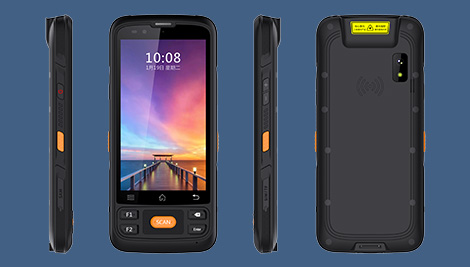
In the era of large-scale farming, the livestock industry faces unprecedented challenges. Manual record-keeping leads to data errors, inefficient paper-based queries, and delayed cross-departmental information sharing, directly impacting farm productivity and profitability. With the proliferation of IoT technology, handheld PDA terminals are becoming indispensable digital tools for modern livestock management due to their portability, professionalism, and real-time capabilities. This guide delves into the core value of these devices in livestock scenarios, offering actionable smart solutions.
1. End-to-End Data Collection: Building Precision Farming Databases
1.1 Electronic Individual Identification
Livestock wearing electronic ear tags or leg bands with unique IDs can be scanned via PDA's NFC or external modules within 0.3 seconds. Offline storage ensures critical data (e.g., vaccinations, breeding events) is recorded in remote areas and auto-synced to cloud systems later.
1.2 Dynamic Production Tracking
Integrated infrared thermometers and ultrasonic sensors enable real-time monitoring of body temperature and condition scores. Built-in algorithms calculate daily weight gain and feed conversion ratio (FCR), reducing data errors from 15% to <0.1%.
1.3 Feed Inventory Management
Connected to electronic scales and RFID readers, PDAs digitize feed workflows. The system compares theoretical vs. actual usage, triggering vibration and on-screen alerts when stocks dip below safety thresholds.
2. Mobile Workflow Platform: Reinventing Farm Operations
2.1 Task Assignment & Execution
Tasks from PC systems are pushed to PDAs. Veterinarians access e-SOPs, scan ear tags to log medication details, and auto-generate digital records.
2.2 Real-Time Anomaly Response
Environmental or health abnormalities trigger a three-tier alert (vibration, app notification, SMS), cutting response time by 60%.
2.3 Customizable Data Dashboards
Livestock management apps display key metrics (e.g., FCR rankings, breeding success rates) on 5.5-inch HD screens, replacing outdated reports.
3. Precision Feeding System: Optimizing Resource Allocation
3.1 Individual Feeding Plans
Bluetooth-connected smart dispensers adjust rations based on body condition, parity, and milk yield, reducing weight gain variability by 40%.
3.2 Electronic Formula Control
A 200+ ingredient database enables nutrition validation and cost optimization. QR code scans verify feed mix accuracy.
3.3 Leftover Recycling
PDA-recorded leftovers and AI image analysis reduce feed waste from 8-12% to 3-5% in TMR systems.
4. Disease Control: Strengthening Biosecurity
4.1 Digital Vaccination Management
Customizable schedules with expiry/ temperature checks and operator facial recognition ensure compliance.
4.2 Epidemic Tracing
Scanning tags reveals 30-day contact history and movement trails, generating transmission maps to isolate outbreaks 75% faster.
4.3 Disposal Supervision
Integrated weighing scales and cameras log disposal methods, enabling full-process traceability.
5. Environmental Monitoring Hub: Building Smart Farm Ecosystems
5.1 Multi-Parameter Sensing
PDAs connect to 12+ sensors (ammonia, humidity, light) with species-specific environment recommendations.
5.2 Automated Device Control
Excessive ammonia levels trigger fans or curtain adjustments via LoRa networks.
5.3 Energy Efficiency Analytics
Time-based equipment optimization cuts winter heating costs by 23% and ventilation energy by 18%.
Conclusion: Digital Infrastructure for Modern Livestock Farming
Handheld PDAs are reshaping livestock operations by creating a data-driven foundation. Integrating individual records with growth models and genomics unlocks innovations like dynamic nutrition and early disease alerts. Adopting these terminals is both a tactical solution to cost pressures and a strategic investment in future competitiveness – controlling data collection means mastering the neural hub of smart farms.