

As urbanization accelerates and vehicle ownership surges, road occupancy management has become a critical challenge. Traditional manual enforcement faces inefficiencies, evidence preservation difficulties, and data fragmentation. Wireless PDA handheld terminals now offer an efficient solution. This analysis examines how this technology reshapes urban parking management through its technical principles, applications, outcomes, and future trends.
I. Challenges in Urban Road Occupancy Management
• Efficiency Bottlenecks
Manual processes involving paper citations and data entry take 15-20 minutes per case, limiting daily case resolution—especially during peak hours.
• Incomplete Evidence
Handwritten errors in license plates/timestamps weaken legal standing during appeals.
• Data Silos
Disconnected systems among traffic police, municipal agencies, and city management hinder cross-departmental coordination.
• Poor User Experience
Limited real-time query options and payment channels fuel complaints.
II. Technological Innovations of Wireless PDA Terminals
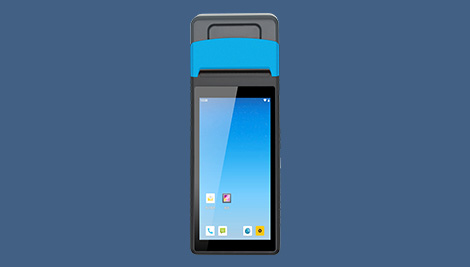
Integrated 4G/5G, GPS, HD imaging, and barcode scanning enable end-to-end digital enforcement:
• Mobile Enforcement Loop
Real-time evidence collection with geotagged photos/videos
Instant vehicle registration/history verification via license plate scan
QR-coded electronic citations for instant payment/appeals
• Data Integration
Cloud-based synchronization across departments for joint enforcement
• AI-Driven Insights
Heat maps for violation hotspots
Alerts for high-risk vehicles (e.g., cloned plates)
III. Application Scenarios
• Dynamic Patrols
80% faster violation processing via automated license plate checks and digital citations.
• Vendor Occupation Control
"One-store-one-file" digital records for illegal street vending enforcement.
• Extreme Weather Operations
Offline mode ensures uninterrupted enforcement during storms.
• Citizen Services
QR codes link to payment portals, appeals, and parking navigation.
IV. Documented Outcomes
• Efficiency Gains
Daily cases processed rose from 12 to 45 per officer; citation accuracy reached 99.8%.
• Data-Driven Optimization
Night parking zones reduced violations by 42% in commercial areas.
• Cost Reduction
$2.3K annual savings per terminal via paperless operations.
• Public Trust
Complaints dropped 53% with transparent processes.
V. Implementation Strategies
• Rugged Design
IP65 waterproofing and 1.5m drop resistance with hot-swappable components.
• Offline Capability
Data caching for low-signal areas.
• Training Protocols
Focus on cybersecurity and device maintenance.
VI. Future Evolution
• 5G + AIoT Integration
Real-time video analysis for proactive violation detection.
• Credit System Linkage
Penalty escalations for repeat offenders via insurance premium adjustments.
• Automated Enforcement
Drone-assisted surveillance in closed premises.
Conclusion
Wireless PDA terminals exemplify urban digital transformation, shifting enforcement from punitive measures to precision service. As technology evolves, these tools will further catalyze smart city development through data-driven governance.