
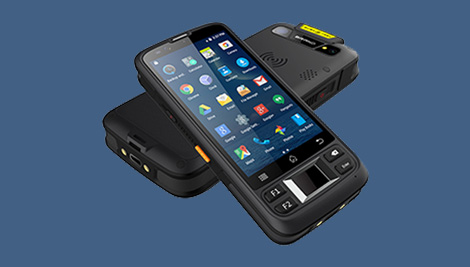
In the era of rapid development in medical informatization, the precision and efficiency of nursing work are directly related to patient safety and medical quality. As a core tool in mobile nursing, the nurse PDA barcode handheld terminal is reshaping key workflows such as drug management, patient identity verification, and infusion monitoring through its portability, real-time capability, and accuracy. This article will focus on the deep application of the nurse PDA in the field of drug traceability, analyzing how it empowers nursing processes through technology to achieve standardization and intelligent upgrades.
I. Full-Process Drug Traceability: Closed-Loop Management from Warehousing to Bedside
Drug safety is the lifeline of medical quality. In traditional models, the flow of drugs from the pharmacy to clinical departments relies on manual records, posing risks such as information delays and data errors. The nurse PDA upgrades drug management from "static recording" to "dynamic tracking" through barcode scanning technology:
Warehousing and Storage Stage
Nurses use the PDA to scan the unique traceability code on drug packaging, and the system automatically verifies information such as drug name, specifications, and expiration date to achieve precise warehousing. For drugs requiring refrigeration or special storage, the nurse PDA barcode handheld terminal can record temperature and humidity data and generate abnormal alerts, preventing drug failure due to improper storage.
Ward Distribution and Verification
When drugs are delivered from the pharmacy to the ward, nurses scan the patient's wristband and drug barcode with the PDA. The system automatically verifies the match between "patient-drug-dose-usage." If issues like overdosing or allergic drug conflicts arise, the PDA immediately emits audible and visual alarms, eliminating medication errors at the source.
Bedside Execution and Real-Time Feedback
At the patient's bedside during drug administration, the PDA scans the drug and patient identity code again. The system records the administration time, executor, and patient status, forming tamper-proof electronic records. After administration, nurses can enter changes in patient vital signs or adverse reactions via the PDA, with data synchronized in real-time to the electronic medical record system, providing dynamic support for clinical decision-making.
II. Accurate Patient Identity Verification: Building the First Line of Defense for Nursing Safety
Patient identity misidentification is a high-incidence area of medical errors. The nurse PDA digitizes the "three checks and seven verifications" process, upgrading manual verification to intelligent validation:
Dual-Code Wristband Verification: Patient wristbands are printed with both barcodes and QR codes. After scanning with the PDA, the system automatically compares information such as name, admission number, and bed number, cross-referencing with the doctor's order system to ensure accuracy in operations like medication, testing, and treatment.
Dynamic Facial Recognition: Some nurse PDA barcode handheld terminals integrate camera modules for facial recognition of patients. By comparing with pre-stored photos, they provide secondary identity confirmation, especially useful for unconscious or language-impaired patients.
Intelligent Nursing Task Push: The PDA automatically plans patrol routes and pushes task lists based on patient location and care level, preventing operational omissions due to subjective nurse negligence.
III. Intelligent Infusion Monitoring: From "Manual Monitoring" to "System Alerts"
Intravenous infusion is a common clinical nursing procedure, but steps like drip rate control and fluid residue monitoring have long relied on nurse experience. The nurse PDA achieves digital control of the entire infusion process through integration with smart infusion pumps:
Parameter Presetting and Automatic Adjustment
Nurses set infusion speed, total volume, and special requirements (e.g., light avoidance, constant temperature) on the PDA. Data is transmitted via Bluetooth to the infusion pump, which automatically adjusts to preset parameters, avoiding manual errors.
Real-Time Residue Monitoring and Alerts
The PDA displays real-time weight changes of the infusion bag. When residue falls below a threshold, it automatically alerts nurses to replace the fluid. If abnormalities like irregular drip rates or tube blockages occur, the system immediately pushes alerts to the nursing station screen and the responsible nurse's PDA, ensuring timely intervention.
Electronic Signature and Traceability
Key infusion events such as start, pause, and end require nurse confirmation via PDA electronic signature. Operation records are stored with video surveillance data, meeting traceability needs for medical disputes.
IV. Mobile Nursing Workstation: Reshaping Clinical Nursing Models
The nurse PDA is not just a data collection terminal but the core carrier of a mobile nursing workstation:
Electronic Medical Record Access Anytime: Nurses can view complete patient records, test results, and care plans on the PDA, eliminating the need to return to the nursing station for paper records.
Immediate Nursing Assessment Entry: For assessment scales like pain scores and fall risks, nurses can select options directly on the PDA to generate structured data. The system automatically calculates scores and triggers alerts.
Closed-Loop Order Execution: From doctor's orders to nurse execution and feedback, the entire process is electronic via the PDA, eliminating risks from verbal orders and paper records.
V. Data-Driven Management: From Experiential to Intelligent Optimization
The vast data generated by nurse PDA barcode handheld terminals offers new perspectives for nursing management:
Workload Dynamic Analysis: The system automatically counts data like nurse rounds, medication administrations, and patient assessments, providing objective bases for shift scheduling and performance allocation.
Error Trend Alerts: By analyzing data patterns from adverse events like medication errors or falls, the system identifies high-risk periods, areas, and procedures, aiding managers in targeted improvements.
Fine Management of Drugs and Consumables: PDA-recorded drug consumption data interfaces with the hospital HIS system, enabling functions like inventory alerts, expiry management, and high-value consumable traceability, reducing operational costs.
VI. Future Outlook: Nursing Upgrade in the IoT Era
With the proliferation of 5G and IoT technologies, the functionality of nurse PDAs will expand:
Deep Integration with Medical Devices: Control parameters of monitors and ventilators via PDA to enable continuous monitoring and alerts for patient vital signs.
AI-Assisted Decision Support: Based on patient history and clinical guidelines, the PDA can provide nurses with smart recommendations for medication and care plans.
Patient-Participatory Nursing: Push health education content to patients via PDA and collect their subjective feedback, building a collaborative care model.