

In the context of accelerating digital battlefield construction, military handheld PDAs have become indispensable data collection tools in military operations. Unlike civilian devices focused on entertainment, military PDAs prioritize stability in harsh environments and precision in data processing, forming the neural endpoints of battlefield informatization. This article will delve into the functional design logic and technological implementation pathways of military handheld PDAs in military scenarios, starting from the entire data collection process.
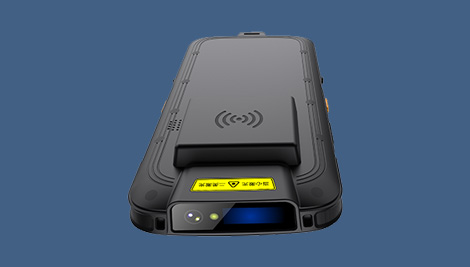
1. Industrial-Grade Protection Architecture
Adhering to military triple-proof standards, the equipment can withstand impacts from 1.5-meter drops and operate in extreme temperature ranges from -20°C to 60°C. Sealed structures protect against sand, dust, and seawater erosion. Some models feature explosion-proof battery components certified to U.S. military MIL-STD-810G standards, ensuring continuous and stable operation in complex terrains such as plateaus, deserts, and tropical rainforests.
2. Ergonomic Interaction Design
To address special needs like gloved operation and visibility in strong light, the device uses a 5.5-inch high-brightness touchscreen (over 1000 nits), paired with physical function keys and rotary encoders. The grip area features anti-slip patterns, and the battery module supports hot-swapping, meeting endurance requirements during prolonged combat missions.
Core Data Collection Function Matrix
The data processing workflow of military handheld PDAs encompasses four key stages: information input, transmission, storage, and processing, forming a comprehensive closed-loop data management system.
1. Structured Data Collection Engine
Multi-mode input system: Integrates a numeric keypad, barcode scanner (supporting Code 128/QR codes), and RFID reader (13.56MHz high-frequency band) for rapid identification of military codes such as weapon serial numbers and ammunition batch information.
Geographic information coupling: Built-in high-precision BeiDou/GPS dual-mode positioning module automatically annotates coordinate information during data collection, with an error margin of ≤5 meters, supporting contour map overlay display.
Sensor interface expansion: Connects to professional devices like hygrometers and radiation detectors via RS232/USB Type-C interfaces for real-time environmental parameter collection and recording.
2. Offline Combat Data Bank
Localized storage solution: Utilizes military-grade solid-state drives (MLC NAND flash), with 128GB standard storage expandable to 512GB via TF cards. Data is encrypted and partitioned, preventing extraction of valid information even if the device is captured.
Disconnected transmission mechanism: In areas without satellite signals, the device automatically activates local caching mode, resuming data transmission once communication coverage is restored to ensure no battlefield information loss.
3. Real-time Data Link Construction
Multi-mode communication module: Integrates ultra-shortwave radio, 4G/5G private networks, and BeiDou short-message communication, automatically selecting the optimal link based on mission requirements. In electromagnetic-restricted environments, encrypted frequency-hopping technology enables covert communication.
Data compression transmission: Employs improved algorithms for real-time data compression, reducing bandwidth requirements for 1080P image transmission to 512Kbps, significantly enhancing battlefield network efficiency.
Typical Military Application Scenarios
1. Battlefield Situational Awareness System
Frontline scouts use PDAs to scan enemy equipment identification codes, with the device automatically cross-referencing backend databases to match equipment models and deployment times, generating threat-level assessment reports within 30 seconds. Combined with an electronic compass, it marks enemy firepoint coordinates on digital maps, transmitting data to command centers via encrypted links in real time.
2. Equipment Health Management System
In maintenance scenarios, technicians read RFID tags on weapon systems via PDAs to access full lifecycle maintenance records. The built-in vibration analysis module performs spectral detection on tank engines, triggering alerts for abnormal data, and pushing repair plans to technician terminals via military MESH networks.
3. Logistics Support Command Hub
Field hospitals scan patient wristbands with PDAs to automatically record critical information like blood type and allergy history, synchronizing electronic medical records. In supply management, scanning ammunition box barcodes enables dynamic inventory control, with the system generating priority resupply lists based on consumption rates across combat units.
Technology Evolution Outlook
Current military handheld PDAs are evolving toward intelligence and modularization:
Edge computing enhancement: Integrating NPUs for real-time battlefield image target recognition (e.g., distinguishing friend-or-foe vehicles), reducing computational load on command systems.
Mission-adaptive expansion: Attaching specialized modules like biochemical detectors and laser rangefinders via standardized interfaces allows a single terminal to rapidly reconfigure for different mission types.
Quantum encryption upgrade: Cutting-edge models are testing quantum key distribution technology, elevating data transmission security to theoretical limits.
Conclusion
The value of military handheld PDAs lies not just in hardware specifications but in their role as battlefield information hubs. From individual equipment inspections to strategic supply allocations, and from real-time situational awareness to combat effectiveness evaluations, this "palm-sized command post" is reshaping data flow in modern military operations. With the integration of technologies like low-orbit satellite internet and cognitive radio, future military PDAs will evolve into true "external brains" for digital soldiers, solidifying data superiority in information warfare.