

Amidst rapid development in the pharmaceutical retail industry, the efficiency of warehousing logistics in pharmacy chains directly impacts store operations and customer satisfaction. As a critical tool in modern warehouse management systems, handheld electronic terminal devices (PDA) have become essential for optimizing supply chain processes and improving sorting accuracy through specialized functional designs. This article explores PDA’s core functionalities in pharmaceutical logistics and its role in driving end-to-end efficiency.
1. Real-Time Data Capture & Interaction
High-Precision Barcode Scanning
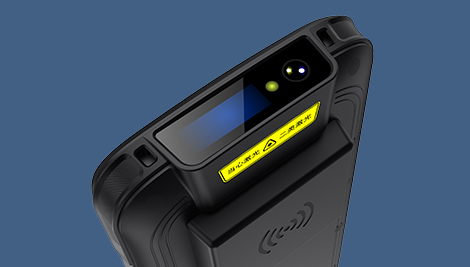
PDAs feature industrial-grade scanners that decode 1D/2D barcodes (e.g., Code128, GS1-128, DataMatrix) within milliseconds. During receiving, operators scan product cases to auto-capture batch numbers, expiration dates, and specifications—eliminating manual entry. For mixed-SKU scenarios, PDAs enable continuous scanning to generate bin labels, preventing mis-sorting.
Wireless Data Synchronization
Via Wi-Fi/4G/5G, PDAs maintain real-time bidirectional communication with Warehouse Management Systems (WMS). Pickers receive dynamic order waves, location paths, and stock levels on-screen. If inventory is low, the system triggers replenishment alerts on nearby PDAs, transforming "person-to-goods" workflows into "location-guided" smart operations.
2. Intelligent Warehouse Operations
Dynamic Picking Path Optimization
Using 3D warehouse mapping, PDAs employ "S-shaped path + zone clustering" algorithms to merge orders and generate optimal routes. One pharmacy chain reduced daily travel by 42% and extended PDA battery life by 30%.
Visual Inventory Control
UHF RFID scanning enables bulk inventory checks (500+ tags within 5 meters), boosting cycle counting efficiency 8-fold. Real-time variance detection generates surplus/shortage reports, maintaining 99.9% inventory accuracy.
Anomaly Alerts
Multi-level warnings activate for:
Expiring drugs (red on-screen prompts + mandatory review)
Damaged packaging (auto-photograph + quality system linkage)
Operation delays (vibration + backend alerts)
3. End-to-End Traceability
Drug Tracking
PDAs record GS1-standard traceability codes across receiving, storage, picking, and shipping. During recalls, batch number queries pinpoint affected stock in ≤6 hours (vs. 72 hours manually).
Temperature Monitoring
For biologics, Bluetooth-enabled PDAs log ambient data every 30 seconds. If temperatures deviate from 2–8°C, they trigger:
① Local audio/visual alarms
② Manager PDA notifications
③ Automatic shipment freezes
4. Device Management & Scalability
Rugged Design
IP65-rated PDAs withstand -20°C to 60°C and 1.5m drops. ISO 22196-certified antimicrobial coatings inhibit bacterial growth.
Modular Expansion
Hot-swappable docks support RFID readers, fingerprint scanners, or IR thermometers. For vaccines, biometric modules enable dual verification (ID + scan).
Remote Management
MDM platforms allow IT teams to configure 300+ devices remotely, reducing downtime to ≤30 minutes via automated diagnostics.
5. Value Proposition
Efficiency: Daily picking capacity ↑200%; order cycles ↓50%
Cost: Labor ↓30%; logistics waste ↓15%
Quality: Complaint rates ↓85% with full-process tracking
Insights: Real-time dashboards track inventory across 200+ stores
As pharmacy chains adopt "New Retail" models, PDAs synergize with AGVs and AS/RS to build smart logistics networks. Investing in scalable PDA solutions is strategic for supply chain excellence.