

In the wave of digital transformation in the healthcare industry, warehouse management, as a key link in the material supply chain, directly impacts clinical service quality and operational costs through its efficiency and accuracy. The Medical PDA mobile terminal, as an intelligent device designed specifically for medical scenarios, has become a core tool in modern medical warehouse management due to its specialized functional configurations and scenario adaptability. This article delves into the technical value and application advantages of Medical PDA in medical warehouse inventory and material management from a functional perspective.
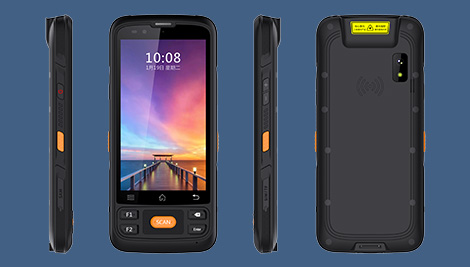
I. Medical-Grade Hardware Design: Adapting to Complex Warehouse Environments
Medical warehouses often face specific challenges such as cramped spaces, significant temperature and humidity variations, and frequent disinfection, imposing stringent demands on device durability. The Medical PDA mobile terminal adopts industrial-grade triple-protection standards (dustproof, waterproof, and shockproof), with its casing treated with medical-grade antibacterial coating to withstand daily wiping with chemicals like alcohol and chlorine-based disinfectants. The device screen features a high-brightness display, ensuring clear information visibility even in low-light or bright environments. This allows operators to work smoothly across different warehouse areas, such as cold storage, ambient temperature storage, and hazardous chemical storage.
II. Multi-Dimensional Data Collection: Building Accurate Material Archives
Barcode/QR Code Identification System
The Medical PDA has a built-in high-precision scanning engine that supports rapid decoding of one-dimensional and two-dimensional codes. It can adapt to various coding systems, including Unique Device Identification (UDI) for medical devices and electronic drug supervision codes. By customizing scanning rules, the device automatically filters duplicate barcodes, verifies code validity, and matches data in real-time with backend material databases, achieving precise "one item, one code" traceability.
RFID Radio Frequency Identification Technology
For materials requiring batch management, such as high-value consumables and implantable devices, the Medical PDA integrates ultra-high-frequency RFID reading and writing modules. This enables long-distance, non-contact batch identification. For example, during inventory checks in secondary operating room warehouses, operators can hold the device near shelves to read hundreds of instrument electronic tags in seconds, significantly improving inventory efficiency.
Manual Entry and Voice Interaction
For unmarked materials or special scenarios, the device supports touchscreen handwriting input, virtual keyboard entry, and voice command operations. In emergency allocation situations, warehouse staff can quickly create outbound orders via voice commands, with the system automatically associating material codes and inventory quantities to reduce human errors.
III. Intelligent Task Management: Optimizing Warehouse Workflows
Dynamic Task Allocation
Based on Wi-Fi 6 or 4G/5G networks, the Medical PDA mobile terminal synchronizes data in real-time with hospital material management systems (HMS). Managers can push inventory tasks to designated devices through the backend system, specifying parameters like warehouse zones, material categories, and priorities. The device displays task progress visually and supports filtering target materials by shelf, batch, expiration date, and other dimensions.
Path Planning and Navigation
For large medical warehouses, the built-in indoor positioning module combines with electronic maps to plan optimal inventory paths for operators. For instance, when searching for specific batch-numbered reagents, the system generates a navigation route from the current position to the target shelf and prompts the exact storage location.
Anomaly Warning and Handling
During inventory, the device automatically compares theoretical and actual stock levels, triggering audio-visual alerts for anomalies like insufficient stock, approaching expiration dates, or misplaced items. Operators can directly initiate processes such as transfer requests, expiration adjustments, or stock corrections through the device, achieving closed-loop issue management.
IV. Data Collaboration and Traceability: Integrating the Full Supply Chain
Real-Time Inventory Synchronization
The Medical PDA supports offline and online dual-mode operation, allowing data collection even during network outages. Data is automatically uploaded to cloud servers upon network restoration. Hospital material management departments can monitor real-time inventory dynamics across warehouses, providing data support for procurement plans and clinical requisitions.
Full Lifecycle Traceability
Through data interfaces with hospital systems like HIS and SPD, the Medical PDA mobile terminal records end-to-end information on materials from receipt, storage, and transfer to usage. For example, when tracing the flow of a specific batch of infusion sets, the system displays receipt times, storage warehouses, receiving departments, and specific patient usage records, meeting requirements for medical insurance audits and quality traceability.
Multi-Dimensional Report Generation
The device has a built-in data analysis engine that automatically generates key indicator reports, such as inventory turnover rates, expiration distributions, and out-of-stock rates. Managers can optimize inventory structures through trend analysis, such as adjusting safety stock thresholds or storage strategies for high-risk materials.
V. Security and Compliance: Safeguarding Medical Data Privacy
Role-Based Access Control (RBAC)
The Medical PDA supports role-based access control, assigning different operation permissions to roles like warehouse managers, auditors, and system administrators. For instance, regular warehouse staff can only perform inventory and transfer tasks, while system administrators can configure device parameters and user permissions.
Data Encryption Transmission
The device uses the SM4 cryptographic algorithm to encrypt transmitted data, preventing leaks of sensitive information like material details and patient data. Local storage data supports automatic backup and remote erasure functions, mitigating risks from device loss.
VI. Scenario-Based Innovation: Extending Warehouse Management Boundaries
Cold Chain Monitoring Integration
Some Medical PDA models can connect to external temperature and humidity sensors for real-time monitoring of cold storage environments. When parameters exceed thresholds, the device automatically alerts managers and links to affected material batches, aiding quality assessments.
Mobile Printing Functionality
By connecting to portable printers via Bluetooth or Wi-Fi, the Medical PDA can print material labels and expiration stickers directly at inventory sites. This reduces time spent returning to operation stations, enhancing workflow continuity.
Training and Assessment Modules
The device can embed a library of standard operating procedure (SOP) videos for warehouse management. New employees access operational guides by scanning QR codes. Some systems support simulated inventory assessments, automatically recording operation times and accuracy rates to facilitate skill evaluations.
Conclusion
The Medical PDA mobile terminal, through deep integration of customized hardware, specialized functions, and collaborative data, is reshaping the operational models of medical warehouse management. From precise inventory to intelligent decision-making, and from process optimization to risk control, its value surpasses traditional data collection tools, making it foundational infrastructure for hospitals building smart supply chain systems. In the future, with the convergence of IoT and healthcare IT technologies, Medical PDA will further expand into application scenarios like intelligent cabinets for high-value consumables and operating room behavior management, continuously advancing medical material management toward refinement and intelligence.