

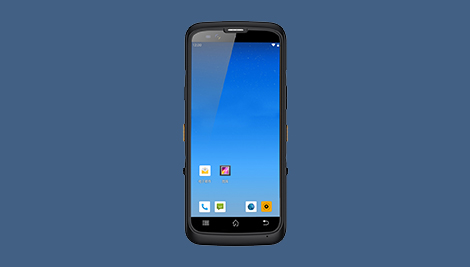
Medical waste management is a critical component of public health systems, where its standardization and intelligence level directly impact environmental safety and public health. With the proliferation of IoT technology, industrial handheld PDA devices have become essential tools for full-process supervision of medical waste due to their portability, stability, and professional functional design. This article delves into the core functionalities and application value of industrial handheld PDA devices in medical waste management from dimensions such as data acquisition, process control, and risk warning.
I. Core Pain Points in Medical Waste Management Scenarios
Medical waste carries high-risk attributes such as infectivity, toxicity, and corrosiveness. Its management chain involves five key stages: generation, classification, temporary storage, transportation, and disposal. Traditional management models face the following prominent issues:
Information Gaps: Paper records are easily lost, and data synchronization lags, making it difficult for regulators to monitor waste dynamics in real time.
Operational Risks: Manual weighing and classification are error-prone, with high risks of cross-contamination.
Traceability Challenges: Incomplete records of waste sources and destinations lead to inefficient accident tracing.
Process Vulnerabilities: Lack of immediate control over violations like temporary storage timeouts or transportation route deviations.
Industrial handheld PDA devices address these pain points by integrating specialized modules such as barcode recognition, RFID reading/writing, and BeiDou GPS positioning, establishing a closed-loop management system from waste generation to disposal terminals.
II. Analysis of Core Functional Modules
1. Multi-Mode Data Acquisition System
(1) Barcode/RFID Dual-Mode Recognition
Supports 1D/2D barcode scanning, compatible with pre-printed barcodes on medical waste packaging bags, achieving rapid recognition in 0.3 seconds.
Equipped with UHF RFID reading/writing modules for batch-reading of electronic tags on transfer containers, with a single read range of up to 15 meters, suitable for quick inventory in stacking scenarios.
Dual verification mechanisms ensure data accuracy, preventing numbering errors from manual entry.
(2) High-Precision Weighing Integration
Automatically associates weighing data with batch information to generate electronic records with weight signatures.
Abnormal weight warning function identifies violations like empty containers or overweight packaging.
2. Full-Process Control Platform
(1) Standardized Operation Guidance
Pre-installed medical waste classification database provides visual instructions via the PDA screen to standardize operator behavior.
Multi-level permission management restricts access to specific functional modules based on user roles.
Mandatory checks at critical nodes, such as packaging seal inspections and container disinfection records.
(2) Real-Time Location Tracking
Integrated quad-mode positioning system (GPS+BeiDou+GLONASS+Galileo) with sub-meter accuracy.
Geofencing function: Sets virtual boundaries at key areas like medical institutions and transfer stations, triggering immediate alerts for abnormal entries or exits.
Transport trajectory playback: Supports 90-day historical route queries for regulatory audits.
3. Environmental Safety Monitoring
(1) Real-Time Temperature and Humidity Monitoring
Built-in high-sensitivity sensors monitor temperatures from -20°C to 60°C with ±0.5°C precision.
Humidity monitoring range of 0-100% RH, supporting temperature and humidity curve recording for cold-chain transport scenarios.
Threshold exceedances automatically trigger audible and visual alarms, with notifications pushed to management centers via 4G/5G networks.
(2) Impact and Collision Detection
Three-axis accelerometers monitor transport vibrations in real time.
Abnormal impact events automatically timestamp and record G-force data for damage tracing.
Combined with the PDA's camera function, allows on-site image capture of container appearance as evidence.
4. Intelligent Warning and Decision Support
(1) Dynamic Inventory Management
Automatically calculates inventory capacity for departments/storage points, generating visual heatmaps.
Predicts replenishment needs using algorithms to optimize container allocation.
Inventory overload warnings: Sets differentiated thresholds based on medical institution levels.
(2) Disposal Efficiency Analysis
Tracks KPIs like timely reception rates and incineration/sterilization efficiency for disposal units.
Generates monthly management reports with 20+ dimensions of data, including waste generation trends and classification accuracy rates.
Supports export of standardized records compliant with regulations.
III. Practical Application Scenarios
Scenario 1: Waste Generation Source Control
Nurses scan patient wristbands and waste packaging barcodes via PDA, automatically linking waste to its source.
Weighing data syncs with HIS systems for precise cost accounting in wards.
Full-container warnings prompt timely replacements to prevent over-accumulation risks.
Scenario 2: Transfer and Transport Supervision
Transport personnel use PDAs to scan electronic signatures from both parties, completing the responsibility chain.
During vehicle loading, PDAs automatically verify RFID tag consistency with electronic manifests.
At disinfection points, NFC technology reads disinfection equipment operation records.
Scenario 3: End-Point Disposal Verification
Disposal units scan batch codes of incoming waste via PDA, retrieving full-process supervision data.
During unpacking inspections, high-definition cameras record video and upload it to blockchain for evidence preservation.
Real-time parameters like incinerator temperature and emissions are relayed to environmental monitoring platforms.
IV. Key Equipment Selection Indicators
Protection Rating: IP65 dust and water resistance, 1.5-meter drop resistance for complex medical environments.
Battery Life: Hot-swappable battery design supports 7×24 hours of continuous operation.
Network Compatibility: Dual-band WiFi + 4G full-network support ensures real-time data transmission.
User Experience: 5.5-inch industrial touchscreen, operable with gloves or wet hands.
Expansion Interfaces: Reserved USB-C and RS232 ports for compatibility with printers, labelers, and other peripherals.
V. Future Development Trends
As medical waste management standards evolve, industrial handheld PDA devices will advance in three directions:
Modular Customization: Developing specialized function kits tailored to different medical institution levels.
Edge Computing: Performing basic data analysis on-device to reduce cloud processing load.
5G + IoT Integration: Enabling low-power wide-area connections via NB-IoT technology.
Industrial handheld PDA devices create a "Device-Network-Cloud" collaborative system, achieving visual, traceable, and quantifiable medical waste management. This drives the industry toward refinement and intelligence, with increasingly critical support roles in public health safety as technical standards improve.